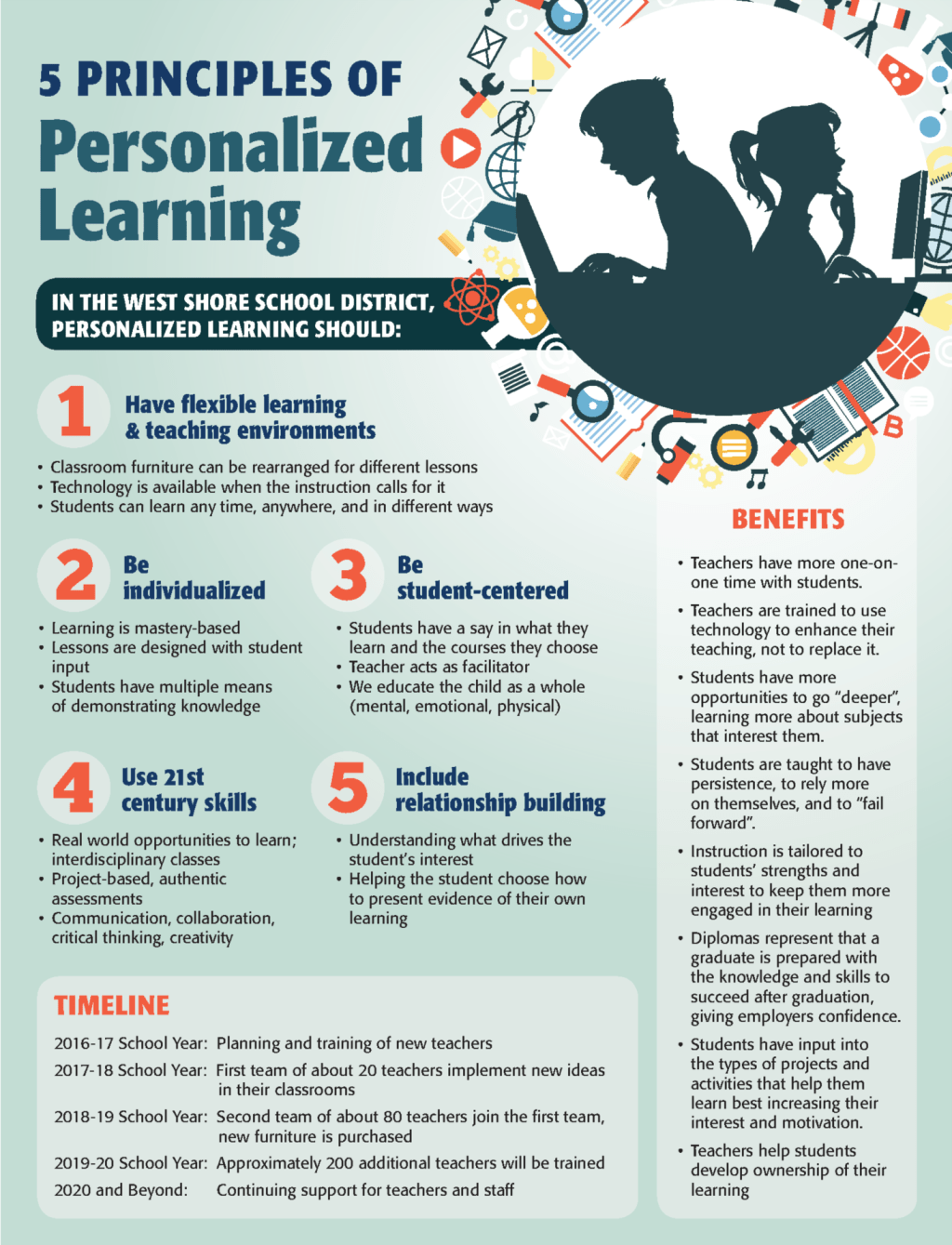
Personalized learning in blended environments:
Blended learning is an educational approach that combines traditional face-to-face instruction with online learning. This blended model offers flexibility and customization, allowing students to learn at their own pace and in a way that suits their individual needs. One aspect of blended learning that has gained significant attention is personalized learning.
Personalized learning focuses on tailoring instruction to meet the unique needs and interests of each student. In a blended environment, this can be achieved through the use of technology tools and adaptive software that provide individualized content and feedback.
One key benefit of personalized learning in a blended environment is increased student engagement. When students have control over their own learning, they are more likely to be motivated and invested in the material. By incorporating elements such as self-paced modules or choice boards, educators can empower students to take ownership of their education.
Furthermore, personalized learning allows for differentiation based on student readiness, interest, and preferred learning style. In a traditional classroom setting, it can be challenging for teachers to cater to every student’s specific needs simultaneously. However, through the use of online platforms or adaptive software programs, educators can offer targeted resources and activities that align with each student’s strengths and areas for growth.
Gamification and game-based learning in alternative education:
In recent years, gamification has emerged as a powerful tool in alternative education settings. Gamification refers to the integration of game elements into non-game contexts to engage learners and motivate them towards achieving desired outcomes.
Game-based learning takes this concept further by making games themselves an integral part of the instructional process. Through gamified approaches or immersive game experiences designed specifically for educational purposes, students can engage with content in a fun and interactive manner.
The incorporation of gamification principles into alternative education models helps create engaging experiences that foster active participation among learners while promoting critical thinking skills problem-solving abilities.
Project-based Learning (PBL) in a Blended Setting:
Project-based Learning (PBL) is an instructional approach that emphasizes hands-on, real-world experiences to foster deep understanding and knowledge retention. In a blended learning environment, PBL can be seamlessly integrated by leveraging online resources for research, collaboration tools for group work, and multimedia platforms for presentations.
The key advantage of implementing PBL in a blended setting is the ability to combine both online and offline activities. Students can conduct independent research using digital sources while also engaging in face-to-face discussions and hands-on experiments. This combination allows for a more comprehensive learning experience that bridges theory with practical application.
Differentiating Instruction through Blended Learning:
One of the biggest challenges educators face is meeting the diverse needs of students within a single classroom. Blended learning offers numerous opportunities for differentiation, allowing teachers to tailor instruction to meet individual student needs.
In a blended environment, teachers can provide different levels of scaffolding or support materials based on each student’s readiness level. For example, advanced learners may be assigned additional enrichment activities or provided with more challenging assignments online. On the other hand, students who require extra support can access additional resources or receive personalized feedback through online platforms.
Assessing Student Progress in Blended Classrooms:
Effective assessment strategies are crucial for monitoring student progress and ensuring that learning goals are being met. In a blended classroom, there are various ways to assess student understanding and mastery of content.
Online quizzes or tests can be used to gauge comprehension at regular intervals throughout the course. These assessments can provide immediate feedback to both students and teachers regarding areas of strength or weakness.
Additionally, project-based assessments allow students to demonstrate their understanding through authentic tasks such as presentations or portfolios. Through these assessments, teachers can evaluate not only content knowledge but also critical thinking skills and application abilities.
Social-Emotional Learning (SEL) in Online and Offline Spaces:
While academic achievement is important in any educational setting, social-emotional development plays an equally vital role in shaping well-rounded individuals. In a blended learning environment, it is essential to incorporate social-emotional learning (SEL) strategies to support students’ holistic growth.
Online platforms can be utilized to foster positive social interactions and build connections among students. Discussion boards or virtual collaboration spaces allow for peer-to-peer interaction and the development of communication skills.
Offline activities such as group projects or community service initiatives provide opportunities for teamwork, empathy-building, and problem-solving in real-world contexts. Teachers can also integrate SEL-focused lessons into their curriculum to explicitly teach skills such as self-awareness, self-management, social awareness, relationship building, and responsible decision-making.
Culturally Responsive Teaching in Blended Environments:
Culturally responsive teaching is an instructional approach that recognizes and values the diverse backgrounds and experiences of students. In a blended learning environment, it becomes even more critical to create inclusive spaces that honor every student’s cultural identity.
Educators should strive to select online resources that represent diverse perspectives and showcase culturally relevant content. This could include incorporating literature or multimedia materials from different cultures or highlighting historical events from various world regions.
Furthermore, teachers must be intentional about creating a classroom culture that promotes respect for all voices and encourages open dialogue on topics related to diversity and inclusion. Facilitating discussions around cultural differences can help foster empathy and understanding among students.
Building Community and Collaboration in Virtual Classrooms:
Creating a sense of community is vital in any educational setting, including virtual classrooms. In a blended environment where face-to-face interactions may be limited, educators need to employ strategies that promote connection and collaboration among students.
Teachers can utilize video conferencing tools for synchronous discussions or class meetings where students have the opportunity to interact with one another in real-time. Icebreaker activities at the beginning of each session can help break down barriers between classmates who may not have met physically before.
Additionally, collaborative projects using online platforms enable students from different locations to work together towards common goals. By fostering a collaborative mindset, educators can nurture a sense of belonging and collective responsibility within the virtual classroom.
Supporting Students with Special Needs through Blended Approaches:
Blended learning offers unique opportunities to support students with special needs by providing individualized instruction and accommodations. In a blended environment, teachers can leverage technology tools and multimedia resources to address diverse learning styles and abilities.
For students with visual impairments, screen readers or text-to-speech software can be utilized to ensure access to digital content. Similarly, closed captioning or transcripts should be available for videos to support students with hearing impairments.
Additionally, online platforms allow for differentiated instruction by providing customizable settings such as font size or background color that cater to the specific needs of each student. Teachers can also provide additional supports such as graphic organizers or study guides digitally.
By leveraging the benefits of both face-to-face interactions and online resources, educators can create inclusive learning environments where all students have equal opportunities for success.
Parental Involvement and Communication in Alternative Schooling Models:
In alternative schooling models that incorporate blended learning, parental involvement is crucial for student success. Parents play an essential role in supporting their child’s education at home and fostering a positive learning environment.
Communication between parents and teachers is key in ensuring continuous collaboration. Online platforms such as Learning Management Systems (LMS) or parent portals facilitate communication channels between parents and teachers. These platforms enable teachers to share updates on assignments, progress reports, upcoming events while allowing parents to inquire about their child’s academic performance or seek clarification on instructional materials.
Furthermore, involving parents in their child’s educational journey through activities like virtual parent-teacher conferences or family engagement events fosters a stronger partnership between home and school. By actively engaging parents in the blended learning process, educators enhance student support networks while encouraging parental involvement in their child’s education.
Integrating Technology Tools for Effective Blended Learning Experiences:
Technology tools are at the core of blended learning, enabling educators to create interactive and engaging experiences for students. There are numerous technology tools available that can enhance instruction and facilitate student learning in a blended environment.
Learning Management Systems (LMS) serve as a central hub for organizing course materials, assignments, and assessments. These platforms allow teachers to deliver content asynchronously, provide resources for independent study, and track student progress.
Collaboration tools such as Google Docs or Microsoft Teams enable students to work together on projects or assignments in real-time regardless of their physical location. This fosters teamwork and communication skills while promoting active engagement in the learning process.
For formative assessment purposes, digital tools like Kahoot! or Quizlet offer gamified quizzes that allow teachers to gauge student understanding instantly. Adaptive software programs personalize learning by providing targeted content based on individual needs.
By thoughtfully integrating technology tools into instructional practices, educators can create dynamic learning experiences that cater to diverse learners’ needs in a blended environment.
Creating Inclusive and Equitable Practices in Alternative Education Settings:
In alternative education settings where students come from diverse backgrounds with varying needs and abilities, it is vital to create inclusive environments that ensure equitable access to quality education.
To foster inclusivity, educators should provide multiple means of representation through diverse instructional materials that reflect the cultural backgrounds of their students. This includes incorporating literature from different cultures or inviting guest speakers who represent various perspectives.
Differentiation plays a crucial role in promoting equity within blended classrooms. Educators need to be mindful of designing instruction that caters to all learners’ needs by offering varied levels of support or challenge based on individual readiness levels.
Furthermore, creating an inclusive classroom culture involves valuing every student’s voice and perspective. Teachers should encourage participation from all students through strategies such as think-pair-share activities or online discussion boards where everyone has an opportunity to contribute.
Addressing Digital Citizenship and Online Safety for Students in Blended Programs:
As more educational activities shift online within blended programs, it is essential to address digital citizenship and online safety concerns. Educators must explicitly teach students how to navigate the digital world responsibly and safely.
Lessons on digital literacy, cyberbullying prevention, and online privacy should be incorporated into the curriculum. Students need to understand the importance of protecting their personal information while respecting others’ rights in virtual spaces.
Educators can also provide guidelines for appropriate online behavior and establish clear expectations regarding netiquette. By fostering a culture of responsible digital citizenship, teachers help create safe learning environments that promote positive interactions both offline and online.
Supporting English Language Learners through Blended Instruction Methods:
Blended instruction offers unique opportunities for supporting English language learners (ELLs) by providing differentiated instruction that addresses their specific language needs.
In a blended environment, ELLs can access multimedia resources such as videos or audio recordings that support comprehension and vocabulary development. Online platforms can offer translation features or multilingual support tools that facilitate understanding of content material.
Furthermore, collaboration tools allow ELLs to engage in meaningful conversations with peers or participate in group projects where they can practice their language skills in an authentic setting. Teachers can also provide additional supports such as graphic organizers or sentence starters digitally to scaffold language production.
By leveraging technology tools alongside face-to-face interactions, educators create inclusive environments where ELLs have equal opportunities for academic success within alternative education settings.
Leveraging Open Educational Resources (OER) for Alternative Schooling:
Open Educational Resources (OER) are freely available educational materials that are openly licensed for use by educators and students worldwide. OER provides an excellent opportunity for alternative schooling models to access high-quality resources without financial barriers.
Through OER platforms such as OpenStax or Khan Academy, educators can find textbooks, lesson plans, videos, simulations, and other instructional materials across various subject areas. These resources enable teachers to customize content based on student needs while aligning with curriculum standards.
Additionally, OER promotes collaboration and sharing among educators. Teachers can modify existing resources to suit their instructional goals or contribute back by sharing their own creations with the broader educational community. This collaborative approach ensures continuous improvement and access to a wide range of materials for alternative schooling models.
Designing Effective Online Discussions for Student Engagement:
Online discussions play a crucial role in engaging students in blended learning environments, allowing them to interact with peers and deepen their understanding of the content.
To design effective online discussions, it is essential to establish clear expectations and guidelines for participation. Educators should provide prompts or questions that encourage critical thinking and reflection while promoting diverse perspectives.
Furthermore, fostering an inclusive discussion environment involves setting norms that promote respectful communication and active listening. Encouraging students to respond directly to each other’s ideas fosters dialogue rather than monologue.
Teachers can also utilize technology tools such as discussion boards or video conferencing platforms that support multimedia integration. By incorporating visual aids or multimedia content into online discussions, educators enhance student engagement while catering to different learning preferences.
Implementing Flipped Classroom Strategies within a Blended Model:
The flipped classroom model involves reversing the traditional sequence of instruction by delivering direct content outside of class time through videos or readings, while using face-to-face class time for collaborative activities, discussions, and problem-solving.
In a blended learning environment, the flipped classroom strategy can be effectively implemented by utilizing online platforms for pre-recorded lectures or digital reading materials that students can engage with at their own pace. This allows teachers to optimize face-to-face interactions by focusing on application exercises or group work where students actively apply knowledge gained from independent study.
Flipped classrooms promote student-centered learning experiences as they shift the focus from passive consumption of information during class time towards higher-order thinking skills development and peer-to-peer interaction. Students have more opportunities to engage in hands-on activities, ask questions in real-time, seek clarification from peers or teachers while receiving immediate feedback.
Professional Development for Teachers Implementing Blended Learning:
To effectively implement blended learning, teachers require ongoing professional development opportunities that enhance their instructional practices and technological skills.
Professional development programs should address both pedagogical strategies and technology integration techniques. Educators need to understand how to design effective online lessons, create engaging multimedia content, facilitate virtual discussions, or utilize digital assessment tools.
Furthermore, collaboration among teachers is crucial for sharing best practices and lessons learned. Professional learning communities or teacher networks can serve as valuable platforms for educators to exchange ideas, resources, and experiences related to blended learning implementation.
Balancing Screen Time and Offline Activities in Alternative Education:
In a world where technology plays an increasingly significant role in education, it is essential to strike a balance between screen time and offline activities in alternative schooling models.
Educators must be mindful of the potential negative effects of excessive screen time on students’ physical health and social-emotional well-being. Encouraging regular breaks from screens during the day allows students to engage in physical activity or pursue other interests that promote overall wellness.
Offline activities such as hands-on experiments or project-based assignments help diversify student experiences while promoting critical thinking skills. Additionally, incorporating opportunities for face-to-face interactions through group work or class discussions fosters social connections among peers.
Fostering Creativity and Innovation through Blended Approaches:
Blended approaches offer unique opportunities for fostering creativity and innovation within alternative education settings by providing students with access to diverse resources and platforms that encourage exploration and experimentation.
Through online platforms or multimedia creation tools like Adobe Spark or Canva, students can express their creativity by designing presentations, videos, infographics, or digital storytelling projects. These mediums allow them to showcase their understanding of concepts while incorporating elements of imagination and personal expression.
Moreover, blending traditional arts-based instruction with digital tools enhances artistic capabilities by offering new ways of creating art forms such as digital painting or animation. By combining traditional arts with technology, students develop a broader skill set that aligns with the demands of the digital age.
Using Data to Inform Instructional Decisions in a Hybrid Environment:
Data-driven decision making is a fundamental aspect of effective instructional practice. In a hybrid environment, educators can leverage data from various sources to inform their teaching and support student learning.
Online platforms provide valuable insights into student progress through real-time analytics or learning management system dashboards. These data points help educators identify areas where students may be struggling and tailor instruction accordingly.
Additionally, formative assessments conducted online offer immediate feedback on student understanding. Teachers can use this information to differentiate instruction or adapt their lesson plans based on individual needs.
Collaborating with colleagues through professional learning communities allows teachers to share data analysis strategies and collectively analyze patterns or trends within student performance. This collective approach ensures that instructional decisions are informed by multiple perspectives and expertise.
Promoting Self-Regulated Learning Skills among Students in Blended Settings:
Self-regulated learning skills are essential for students’ academic success and lifelong learning. Blended settings provide an ideal platform for promoting these skills as they allow students greater autonomy over their own learning.
Teachers can explicitly teach self-regulation strategies such as goal setting, time management, and metacognition using online tools like digital planners or project management apps. By providing opportunities for independent study or self-paced modules, educators encourage students to take ownership of their learning process.
Moreover, fostering reflection becomes crucial in blended environments where much of the learning occurs independently online. Encouraging regular check-ins or journaling activities helps students reflect on their progress while identifying areas for improvement.
Blended settings also allow for continuous monitoring of progress towards goals through online platforms that track completion rates or mastery levels. By empowering students to monitor their own progress, educators promote self-awareness and accountability while building self-regulated learners who are better equipped to navigate future educational endeavors.
Blended Learning for Adult Learners Seeking Alternative Education Options:
Blended learning models are not limited to K-12 education but can also be advantageous for adult learners seeking alternative education options. Adult learners often have diverse schedules and responsibilities that make traditional classroom attendance challenging.
By incorporating online components into their educational programs, alternative schools can provide flexible learning opportunities that cater to the needs of adult learners. Online modules or self-paced courses allow individuals to learn at their own convenience while balancing work, family, or other commitments.
Furthermore, blended learning environments offer adult learners the opportunity to engage in meaningful discussions and collaborative activities with peers from various backgrounds. Virtual classrooms provide a space for networking and sharing experiences that enrich the overall learning journey.
Exploring the Role of Artificial Intelligence (AI) in Personalized Online Instruction:
Artificial Intelligence (AI) has revolutionized many industries, including education. In personalized online instruction within blended settings, AI technologies can play a significant role in tailoring content and adapting instruction based on individual student needs.
AI-powered adaptive software can analyze vast amounts of data generated by students’ interactions with online platforms. This enables educators to gain insights into each student’s strengths, weaknesses, and areas requiring additional support.
These AI tools use algorithms to deliver personalized content recommendations or targeted interventions. By providing real-time feedback and customized resources aligned with each
 Alternative Amie
Leave a comment