Peer Assessment in Online Education: A Collaborative Approach to Learning
Online education has become increasingly popular over the years, offering students a flexible and accessible way to pursue their academic goals. However, one aspect that has often been missing from online courses is the opportunity for students to engage in peer assessment. Fortunately, this is changing as more educators recognize the value of incorporating peer assessment into online learning environments.
Peer assessment involves students evaluating and providing feedback on each other’s work. It serves multiple purposes, including promoting critical thinking skills, enhancing understanding of course content, and fostering a sense of community among learners. In traditional face-to-face classrooms, peer assessment has long been recognized as an effective teaching strategy. Now, with advancements in technology and the growth of online platforms, it can be seamlessly integrated into virtual classrooms.
One of the key benefits of peer assessment in online education is its ability to encourage active learning. When students take on the role of both learner and assessor, they must carefully analyze their peers’ work and provide constructive feedback. This process not only helps them solidify their own understanding but also allows them to develop essential skills such as problem-solving and communication.
Moreover, peer assessment promotes autonomy and accountability among learners. By engaging in self-assessment exercises before evaluating their peers’ work, students become more aware of their own strengths and weaknesses. They take ownership of their learning journey while developing a deeper understanding of course objectives.
Another advantage is that peer assessment nurtures collaboration among learners who may be physically distant from each other but are connected through digital platforms. Through discussions about assignments or projects being assessed together or individually by peers within a structured framework provided by instructors or course facilitators; they build connections beyond geographical boundaries.
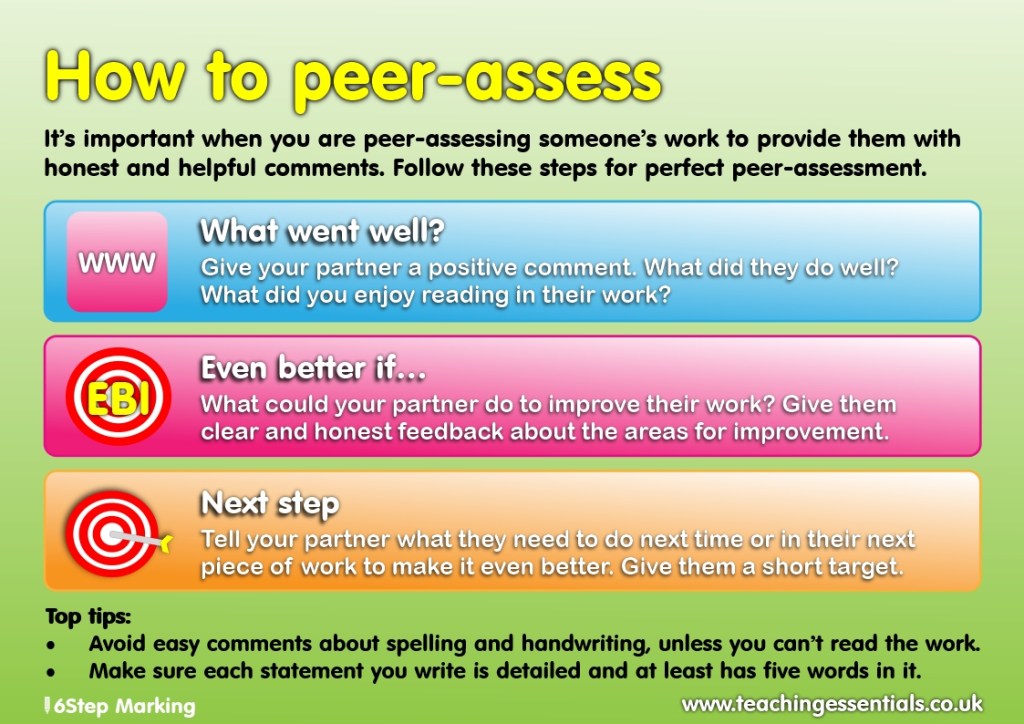
However, implementing effective peer assessment requires careful planning by instructors who need to establish clear evaluation criteria guidelines for participants while creating an inclusive environment where everyone feels comfortable providing feedback. Training sessions or resources on how to give constructive criticism can be helpful to ensure that students’ feedback is both informative and supportive.
Technology plays a vital role in facilitating peer assessment. Many online learning platforms offer built-in tools for submitting assignments, providing feedback, and tracking the progress of assessments. Rubrics or scoring guides can also be utilized to provide consistent evaluation standards across multiple peer assessors.
In conclusion, peer assessment in online education offers numerous benefits for both learners and instructors. It fosters active learning, critical thinking skills, autonomy, and collaboration among students while creating a sense of community within the virtual classroom. By incorporating this collaborative approach into online courses, educators can enhance the overall learning experience and prepare students for real-world problem-solving scenarios. As online education continues to evolve, it is essential that we embrace innovative strategies like peer assessment to maximize its potential as an effective educational tool.
 Alternative Amie
Leave a comment