Montessori Education: Nurturing Independent Thinkers
In a world where traditional education methods dominate, Montessori education stands as an alternative approach that has gained popularity over the years. Developed by Italian physician and educator Maria Montessori in the early 1900s, this method focuses on fostering independent thinking, exploration, and self-paced learning. By creating a nurturing environment that encourages curiosity and hands-on experiences, Montessori education prepares children to become lifelong learners.
One key aspect of Montessori education is its emphasis on mixed-age classrooms. Instead of grouping students solely based on their chronological age, children are placed in multi-age settings spanning three-year age ranges. This arrangement allows younger children to learn from older peers while providing older students with opportunities for leadership and mentorship roles. Through collaboration and observation within these diverse groups, children develop important social skills such as empathy, conflict resolution, and cooperation.
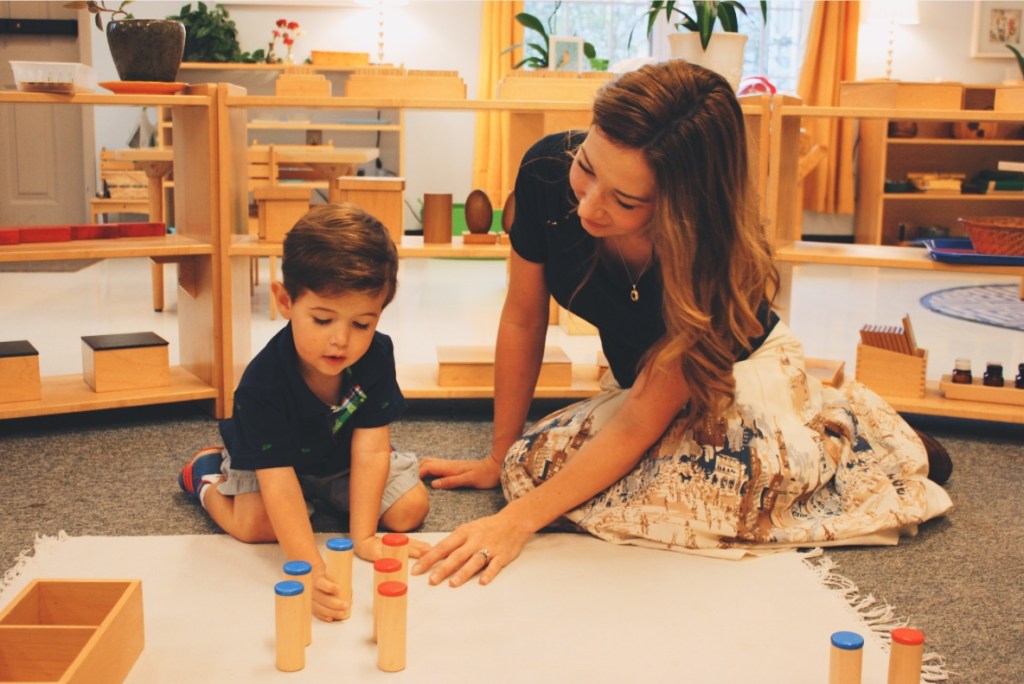
Another hallmark of the Montessori philosophy is the use of specially designed materials that facilitate self-directed learning. These materials are meticulously crafted to promote engagement through sensory experiences. From sensorial activities like sorting objects by size or color to practical life exercises such as pouring water or tying shoelaces, each material serves a specific purpose in developing cognitive skills while promoting fine motor control.
The classroom environment in a Montessori setting plays a crucial role in supporting independent learning. Classrooms are typically organized into different sections dedicated to various subjects such as language arts, math, science, geography, and practical life skills. Each section contains open shelves with neatly arranged materials that are easily accessible to students. Teachers act as facilitators rather than lecturers – they observe student progress closely and provide guidance when necessary but allow them freedom to explore topics at their own pace.
Additionally, uninterrupted blocks of work time are an essential component of the Montessori methodology. Students have extended periods during which they can choose activities independently without interruption from teachers or peers. This uninterrupted time fosters concentration, focus, and deep engagement with the chosen task. It also allows children to develop their own sense of responsibility and time management skills.
One of the main goals of Montessori education is to cultivate a love for learning that extends beyond the classroom walls. By nurturing self-motivation and curiosity, this approach encourages students to become active seekers of knowledge throughout their lives. Rather than relying solely on grades or external rewards, Montessori education prioritizes intrinsic motivation – the joy derived from mastering a new skill or understanding a complex concept.
In conclusion, Montessori education offers an alternative approach that focuses on developing independent thinkers who are curious, confident, and self-disciplined. Through mixed-age classrooms, specially designed materials, supportive environments, uninterrupted work periods, and an emphasis on intrinsic motivation; Montessori educators aim to nurture children’s innate desire to learn and explore. By embracing these principles in education systems around the world, we can empower future generations with the tools they need to navigate an ever-changing world successfully.
 Alternative Amie
Leave a comment