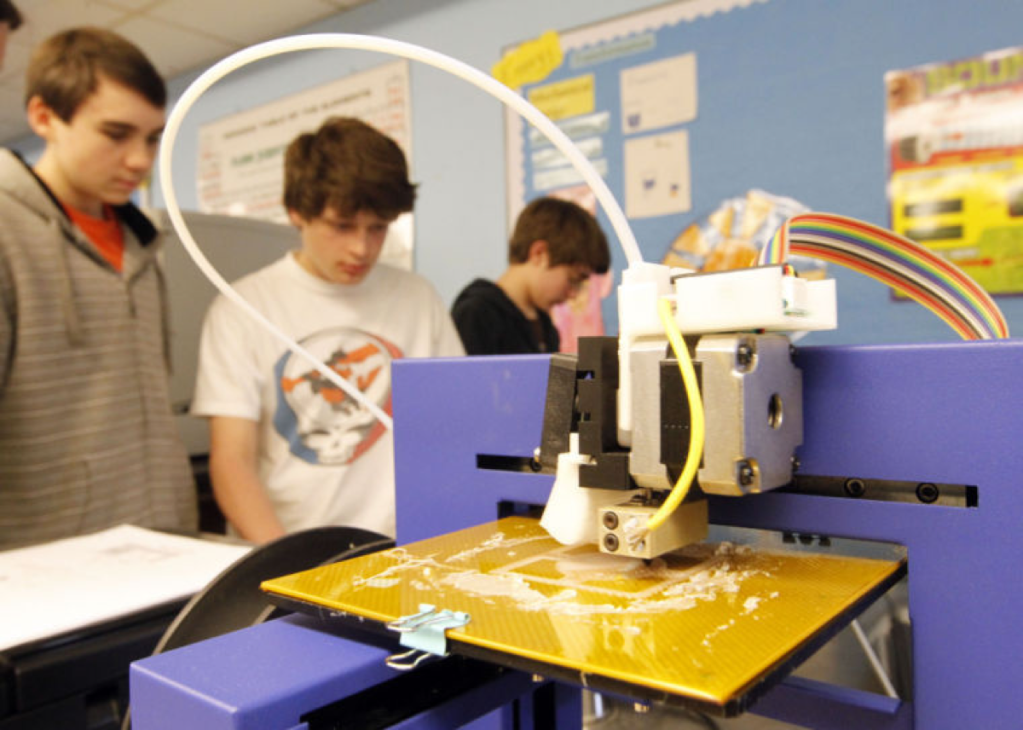
3D Printing: Revolutionizing Education
In recent years, 3D printing has emerged as a groundbreaking technology that has the potential to revolutionize various industries, including education. This innovative tool allows physical objects to be created from digital designs, making it an ideal medium for hands-on learning experiences. From STEM subjects to art and design, 3D printing offers students a unique opportunity to engage in experiential learning and develop critical thinking skills. In this article, we will explore the benefits of integrating 3D printing into alternative schooling and education.
1. Enhancing Creativity:
By allowing students to transform their ideas into tangible objects, 3D printing fosters creativity in a way traditional methods cannot. Students can design and print their own prototypes or models, encouraging them to think outside the box and explore unconventional solutions. This process enables learners to translate abstract concepts into concrete forms, promoting imaginative thinking across disciplines.
2. Empowering Problem-Solving Skills:
One of the key advantages of incorporating 3D printing in education is its ability to enhance problem-solving skills. As students work through the design process – brainstorming ideas, testing prototypes, and making iterative improvements – they learn how to identify challenges and find effective solutions independently or collaboratively with peers.
3. Bridging Theory with Practice:
Often in classrooms, theoretical knowledge can seem disconnected from real-world applications; however, with 3D printing technology at hand, educators can bridge this gap effectively. By creating physical representations of abstract concepts such as geometric shapes or molecules, teachers can help students visualize complex ideas more easily while reinforcing theoretical understanding.
4. Promoting Collaboration:
Collaborative learning becomes more dynamic when using 3D printers since multiple students can contribute towards designing a single object or project collectively. Through team-based activities involving ideation sessions and collaborative decision-making processes during prototyping stages; pupils gain valuable experience working synergistically – essential skills for future success in the workplace.
5. Encouraging Interdisciplinary Learning:
3D printing is a versatile tool that can be integrated into various subjects, encouraging interdisciplinary learning. For instance, in biology classes, students can print models of cells or organs; in history lessons, they can recreate artifacts; and in mathematics, they can build geometric shapes or solve puzzles through tangible manipulatives.
6. Fostering Entrepreneurial Mindset:
With 3D printing’s ability to turn ideas into reality quickly and at a reduced cost compared to traditional manufacturing methods, it empowers students to develop an entrepreneurial mindset. By enabling them to design prototypes of their inventions or products and test them before investing significant resources, 3D printing nurtures innovation and risk-taking.
7. Accessibility for All Learners:
Alternative schooling often caters to diverse learners with varying needs and abilities. 3D printing allows educators to create customized learning materials tailored specifically for individual students’ requirements – whether producing tactile objects for visually impaired students or designing adaptive tools for those with physical disabilities.
8. Preparing Students for the Future:
Incorporating 3D printing into alternative education prepares students for the rapidly evolving job market where digital fabrication skills are highly sought after. Familiarity with this technology equips learners with relevant knowledge and practical experience needed to thrive in fields such as engineering, architecture, manufacturing, medicine, fashion design, and more.
9. Cultivating Environmental Consciousness:
Another noteworthy aspect of integrating 3D printing into education is its potential contribution towards sustainability efforts. Traditional manufacturing processes often result in excess waste material being generated during production; however, additive manufacturing techniques used in 3D printers minimize material wastage by only using what is necessary to construct the desired object.
10. Realizing Ethical Considerations:
As exciting as it may be to explore the possibilities offered by 3D printing technology within education settings; it also raises ethical considerations that need to be addressed. Educators must guide students on responsible usage, emphasizing the importance of respecting intellectual property rights and ethical design practices.
11. Overcoming Barriers:
Integrating 3D printing into alternative schooling may face some challenges such as cost limitations, access to necessary equipment, or lack of teacher training. However, with the increasing availability of affordable desktop printers and resources for educators to upskill themselves in this area; these barriers can be overcome gradually.
12. Inspiring Lifelong Learning:
By introducing students to 3D printing technology early on, alternative education institutions instill a passion for lifelong learning. The excitement and curiosity generated by exploring this innovative tool encourages learners to explore further applications independently beyond the classroom walls.
In conclusion, 3D printing opens up a world of possibilities in education by promoting creativity, problem-solving skills, collaboration, interdisciplinary learning, and an entrepreneurial mindset. By integrating this technology into alternative schooling environments and providing students with hands-on experiences; we prepare them for future careers while fostering critical thinking and innovation – essential skills in today’s rapidly changing world.
 Alternative Amie
Leave a comment