In the world of education, we often hear about traditional schools and their methods. However, there is a growing movement towards alternative schooling and education that aims to provide innovative approaches to learning. These alternative educators are passionate individuals who have dedicated their lives to reshaping the way we educate our children. In this article, we will be highlighting some of these remarkable educators who are making a difference in the field.
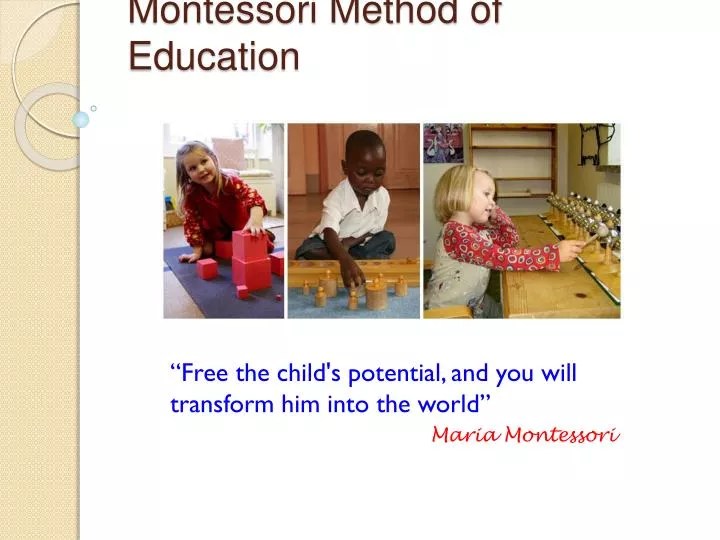
One such educator is Dr. Maria Montessori, an Italian physician and educator who developed the Montessori method of education in the early 20th century. Driven by her belief that children learn best through hands-on experiences, she created an environment where students could explore independently and at their own pace. The Montessori approach emphasizes self-directed learning, individualized instruction, and mixed-age classrooms.
Dr. Montessori’s ideas revolutionized early childhood education by recognizing that each child has unique strengths and interests. Her method encourages teachers to observe and guide rather than instructing directly. This allows students to develop independence, problem-solving skills, and a love for learning from an early age.
Another visionary educator is Sir Ken Robinson, an English author and speaker whose TED Talk on how schools kill creativity became one of the most-watched TED Talks of all time. Sir Ken passionately argues for a shift in educational paradigms that prioritize creativity over conformity.
He believes that our current system stifles creativity by valuing standardized testing and rote memorization over critical thinking and innovation. According to Sir Ken Robinson, nurturing creativity should be at the heart of education as it equips students with essential skills needed for success in today’s rapidly changing world.
Sir Ken’s ideas have inspired countless educators around the globe to rethink their teaching practices and create environments that foster imagination and originality.
Moving away from traditional classroom settings altogether is Sal Khan, founder of Khan Academy – a non-profit organization providing free online educational resources covering various subjects from math to science, history, and more. Khan’s vision is to provide a world-class education for anyone, anywhere.
Khan Academy offers a personalized learning experience through video lessons and interactive exercises. Students can learn at their own pace, reinforcing concepts until they truly understand them. Teachers also benefit from the platform by being able to track student progress and identify areas where additional support may be needed.
Sal Khan’s dedication to democratizing education has made quality learning accessible to millions of students worldwide who otherwise would not have had such opportunities.
Another educator making waves in alternative schooling is Sugata Mitra, an Indian professor known for his experiments with self-organized learning environments (SOLEs). Mitra’s research began with the “Hole in the Wall” experiment, where he installed computers in impoverished communities without any prior exposure to technology.
To his surprise, children quickly taught themselves how to use computers and even mastered complex topics like DNA replication. This led him to develop the concept of SOLEs – spaces where children can explore big questions collaboratively using internet resources.
Mitra’s work challenges traditional notions of education by emphasizing that students are capable of teaching themselves when given access to information and encouraged to ask questions. His experiments have shown that children possess an innate curiosity and desire for knowledge that can flourish under the right conditions.
Lastly, we cannot overlook Paulo Freire – a Brazilian educator whose ideas on critical pedagogy continue to shape educational discussions today. Freire believed that education should be liberating rather than oppressive – a tool for social transformation.
His most famous work, “Pedagogy of the Oppressed,” highlights how traditional education perpetuates social inequalities by treating students as passive recipients of knowledge rather than active participants in their own learning process. Freire advocated for dialogue-based teaching methods that empower learners by involving them in decision-making processes and encouraging critical thinking about social issues.
Freire’s philosophy has inspired educators around the world who strive to create inclusive and democratic learning environments that challenge power imbalances and foster social justice.
These educators represent just a fraction of the many inspiring individuals working towards alternative schooling and education. Their innovative approaches have sparked conversations, influenced policy changes, and transformed countless lives.
As we continue to reimagine education for the future, it is crucial to learn from these pioneers who remind us that there are multiple paths to knowledge and success. By embracing alternative approaches, we can create a more diverse, inclusive, and effective educational system that celebrates the unique talents and abilities of every child.
 Alternative Amie
Leave a comment