Montessori education is known for its unique approach to teaching, and one area where it truly excels is geography. Montessori geography lessons go beyond just learning about countries and capitals; they provide children with a deep understanding of the world around them, fostering a sense of connection and curiosity.
One of the fundamental principles of Montessori geography is the concept of “big to small.” Children start by exploring the Earth as a whole, gradually zooming in on continents, then countries, regions, and finally their own local environment. This approach allows children to develop a comprehensive understanding of how everything fits together.
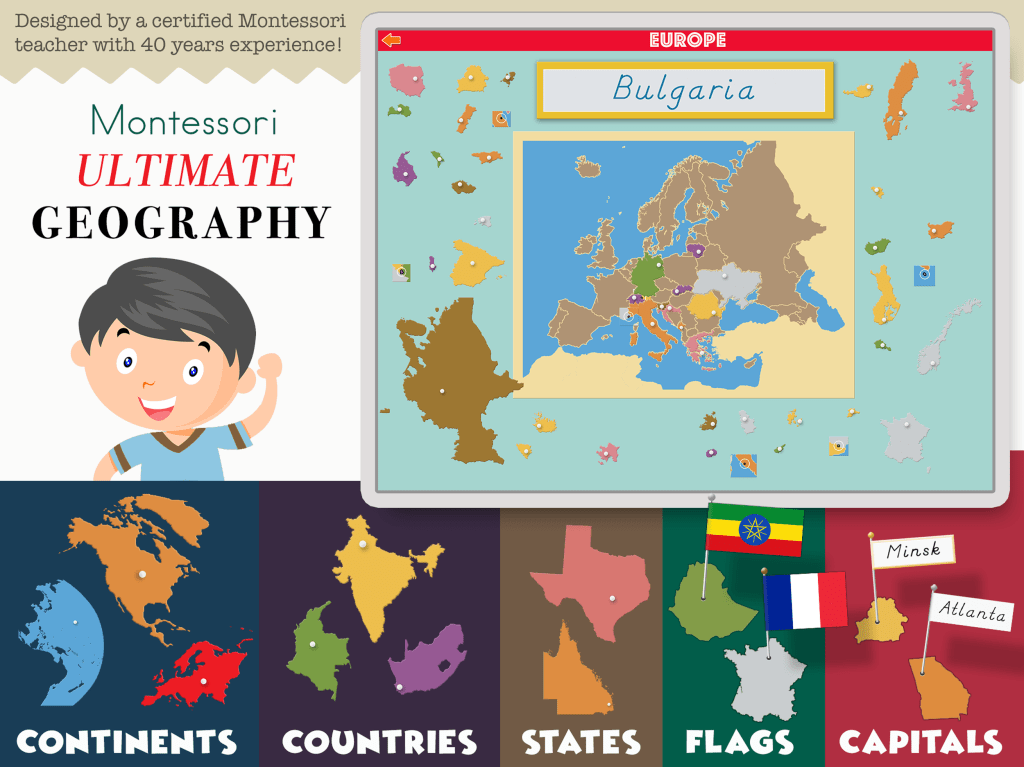
To introduce young learners to geography, Montessori classrooms often include hands-on materials such as puzzle maps. These maps are designed with precision and detail that captivates children’s attention. By manipulating these puzzles, students not only learn about shapes and boundaries but also develop fine motor skills and hand-eye coordination.
Another essential aspect of Montessori geography is making abstract concepts tangible through concrete experiences. For instance, children may engage in sensory activities like pouring water into different-sized containers to understand landforms like lakes or oceans. They might even create three-dimensional models using clay or playdough to represent mountain ranges or volcanoes.
Montessori educators also emphasize cultural awareness within their geography lessons. By introducing students to various traditions, languages, music styles, and art forms from around the world, they promote tolerance and respect for diverse cultures. This helps broaden children’s perspectives while nurturing an appreciation for global interconnectedness.
Field trips are another integral part of Montessori geography instruction. Students may visit local landmarks or natural sites to observe geographical features firsthand. Whether it’s hiking through a nearby forest or taking a trip to an oceanic reserve, these outings allow students to make real-world connections between what they have learned in the classroom and what they experience outside it.
In addition to hands-on activities and field trips, storytelling plays a vital role in Montessori geography lessons. Educators often use captivating books, pictures, and videos to engage children’s imaginations and spark their curiosity about different places and cultures. These stories help students develop empathy and an understanding of the interconnectedness of our global community.
The beauty of Montessori geography lessons lies in their ability to foster independent learning. Students are encouraged to follow their own interests within the framework provided by the curriculum. They have freedom to choose topics they want to explore further or dive deeper into areas that capture their curiosity, allowing for personalized learning experiences.
Montessori geography education doesn’t stop at primary school; it continues through elementary and even beyond. As children grow older, they delve into more complex concepts like climate change, population dynamics, and environmental sustainability. This holistic approach ensures that students not only gain knowledge but also become responsible global citizens who care about preserving our planet for future generations.
In conclusion, Montessori geography lessons offer a comprehensive and engaging way for children to learn about the world around them. By starting with concrete experiences before moving onto abstract concepts, incorporating cultural awareness, utilizing hands-on materials and field trips, telling stories, promoting independent learning, and addressing pressing global issues at an age-appropriate level – Montessori educators provide students with a solid foundation for understanding both the physical aspects of our planet as well as its diverse human cultures.
 Alternative Amie
Leave a comment