Montessori Education: A Holistic Approach to Learning and Development
Introduction:
Education is a fundamental aspect of human development, shaping individuals’ minds and preparing them for the challenges of life. Traditional education models have long dominated the landscape, but in recent years, alternative approaches have gained popularity. One such approach is Montessori education, which emphasizes hands-on learning, individualized instruction, and holistic development. In this article, we will delve into the principles and benefits of Montessori education while exploring how it differs from traditional schooling.
1. The Origins of Montessori Education:
The Montessori method was developed by Dr. Maria Montessori in the early 20th century. As an Italian physician and educator, she observed that children possess an innate desire to learn through exploration and discovery rather than passive absorption of information. This led her to design a child-centered educational approach grounded in scientific observation and experimentation.
2. Key Principles of Montessori Education:
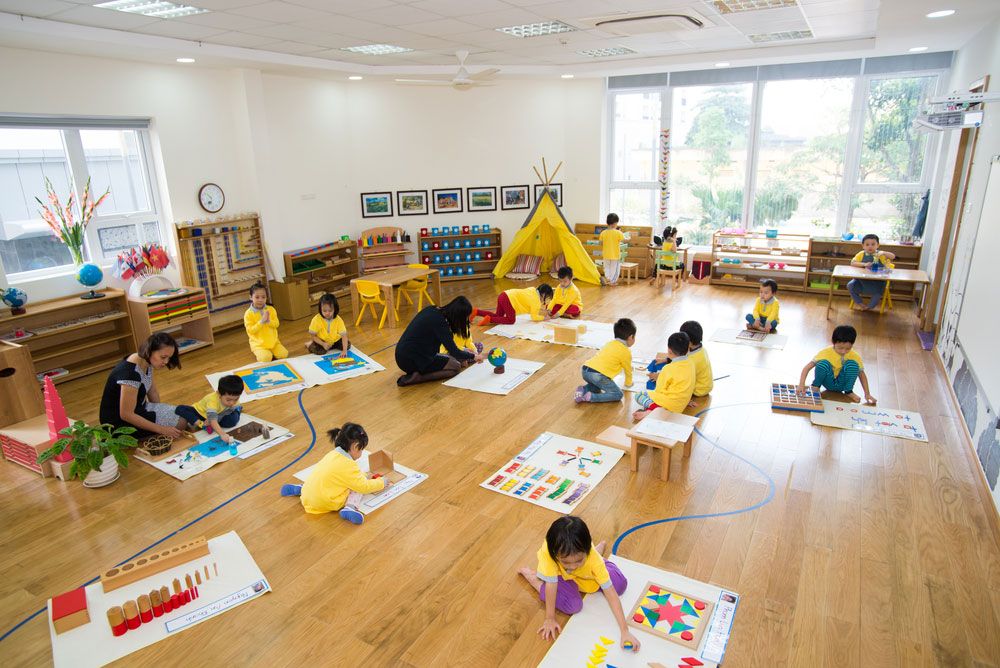
a) Prepared Environment: In a Montessori classroom, carefully designed materials are made accessible to students at their own pace. These materials encourage independent exploration and foster self-discipline.
b) Individualized Instruction: Unlike traditional classrooms where all students follow a standardized curriculum, Montessori education recognizes each child’s unique abilities and interests. Teachers guide students individually or in small groups based on their developmental needs.
c) Freedom within Limits: While freedom is encouraged in a Montessori environment, it is not without boundaries. Students are given choices within structured guidelines that promote responsibility and respect for others.
d) Hands-On Learning: Manipulative materials form the core of Montessori classrooms as they facilitate experiential learning experiences that engage multiple senses simultaneously.
e) Mixed-Age Grouping: Instead of segregating students based on age or grade level, mixed-age classrooms allow children to interact with peers at different stages of development – fostering collaboration, empathy, leadership, and mentorship skills.
f) Uninterrupted Work Periods: Montessori classrooms provide extended periods of uninterrupted work time, allowing students to concentrate deeply on tasks without external distractions.
3. The Role of the Montessori Teacher:
In a traditional classroom, teachers often act as authoritative figures who impart knowledge to their students. In contrast, Montessori teachers take on the role of facilitators or guides. They observe each child’s progress, offer gentle guidance when necessary, and create an environment that promotes self-directed learning. These educators foster independence rather than dependency while nurturing a love for learning in their students.
4. Curriculum and Learning Process:
Montessori education covers all essential academic subjects but approaches them in a unique way:
a) Language Development: Through phonetic-based materials like sandpaper letters and movable alphabets, children develop reading skills at their own pace before progressing to more complex language activities.
b) Mathematics: Manipulatives such as number rods, golden beads, and spindle boxes help children understand abstract mathematical concepts by exploring concrete representations.
c) Practical Life Skills: Activities like pouring water, buttoning shirts, or tying shoelaces develop fine motor skills and encourage independence while instilling real-life practicality.
d) Sensorial Exploration: Montessori classrooms offer various sensorial materials that enable children to refine their senses through activities like matching colors or grading objects by size and shape.
e) Cultural Studies: Geography, history, science experiments are integrated into the curriculum to broaden children’s understanding of the world around them.
5. Benefits of Montessori Education:
a) Whole Child Development: Montessori education nurtures cognitive development alongside social-emotional growth by focusing on critical thinking skills,
problem-solving abilities,
and character traits such as empathy,
respect,
and responsibility.
b) Self-Directed Learning: By providing freedom within limits,
Montessori education empowers children to become active participants in their own education,
developing a sense of ownership and intrinsic motivation.
c) Individualized Instruction: Montessori classrooms allow students to progress at their own pace,
ensuring that they are neither held back by others nor left behind.
d) Respect for Diversity: With mixed-age classrooms and emphasis on collaboration,
Montessori education fosters a deep understanding and appreciation of diverse perspectives – an essential skill for success in the modern world.
e) Creativity and Problem-Solving Skills: The emphasis on hands-on learning and independent thinking cultivates creativity, innovation, and effective problem-solving skills.
Conclusion:
Montessori education offers a refreshing alternative to traditional schooling. By prioritizing individualized instruction, hands-on learning experiences, holistic development, and nurturing independence, this approach empowers children to become self-motivated learners who can thrive academically while developing critical life skills. Whether you are a parent seeking an educational experience that aligns with your child’s natural curiosity or an educator looking for innovative teaching methods, Montessori education holds immense potential to transform the way we educate future generations.
 Alternative Amie
Leave a comment