Rubrics in Grading: A Comprehensive Approach to Assessing Student Learning
In the traditional education system, grading has predominantly been based on subjective judgments made by teachers. However, the implementation of rubrics has emerged as an effective alternative that provides a more transparent and objective approach to assessing student learning. Rubrics offer a structured framework for evaluating assignments and can be tailored to specific learning objectives, enabling educators to provide meaningful feedback and promote student growth. By providing clear expectations and criteria for success, rubrics not only enhance student understanding but also foster self-assessment and reflection.
One of the key advantages of using rubrics in grading is their ability to clearly outline expectations. When students receive an assignment with a detailed rubric, they gain a deeper understanding of what is required to achieve success. The criteria within the rubric may include various aspects such as content knowledge, critical thinking skills, organization, creativity, and communication abilities. By breaking down these components into specific indicators or descriptors (e.g., excellent, good, fair), students can gauge their own progress throughout the assignment process.
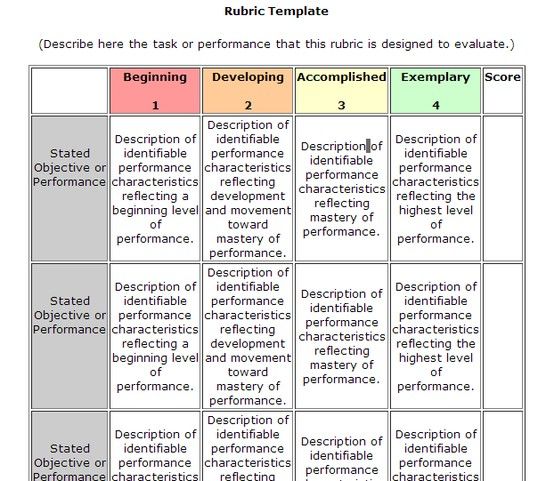
Moreover, rubrics encourage consistency among different graders by establishing uniform standards for assessment. This helps mitigate any potential bias or subjectivity that may arise when multiple educators are involved in evaluating student work. With well-defined criteria laid out in a rubric’s scoring guide or matrix format, teachers can provide fair evaluations across all submissions while ensuring that every aspect of the assignment is accounted for during grading.
Additionally, incorporating rubrics fosters active participation from students themselves through self-assessment opportunities. As learners engage with the provided guidelines before submitting their work, they have an opportunity to reflect on their strengths and areas needing improvement beforehand. Students become active participants in their own evaluation process by comparing their work against each criterion outlined in the rubric – thus promoting metacognition and encouraging them to take ownership over their learning journey.
Furthermore, utilizing rubrics promotes consistent feedback from teachers. By referring to the rubric while grading, educators can provide specific and constructive feedback aligned with each criterion. This helps students understand which areas they excelled in and where they need to focus their efforts for future assignments. Consequently, students are more likely to make progress as they receive targeted guidance based on the rubric’s indicators.
Lastly, incorporating rubrics in grading supports a growth mindset among students. Rather than viewing grades as final judgments of their abilities, learners perceive them as opportunities for improvement and development. The detailed breakdown provided by a rubric enables students to identify areas of weakness and develop strategies for enhancing their skills through revision or seeking additional support.
In conclusion, the use of rubrics in grading offers numerous benefits within the educational landscape. They promote transparency by outlining clear expectations for student work, enhance consistency among graders, encourage self-assessment and reflection, facilitate targeted feedback from teachers, and foster a growth mindset among learners. As alternative schooling and education models continue to gain traction, embracing this comprehensive approach to assessment is crucial in nurturing holistic student development and ensuring fair evaluation practices across diverse learning environments.
 Alternative Amie
Leave a comment