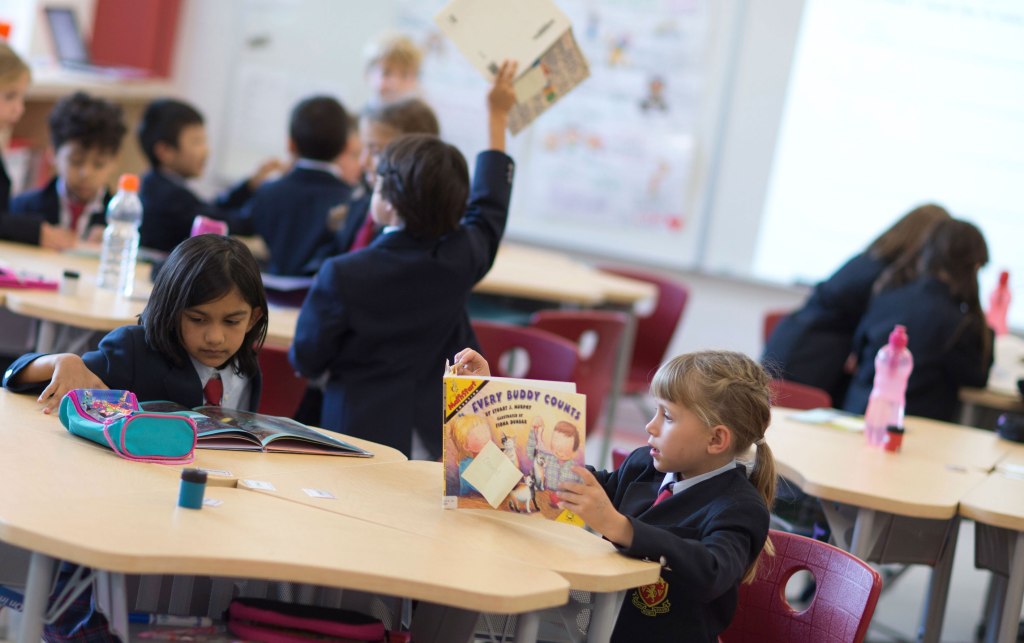
Active Learning: Empowering Students to Take Ownership of their Education
Education is undergoing a transformation, and traditional teaching methods are being challenged. The one-size-fits-all approach that has dominated classrooms for decades is gradually being replaced by more student-centered approaches. Active learning is at the forefront of this revolution, empowering students to become active participants in their education.
Active learning is an educational philosophy that encourages students to take control of their own learning process through hands-on activities, discussions, and problem-solving exercises. Instead of passively receiving information from teachers, students are actively engaged in the learning experience. This approach fosters critical thinking skills, enhances creativity and collaboration, and promotes a deeper understanding of concepts.
One key aspect of active learning is its emphasis on student engagement. Rather than sitting quietly at desks while a teacher lectures at the front of the classroom, students are encouraged to interact with each other and with the material being taught. This can involve group work, debates, experiments, or even field trips.
By actively participating in their education, students develop important skills such as communication and teamwork. They learn how to express their ideas effectively and respectfully debate opposing viewpoints. These skills are vital not only in academic settings but also in real-world scenarios where collaboration and effective communication are essential.
Furthermore, active learning provides opportunities for personalized instruction tailored to individual student needs. In traditional classrooms where all students follow the same curriculum at the same pace without room for flexibility or adaptation based on varying abilities or interests; active learning allows educators to cater lessons according to each student’s strengths and weaknesses.
This customization ensures that every student receives an appropriate level of challenge while avoiding boredom or frustration caused by material that may be too easy or too difficult for them. It also enables educators to tap into each student’s unique talents and interests—nurturing potential passions early on can have a profound impact on future career choices.
Another valuable aspect of active learning is its focus on real-world application. Instead of learning in isolation, students are encouraged to apply their knowledge and skills to practical situations. This approach bridges the gap between theory and practice, preparing students for life beyond the classroom.
For example, rather than simply memorizing formulas in math class, students might be tasked with solving real-world problems that require mathematical reasoning. In science classes, they may conduct experiments or design projects that mirror professional scientific investigations. By engaging in these types of activities, students gain a deeper understanding of how their education is relevant to their lives and future careers.
Active learning also cultivates curiosity and a lifelong love of learning. When students are actively involved in their education, they develop a natural inclination to explore new ideas and seek answers independently. They become self-directed learners who are motivated by their own intrinsic interests rather than relying solely on external rewards or pressures.
Moreover, active learning helps foster a growth mindset among students—a belief that intelligence can be developed through effort and perseverance rather than being fixed at birth. This mindset encourages learners to embrace challenges as opportunities for growth rather than avoiding them out of fear of failure.
Implementing active learning practices requires dedicated educators who are willing to step away from traditional teaching methods and experiment with new approaches. It also requires schools that provide the necessary resources and support to facilitate this shift towards student-centered education.
In conclusion, active learning is revolutionizing the way we educate our children by shifting the focus from passive absorption of information to active engagement with concepts and ideas. By empowering students to take ownership of their education through hands-on activities, discussions, problem-solving exercises, personalized instruction, real-world application, curiosity cultivation, and fostering a growth mindset; active learning prepares them not only academically but also emotionally for success in an ever-evolving world. As we continue on this path towards student-centered education models like active learning will play an increasingly crucial role in shaping tomorrow’s leaders by transforming them into critical thinkers who embrace challenges, collaborate effectively, and have a lifelong love of learning.
 Alternative Amie
Leave a comment