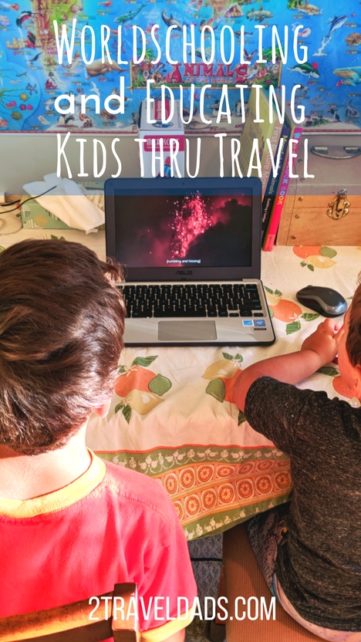
Worldschooling: Exploring the Benefits of Alternative Education
Education is a fundamental aspect of human development, and traditional schooling has long been considered the norm. However, in recent years, there has been a growing interest in alternative educational approaches that deviate from conventional methods. One such approach gaining popularity is worldschooling – an innovative form of education that combines travel and learning.
Worldschooling can be loosely defined as using the world as a classroom. It involves immersing oneself in different cultures, exploring various landscapes, and engaging with diverse communities to foster holistic learning experiences. Rather than confining education to the four walls of a classroom, this unconventional method encourages students to venture beyond boundaries and acquire knowledge through real-life experiences.
The benefits of worldschooling are multifaceted and extend far beyond traditional academic achievements. In this article, we will explore some key advantages associated with this approach:
1. Cultural Immersion:
One of the most significant benefits of worldschooling is cultural immersion. By exposing children to different languages, customs, traditions, and belief systems from an early age, they develop a deep understanding and appreciation for diversity. This firsthand experience fosters empathy, compassion, open-mindedness, and tolerance – qualities that are crucial in today’s interconnected global society.
2. Real-Life Learning:
In contrast to rote memorization or theoretical knowledge often emphasized in traditional classrooms, worldschooling enables students to learn through direct interactions with their surroundings. Whether it’s studying ancient ruins or observing wildlife in its natural habitat, these experiential learning opportunities create lasting memories while enabling practical application of acquired knowledge.
3. Flexibility:
Another advantage offered by worldschooling is flexibility in curriculum design and scheduling. Unlike conventional schools that adhere strictly to predefined curricula and fixed timetables; parents who opt for worldschooling have greater control over what their children learn and when they learn it. This flexibility allows tailoring education to suit a child’s individual interests, strengths, and learning style.
4. Personal Growth:
Worldschooling encourages personal growth in numerous ways. By stepping outside their comfort zones and encountering unfamiliar situations, children develop resilience, adaptability, problem-solving skills, and self-confidence. They learn to navigate new environments independently, communicate effectively with people from diverse backgrounds, and become more self-reliant – essential life skills that cannot be replicated within the confines of a traditional classroom.
5. Global Citizenship:
In an increasingly interconnected world where global issues demand collective action, cultivating responsible global citizens is vital. Worldschooling actively promotes this by nurturing a sense of global awareness and encouraging students to critically analyze social, economic, environmental issues affecting different regions around the globe. Rather than viewing themselves as passive recipients of knowledge or isolated individuals within their communities; worldschoolers are encouraged to engage actively in local initiatives and contribute positively towards sustainable development.
6. Enhanced Social Skills:
Traditional schooling often limits social interactions to peers within one’s age group or immediate community. Conversely, worldschooling exposes children to a wide range of people across various age groups and cultural backgrounds on a regular basis. This exposure fosters exceptional social skills such as empathy, adaptability, communication proficiency across language barriers, effective teamwork abilities – all valuable attributes for success in today’s globally connected society.
7. Self-Directed Learning:
Worldschooling prioritizes self-directed learning over rote memorization or passive consumption of information. Students are encouraged to pursue their passions and take ownership of their education by setting goals and seeking out relevant resources independently. This autonomy not only enhances motivation but also instills lifelong learning habits that extend beyond formal education.
8. Experiential Entrepreneurship:
Worldschooling provides unique opportunities for students to develop entrepreneurial skills through real-life experiences like running small businesses abroad or engaging in community projects that support local economies while fostering creativity and resourcefulness.
9. Broadened Perspectives:
By experiencing diverse cultures, worldschoolers develop broader perspectives and a more nuanced understanding of the world. This exposure challenges preconceived notions, biases, and stereotypes; promoting a more inclusive worldview that values diversity and fosters intercultural dialogue.
10. Family Bonding:
Worldschooling often involves parents or guardians taking an active role in their child’s education. This shared experience creates strong family bonds as it allows for quality time spent together exploring new places, sharing unique experiences, and supporting each other’s growth.
In conclusion, worldschooling offers numerous benefits that extend well beyond traditional education methods. By combining travel with learning, students are exposed to a wealth of experiences that foster personal growth, cultural immersion, global awareness, enhanced social skills, and self-directed learning habits. As alternative educational approaches gain recognition worldwide; worldschooling stands out as an innovative method that prepares children for the complexities of our interconnected global society while nurturing their innate curiosity and love for learning.
 Alternative Amie
Leave a comment