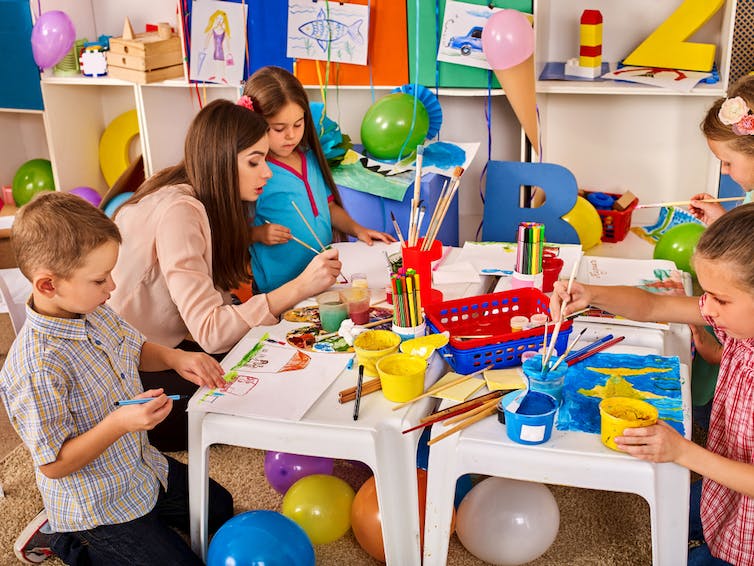
Play-based learning is a method of education that centers around the natural inclination of children to learn through play and exploration. It emphasizes hands-on experiences, creativity, problem-solving, social interaction, and critical thinking skills. This approach recognizes that children have different learning styles and abilities and allows them to develop at their own pace in a supportive and engaging environment.
In traditional schooling systems, education often follows a structured curriculum with predetermined objectives and assessments. However, play-based learning takes a different approach by integrating academic content into playful activities that are tailored to each child’s interests and needs. Rather than being confined to a classroom setting or prescribed textbooks, children are encouraged to explore various topics through interactive games, projects, role-playing scenarios, experiments, art activities, music sessions – the possibilities are endless.
One of the key benefits of play-based learning is its ability to foster intrinsic motivation in children. When they are engaged in enjoyable activities that align with their interests and curiosity levels, they become active participants in their own learning journey. They acquire knowledge without even realizing it because they are fully immersed in the experience.
Through play-based learning experiences such as building blocks or puzzles for younger children or more complex problem-solving activities for older students like escape room-style challenges or scientific investigations – children develop crucial cognitive skills such as reasoning abilities, logical thinking processes, spatial awareness skills necessary for mathematics or engineering fields later on.
Furthermore, play-based learning promotes social development by encouraging collaboration among peers. Children learn how to communicate effectively with others while negotiating roles during pretend-play scenarios or working together on group projects. These interactions teach them important life skills such as empathy towards others’ perspectives and cooperation strategies which will prove valuable throughout their lives.
Another aspect worth mentioning is the emotional growth nurtured by this educational philosophy. Play provides an outlet for self-expression where emotions can be explored freely within safe boundaries set by teachers who encourage open communication channels between themselves (as facilitators) and students alike.
Imagine a classroom filled with laughter, excitement, and engaged students. This is the atmosphere that play-based learning creates. By integrating fun into education, children become more motivated to learn and participate actively in their own development. Play-based learning also helps reduce stress and anxiety often associated with traditional teaching methods where students may feel pressured to meet certain standards or expectations.
In addition to its cognitive, social, and emotional benefits, play-based learning promotes physical development as well. Whether it’s engaging in outdoor activities like sports or gardening or indoor movement games like dancing or yoga – children are encouraged to be physically active while learning new concepts. These experiences not only contribute to healthier lifestyles but also reinforce the mind-body connection for better overall well-being.
Play-based learning can take place in various educational settings such as preschools, kindergartens, primary schools, or even homeschooling environments. It provides flexibility for educators to adapt teaching methods based on individual student needs rather than adhering rigidly to a one-size-fits-all approach. Teachers act as facilitators who observe and guide children through their play experiences while providing appropriate resources and support when needed.
Implementing play-based learning requires a supportive school administration that values creativity and innovation in education. It may require additional training for teachers who might need guidance on how best to incorporate play into their curriculum effectively. However, once implemented successfully, this approach can create a vibrant learning environment where children are excited about coming to school each day.
Critics of play-based learning argue that it lacks structure and discipline necessary for academic success later in life; however research has shown quite the opposite – children who engage in meaningful hands-on activities tend to acquire knowledge faster and retain information longer because they develop a deeper understanding of concepts by experiencing them firsthand instead of passively listening or memorizing facts from textbooks alone.
Furthermore, play-based learning does not mean an absence of formal assessments altogether; rather it encourages ongoing evaluation through observation, documentation, and reflection. Teachers can assess children’s progress by observing their interactions during play activities, analyzing their problem-solving approaches, or reviewing their artwork or written reflections on various topics covered in class.
In conclusion, play-based learning offers a holistic approach to education that recognizes the unique needs and abilities of each child. By integrating playfulness into the learning process, it creates an engaging and enjoyable environment where students can develop essential cognitive skills while fostering social and emotional growth. This educational philosophy not only prepares children for academic success but also equips them with lifelong skills such as creativity, critical thinking, collaboration, and resilience – qualities that are vital in our rapidly changing world.
 Alternative Amie
Leave a comment