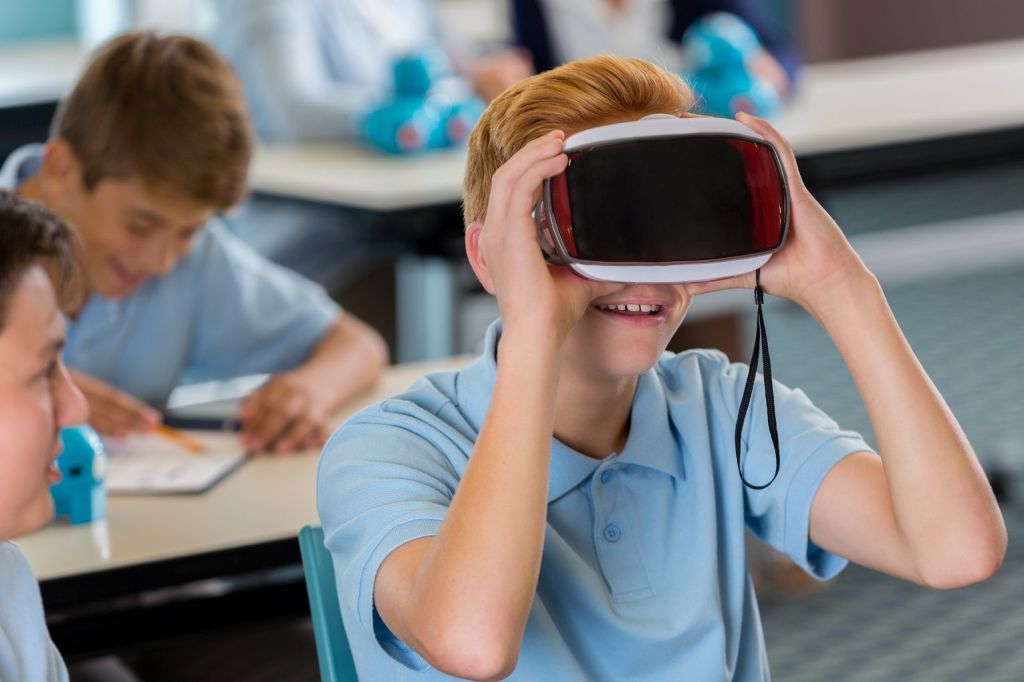
Virtual Reality in Education: Learning with a Twist
Education has come a long way from the days of dusty textbooks and chalkboards. With the advent of technology, learning has become more interactive and engaging than ever before. And now, virtual reality (VR) is taking education to a whole new level.
Imagine stepping into a classroom where you can travel back in time to witness historical events firsthand or explore distant planets without leaving your seat. That’s exactly what virtual reality brings to the table – an immersive experience that makes learning not only informative but also entertaining.
One of the main advantages of VR in education is its ability to transport students beyond the confines of traditional classrooms. It allows them to explore places they could only dream of visiting, giving them a deeper understanding and appreciation for various subjects. For example, history lessons can be transformed as students find themselves walking through ancient ruins or even sitting alongside Abraham Lincoln during his Gettysburg Address.
Not only does VR enhance visual learning, but it also stimulates kinesthetic learning by allowing students to interact with their surroundings. They can manipulate objects, conduct experiments, and solve problems within a simulated environment. This hands-on approach fosters critical thinking skills and encourages active participation among learners.
Moreover, VR provides personalized learning experiences tailored to individual needs and preferences. Students can learn at their own pace while receiving real-time feedback on their performance. This adaptive nature of VR ensures that each student gets the support they need for better comprehension and retention.
But let’s not forget about the fun factor! Virtual reality adds an element of excitement to education that keeps students engaged throughout their learning journey. By turning mundane topics into captivating adventures, it ignites curiosity and inspires lifelong learners who are eager to explore new frontiers.
Of course, like any technology, there are challenges associated with implementing VR in education – cost being one major concern. The initial investment required for equipment such as headsets and software can be significant for schools with limited budgets. Additionally, ensuring that teachers are trained to effectively integrate VR into the curriculum is crucial for its successful implementation.
Despite these challenges, virtual reality has the potential to revolutionize education as we know it. By combining immersive experiences with educational content, it creates a dynamic learning environment that breaks down barriers and sparks curiosity in students of all ages.
So, whether you’re a history buff wanting to experience ancient civilizations or a science enthusiast eager to explore outer space, virtual reality in education is here to make your learning journey more exciting than ever before. Strap on those headsets and get ready for an educational adventure like no other!
 Alternative Amie
Leave a comment