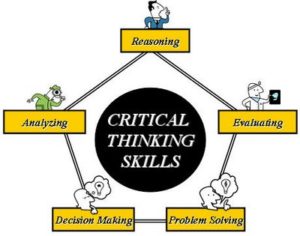
Assessing Critical Thinking Skills in Alternative Education Settings
In alternative education settings, where the focus is often on creative and critical thinking skills rather than traditional academic metrics, it becomes crucial to have effective methods of assessing students’ critical thinking abilities. These assessments not only provide valuable feedback to educators but also help students understand their own strengths and areas for improvement. In this article, we will explore some strategies and techniques that can be used to assess critical thinking skills in alternative education settings.
1. Project-Based Assessments: One of the most effective ways to assess critical thinking skills is through project-based assessments. These assessments require students to apply their knowledge and analytical skills to real-world scenarios or problems. For example, a history class might ask students to research and present an argument for or against a particular historical event or decision. The assessment would not only evaluate their understanding of the subject matter but also their ability to think critically and support their arguments with evidence.
2. Socratic Seminars: Socratic seminars are another valuable tool for assessing critical thinking skills in alternative education settings. This method involves structured discussions where students engage in thoughtful dialogue around a specific topic or text. Educators can observe these discussions and evaluate how well students analyze information, pose thought-provoking questions, consider multiple perspectives, and construct logical arguments.
3. Written Reflections: Written reflections provide an opportunity for students to articulate their thoughts and demonstrate their understanding of complex concepts. Teachers can assign reflective writing tasks that require students to synthesize information from various sources, analyze different viewpoints, and make connections between ideas. By reviewing these reflections, educators can gauge the depth of student understanding while also evaluating their ability to think critically about the subject matter.
4. Problem-Solving Tasks: Problem-solving tasks are excellent indicators of critical thinking abilities as they require students to approach challenges strategically while considering multiple variables or perspectives. These tasks could involve real-life scenarios relevant to the subject being studied within the alternative education setting. For example, in a science class, students might be tasked with designing an experiment to test a hypothesis or finding innovative solutions to environmental issues. By observing their problem-solving process and analyzing their final solutions, educators can assess critical thinking skills.
5. Portfolios: Portfolios are comprehensive collections of student work that showcase their growth and learning over time. In alternative education settings, portfolios can be used as holistic assessments of critical thinking skills. Students can include samples of projects, essays, reflections, and other evidence that demonstrate their ability to think critically across various subjects and contexts. This allows educators to see the progression of critical thinking abilities throughout the academic year.
It is important for educators in alternative education settings to remember that assessing critical thinking skills should not rely solely on traditional methods such as exams or quizzes but should incorporate more authentic forms of assessment that align with the goals of alternative education. By implementing project-based assessments, Socratic seminars, written reflections, problem-solving tasks, and portfolios into their evaluation strategies, educators can gain a deeper understanding of students’ critical thinking abilities while fostering a supportive environment for intellectual growth and exploration.
 Alternative Amie
Leave a comment