Reggio Emilia Approach: Nurturing Creativity and Collaboration in Primary Education
When it comes to primary education, the Reggio Emilia approach stands out as a unique and inspiring philosophy. Developed in the small town of Reggio Emilia in Italy after World War II, this educational approach has gained recognition worldwide for its emphasis on creativity, collaboration, and child-led learning.
At the heart of the Reggio Emilia approach is the belief that children are capable and competent learners from birth. This view challenges traditional notions of education where teachers are seen as knowledge providers and students as passive recipients. Instead, educators following this approach see themselves as facilitators who guide children’s learning through exploration and discovery.
One key aspect of the Reggio Emilia approach is the use of an emergent curriculum. Rather than following a fixed syllabus or predetermined lesson plans, teachers draw inspiration from children’s interests and ideas to create meaningful learning experiences. Through careful observation and documentation, educators identify topics that capture their students’ curiosity and then design projects around those themes.
Projects in a Reggio Emilia classroom can last weeks or even months, allowing for an in-depth exploration of concepts while encouraging interdisciplinary connections. For example, if children show interest in plants during a nature walk, they may engage in activities such as planting seeds, observing growth over time, researching different plant species, or creating artwork inspired by flora.
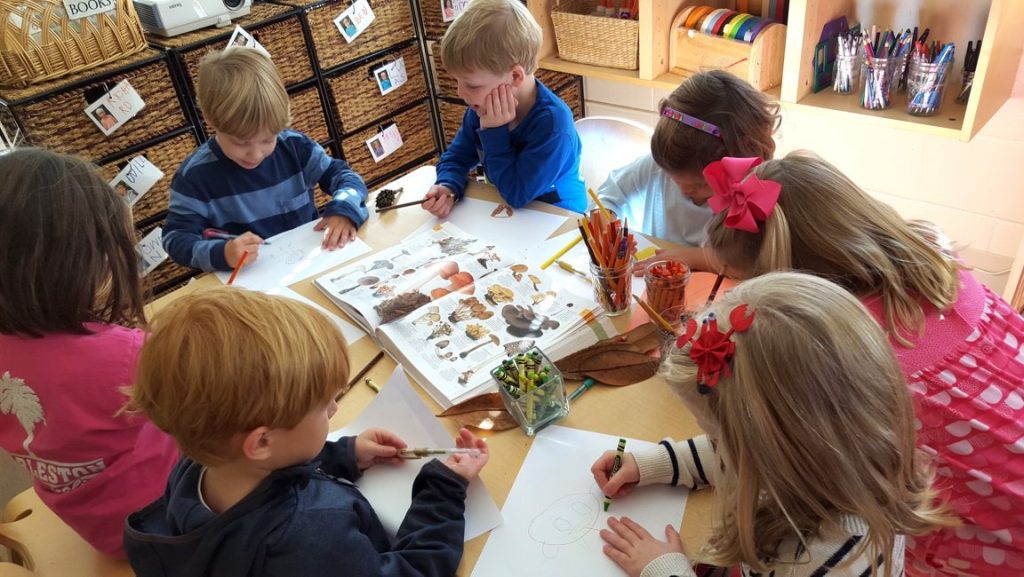
Central to this pedagogical method is the belief that learning should be experienced holistically. Artistic expression plays a significant role within a Reggio-inspired classroom environment. Children are encouraged to express themselves using various art mediums such as painting, drawing, sculpting with clay or recycled materials – all considered essential languages for communication.
Collaboration also lies at the core of the Reggio Emilia approach; classrooms are designed to promote social interaction among students. Open spaces with flexible furniture arrangements encourage dialogue between peers while fostering a sense of community. Group work and projects provide opportunities for children to develop problem-solving skills, negotiate ideas, and learn from one another.
Another unique aspect of the Reggio Emilia approach is the strong emphasis placed on documentation. Teachers carefully observe and record children’s progress by taking photographs, writing observations, or collecting samples of their work. This documentation serves multiple purposes: it helps educators reflect on their teaching practices, enables parents to see the growth and development of their child, and allows students to revisit their own learning journeys.
In conclusion, the Reggio Emilia approach offers a refreshing perspective on primary education that values children as active participants in their own learning process. By promoting creativity, collaboration, and child-led exploration through an emergent curriculum, this educational philosophy nurtures well-rounded individuals who are not only knowledgeable but also curious, confident, and compassionate learners.
 Alternative Amie
Leave a comment