As the world becomes more technologically advanced, it is no surprise that education has also evolved to adapt to these changes. One of the most significant developments in recent times is the rise of Massive Open Online Courses (MOOCs). MOOCs have revolutionized education by offering online courses from prestigious universities and institutions across the globe. In this article, we will explore what MOOCs are, their benefits and drawbacks, and how they are shaping alternative schooling and education.
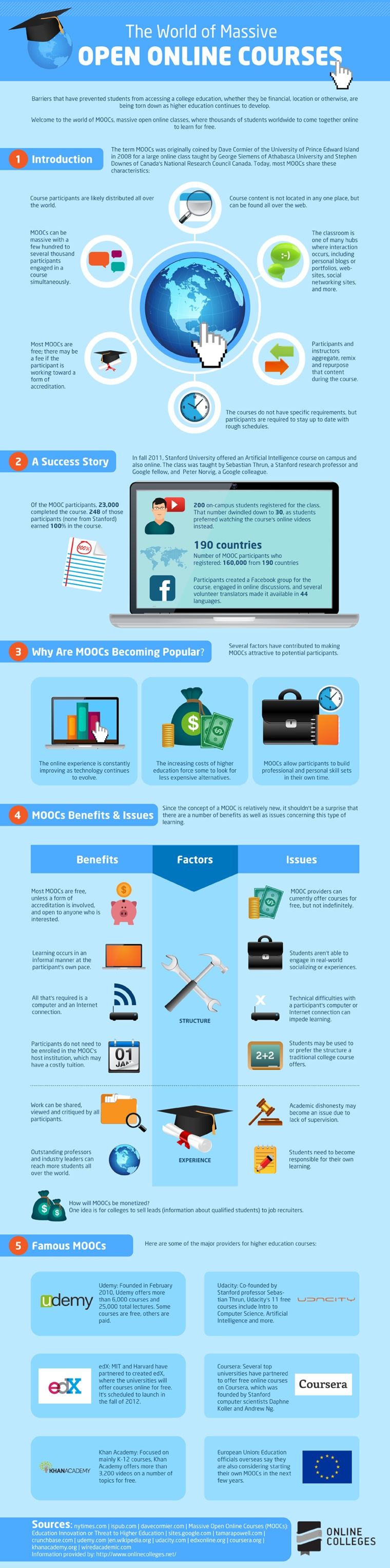
To understand MOOCs better, let’s start with a definition. A MOOC is an online course designed for unlimited participation and open access via the internet. These courses provide educational materials such as lectures, readings, quizzes, and assignments through various multimedia formats like videos, interactive forums, and virtual classrooms. Unlike traditional classroom settings, MOOCs offer flexibility in terms of time management as students can access course materials at their convenience.
One major advantage of MOOCs is their accessibility. With just an internet connection and a computer or smartphone, anyone can enroll in a course regardless of their geographical location or socioeconomic background. This democratization of education has opened doors for many individuals who may not have had access to quality education otherwise.
MOOCs also offer a wide range of subjects to choose from. Whether you’re interested in computer science or philosophy or even niche topics like underwater archaeology or birdwatching – there’s likely a MOOC available on that subject! This vast selection allows individuals to pursue their passions or explore new areas of interest without any financial burden.
Furthermore, MOOCs often feature renowned professors from top-tier universities who deliver high-quality content. Learners can benefit from these expert insights without having to pay exorbitant tuition fees associated with attending prestigious institutions physically. The ability to learn directly from experts in the field contributes significantly to enhancing one’s knowledge base.
Another significant advantage lies in the self-paced nature of most MOOCs. Traditional education often follows a fixed schedule, leaving little room for individual learning speeds. However, MOOCs allow students to progress at their own pace, providing the opportunity to grasp concepts fully before moving on. This flexibility accommodates individuals with different learning styles and ensures a more personalized educational experience.
Moreover, MOOCs encourage interaction and collaboration among learners through discussion forums and virtual classrooms. Students can engage in meaningful discussions, ask questions, and even collaborate on assignments or projects. These interactive elements help create a sense of community within the online classroom environment.
Despite these advantages, there are some drawbacks to consider when it comes to MOOCs. Firstly, while many courses offer certificates upon completion, these credentials may not hold the same weight as degrees obtained from traditional institutions. Employers might still prioritize formal education over online certifications.
Additionally, the lack of face-to-face interaction with professors and peers can be challenging for some students. The absence of immediate feedback or clarification could hinder the learning process for those who thrive in an interactive classroom setting.
Moreover, completing a MOOC requires self-discipline and motivation as there are no attendance requirements or strict deadlines like in traditional academia. Without proper time management skills or personal accountability, students may struggle to complete courses successfully.
Furthermore, despite efforts to make MOOCs accessible globally by offering courses in multiple languages, language barriers can still pose challenges for non-native English speakers or individuals residing in remote areas with limited internet connectivity.
While acknowledging these limitations is crucial when considering alternative schooling options such as MOOCs, it is important not to dismiss their immense value altogether. The convenience they offer coupled with affordability makes them an attractive option for lifelong learners seeking personal enrichment or professional development opportunities.
In conclusion, Massive Open Online Courses (MOOCs) have transformed education by providing accessible and flexible learning opportunities across various disciplines. Their democratization of knowledge has enabled people worldwide to pursue their passions without financial constraints or geographical limitations. Although MOOCs have their drawbacks, they continue to shape alternative schooling and education by offering quality content from prestigious institutions at a fraction of the cost. Whether you’re looking to enhance your skills or explore new subjects, MOOCs are undoubtedly an avenue worth exploring in the ever-evolving landscape of education.
 Alternative Amie
Leave a comment