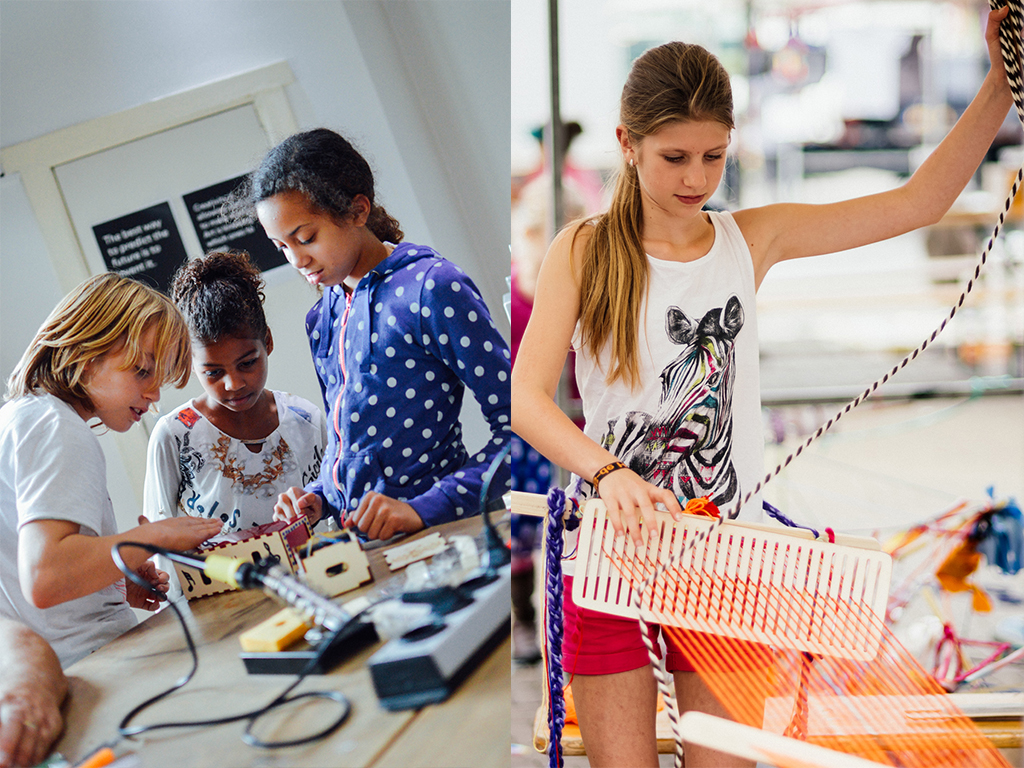
Maker education has gained significant attention in recent years as a way to engage students in hands-on learning experiences that foster creativity, problem-solving skills, and critical thinking. This approach emphasizes the use of tools and technologies to create tangible products, promoting active learning and empowering students to become makers.
One area where maker education can have a profound impact is in Montessori schools. Montessori education already values experiential learning and self-directed exploration, making it an ideal setting for incorporating maker activities. By integrating maker education into the curriculum, Montessori students can further develop their independence, curiosity, and ability to work collaboratively.
Similarly, maker education has shown great potential in supporting students with special needs. The hands-on nature of maker projects allows for differentiated instruction and personalized learning experiences. Students with different abilities can engage with materials at their own pace and adapt projects based on their individual strengths. Maker education also provides opportunities for inclusive collaboration among students with diverse abilities.
Integrating maker education into project-based learning (PBL) approaches is another effective strategy. PBL focuses on real-world problems or challenges that require multidisciplinary solutions. By incorporating makerspaces within PBL frameworks, students not only apply academic knowledge but also gain practical skills through designing prototypes and creating solutions to authentic problems.
Outdoor learning environments provide unique opportunities for engaging students in maker activities while connecting them with nature. Maker projects that involve building structures from natural materials or designing sustainable systems integrate environmental awareness into the educational experience.
Early childhood development can greatly benefit from maker education as well. Young children naturally explore their environment through play and experimenting with materials. Incorporating age-appropriate making activities helps foster creativity, fine motor skills development, spatial reasoning abilities, and early STEM concepts.
Furthermore, using the principles of STEAM (Science, Technology Engineering Arts Mathematics) education alongside maker practices creates a powerful combination for teaching these subjects holistically rather than in isolation. Maker projects inherently involve applying scientific principles, designing and building with technology, and using mathematical concepts to measure and iterate designs.
Promoting sustainable practices through maker education is crucial for instilling environmental consciousness in future generations. By engaging students in designing solutions that address sustainability challenges, such as creating renewable energy systems or repurposing waste materials, they develop a deep understanding of the impact of their actions on the planet.
Incorporating maker education into alternative high schools offers an innovative approach to engage students who may have struggled within traditional educational settings. The hands-on nature of making provides opportunities for personalized learning experiences that foster self-confidence, resilience, and problem-solving skills.
Homeschooling families can also embrace maker education as a valuable addition to their curriculum. Maker activities can be easily integrated into home environments and allow for child-led exploration and creativity. Additionally, makerspaces in community centers or libraries provide opportunities for homeschooling families to connect with other learners and access resources beyond what is available at home.
Waldorf-inspired curricula emphasize holistic development by integrating arts, crafts, music, movement, and practical life skills into the learning experience. Incorporating maker education aligns well with these principles by providing opportunities for creative expression through hands-on projects.
Design thinking processes go hand-in-hand with maker education as both approaches focus on identifying problems or needs and finding innovative solutions. By incorporating design thinking methodologies into maker projects, students learn how to empathize with users’ perspectives, ideate creative solutions, prototype ideas iteratively, gather feedback from peers or mentors before finalizing designs.
Entrepreneurship skills are increasingly important in today’s rapidly changing world. Maker education naturally fosters an entrepreneurial mindset by encouraging students to identify problems worth solving while empowering them to create unique products or services that address those needs.
Cross-cultural learning experiences can be enhanced through maker projects that encourage collaboration among students from different backgrounds. Creating artifacts together allows them to share cultural knowledge while developing empathy towards others’ perspectives.
Promoting critical thinking skills is a fundamental goal of education. Maker projects inherently require students to think critically as they identify problems, consider alternative solutions, make decisions, and iterate designs based on feedback. The process of making encourages experimentation and risk-taking while developing analytical and logical reasoning abilities.
The role of mentors in maker education cannot be overstated. Mentors provide guidance, expertise, and support throughout the making process. They help students navigate challenges, develop new skills, and gain confidence in their abilities.
Incorporating maker spaces into non-traditional educational settings such as libraries or community centers widens access to hands-on learning experiences for learners who may not have access to specialized equipment or resources at home or school.
The impact of maker education on student motivation and engagement is well-documented. By providing opportunities for self-directed exploration and creative expression, maker activities tap into students’ intrinsic motivation, fostering a love for learning that extends beyond the classroom.
Exploring different types of tools and technologies in maker education exposes students to a wide range of possibilities for creating. From traditional hand tools to digital fabrication machines like 3D printers or laser cutters, students can experiment with various mediums that suit their interests while gaining proficiency in using different tools.
Assessment plays a crucial role in any educational setting. In maker-based learning environments, assessment should focus on evaluating the process rather than just the final product. Assessing problem-solving strategies used during iterations or reflections on design choices provides valuable insights into students’ thinking processes.
Promoting diversity and inclusivity in maker spaces is essential for ensuring equitable access to opportunities for all learners. Creating an inclusive environment involves fostering a culture where everyone’s contributions are valued regardless of gender identity, race/ethnicity background socioeconomic status ability level language spoken etc..
Maker education naturally lends itself to environmental awareness by encouraging resourcefulness through repurposing materials reducing waste promoting sustainable practices such as renewable energy systems composting and water conservation.
Using open-source platforms for collaborative making projects enables students to connect with others globally, sharing ideas and collaborating on projects. Open-source resources not only provide access to a wide range of designs and instructions but also foster a culture of sharing knowledge freely.
The benefits of interdisciplinary approaches in maker-based learning are numerous. Integrating different subject areas allows students to make connections between concepts, fostering a deeper understanding of the world around them while promoting creativity through diverse perspectives.
Incorporating storytelling techniques into maker projects adds an additional layer of engagement by allowing students to communicate their ideas and experiences through narratives. Storytelling enhances communication skills while providing opportunities for reflection and self-expression.
The role of failure and iteration is central to the maker mindset. Embracing failure as an opportunity for growth helps students develop resilience, perseverance, and problem-solving skills. Iterative design processes encourage continuous improvement based on feedback, promoting a growth mindset among learners.
Promoting gender equity in the field of making through educational initiatives is crucial for breaking down stereotypes and empowering all individuals to pursue their interests regardless of gender. By providing equal opportunities for both genders in accessing maker education, we can foster an inclusive environment that celebrates diversity within the field.
In conclusion, maker education offers countless possibilities for transforming educational experiences across various settings. Whether it’s incorporating it into Montessori or Waldorf-inspired curricula, supporting students with special needs or homeschooling families, promoting sustainability or entrepreneurship skills development – maker education has proven its potential in engaging learners while fostering creativity problem-solving critical thinking collaboration independence empathy environmental awareness STEAM concepts holistic learning interdisciplinary approaches storytelling resilience inclusivity diversity equity personalization hands-on exploration experimentation risk-taking continuous improvement etc.. With its emphasis on active learning through creating tangible products using tools technologies materials from traditional hand tools digital fabrication machines natural resources repurposed materials open-source platforms etc., makerspaces provide unique spaces where learners can explore their passions develop new skills and become active participants in their own education. The impact of maker education reaches far beyond the classroom, preparing students for a future where creativity innovation adaptability are highly valued skills.
 Alternative Amie
Leave a comment