In today’s education system, there is a growing recognition that intelligence cannot be measured by a single standard. Howard Gardner, an American psychologist and professor at Harvard University, proposed the theory of Multiple Intelligences (MI) in 1983. This theory suggests that individuals possess different types of intelligence, each representing a different way of processing information and demonstrating skills.
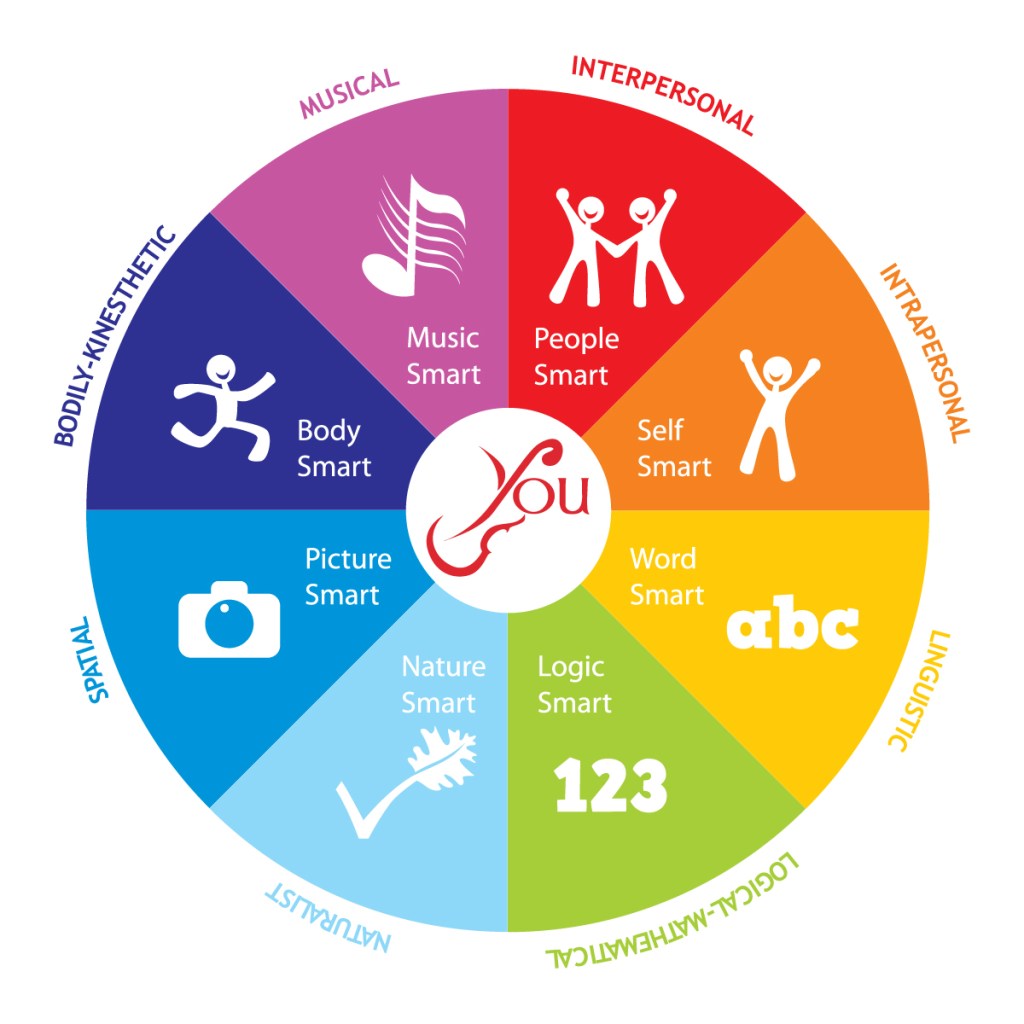
According to Gardner’s theory, there are eight identified intelligences: linguistic-verbal, logical-mathematical, spatial-visual, bodily-kinesthetic, musical-rhythmic, interpersonal, intrapersonal, and naturalistic. Each intelligence represents a unique blend of abilities and strengths.
The linguistic-verbal intelligence refers to individuals who excel in language-based activities such as reading, writing, speaking or debating. These individuals have strong communication skills and enjoy using words to express themselves effectively.
Logical-mathematical intelligence is characterized by strong analytical thinking and problem-solving abilities. People with this type of intelligence excel in mathematical concepts and logical reasoning. They can easily identify patterns and relationships between numbers or ideas.
Spatial-visual intelligence involves the ability to think in pictures or images. Individuals with this intelligence are highly skilled at visualizing objects or concepts in their mind’s eye. They often possess artistic talents such as drawing or painting.
Bodily-kinesthetic intelligence relates to physical movement and coordination. People with this type of intelligence have excellent motor skills and body control. They learn best through hands-on experiences and physical activities.
Musical-rhythmic intelligence refers to individuals who have a deep understanding of music rhythm patterns and melodies. They can easily recognize tones or pitches within music compositions.
Interpersonal intelligence is characterized by having strong social skills and the ability to understand others’ emotions or perspectives accurately. These individuals thrive in group settings where they can collaborate effectively with others.
Intrapersonal Intelligence reflects self-awareness and introspection capabilities. People with this type of MI have a deep understanding of their own emotions, strengths, and weaknesses.
Lastly, naturalistic intelligence is related to the ability to understand and connect with nature. Individuals with this intelligence have a strong affinity for the environment and can easily identify patterns or relationships in the natural world.
It’s important to note that these intelligences are not mutually exclusive; individuals can possess varying degrees of each type. Moreover, Gardner’s theory suggests that traditional education tends to focus primarily on linguistic-verbal and logical-mathematical intelligences while neglecting others. This narrow approach often fails to cater to students’ diverse learning styles and may result in some feeling inadequate or disengaged.
Alternative schooling approaches, such as Montessori or Waldorf education, aim to address this issue by incorporating multiple intelligences into their curriculum. These schools provide a more holistic educational experience by integrating various activities that target different types of intelligence. For example, students might engage in hands-on experiments (bodily-kinesthetic) or participate in music classes (musical-rhythmic).
By recognizing and nurturing the unique talents and strengths of each student across all eight intelligences, alternative schooling models enable children to develop well-rounded skills while fostering a love for learning. This inclusive approach allows students to explore their interests deeply while building essential life skills.
In conclusion, Multiple Intelligences theory offers an alternative perspective on how we define intelligence. By acknowledging the diversity of human abilities and providing educational opportunities that cater to these varied intelligences, we can create an inclusive learning environment where every student has the opportunity to thrive. Alternative schooling approaches play a crucial role in implementing this concept by valuing all forms of intelligence equally and ensuring that no child is left behind due to an emphasis on only certain types of intellects.
 Alternative Amie
Leave a comment