Bilingual Education Subtopics: Exploring the Benefits and Challenges
Introduction:
Bilingual education is a growing field that offers numerous benefits for students, communities, and society as a whole. By providing instruction in two languages, bilingual education programs aim to promote language proficiency, academic achievement, cultural understanding, and cognitive development. However, implementing effective bilingual education requires addressing various challenges and considering different factors such as language policies, teacher training, parental involvement, assessment methods, and technology integration. In this case study-style post, we will delve into several subtopics related to bilingual education to gain deeper insights into this dynamic field.
1. Dual Language Immersion Programs:
Dual language immersion programs are becoming increasingly popular in many educational settings. These programs provide instruction in both English and another target language throughout the curriculum. The goal is to develop students’ proficiency in both languages while fostering cross-cultural understanding.
Research shows that dual language immersion programs not only enhance students’ linguistic skills but also promote cognitive flexibility and socio-emotional development. Students who participate in these programs tend to outperform their monolingual peers academically while developing strong bilingualism.
2. Language Acquisition Theories:
Understanding how children acquire languages is crucial for designing effective bilingual education programs. Various theories explain the process of language acquisition, including behaviorist theories (e.g., Skinner’s operant conditioning) and nativist theories (e.g., Chomsky’s Universal Grammar).
By incorporating these theories into instructional practices, educators can create an environment conducive to second-language learning by focusing on meaningful interactions and comprehensible input.
3. Bilingualism and Cognitive Development:
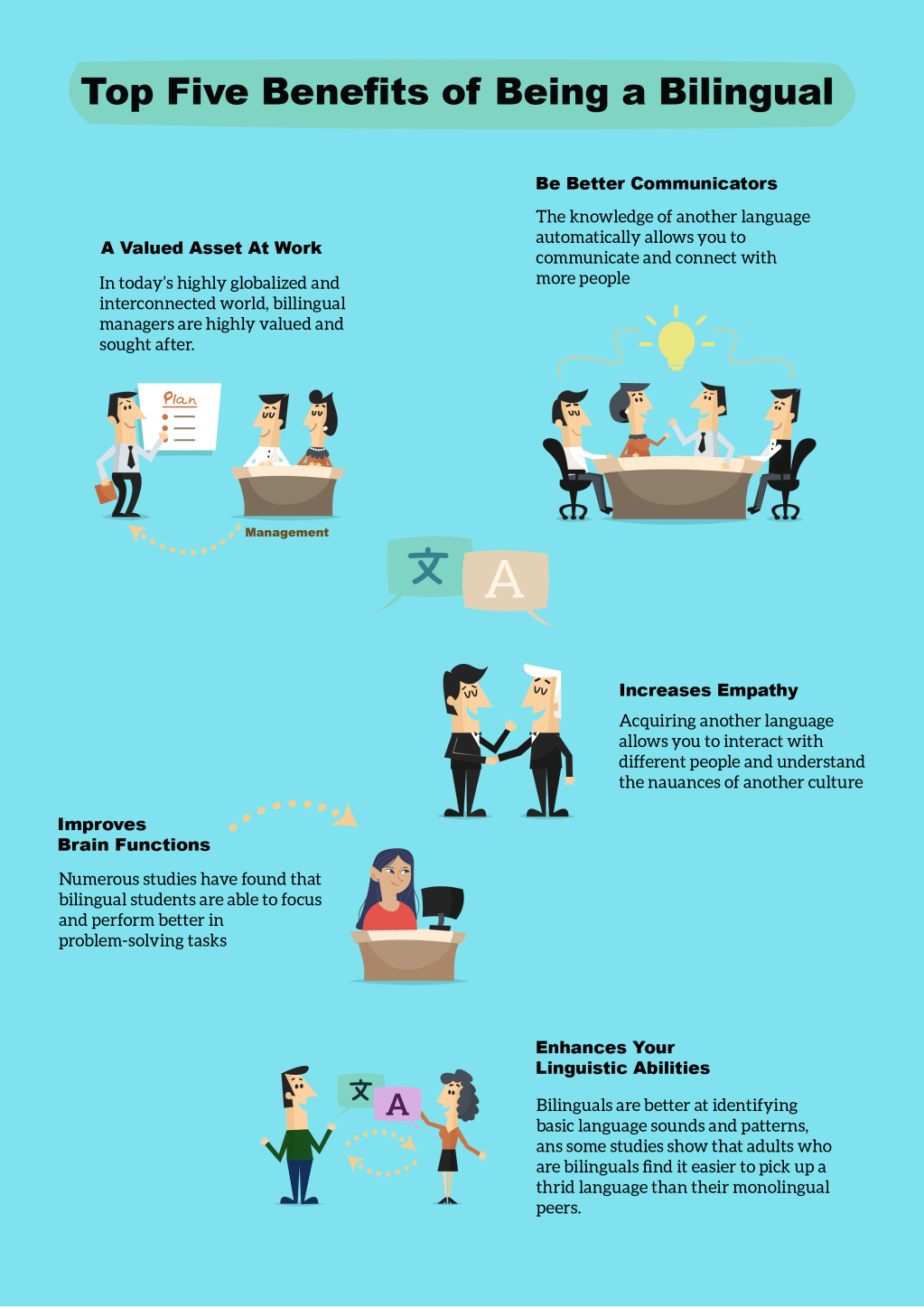
Research has shown that being bilingual positively impacts cognitive skills such as problem-solving abilities, attention control mechanisms, metalinguistic awareness (knowledge about languages), executive function skills (e.g., working memory), and even delaying the onset of neurodegenerative diseases like dementia.
The experience of navigating between multiple languages enhances individuals’ cognitive flexibility, which can be seen as a mental workout for the brain. Bilingual education programs thus provide students with cognitive advantages that extend beyond language proficiency.
4. Benefits of Bilingual Education for Children with Learning Disabilities:
Bilingual education has been found to benefit children with learning disabilities in several ways. It provides them with additional support and resources while promoting their linguistic and academic development.
By embracing their home language in the educational setting, bilingual students with learning disabilities can feel validated and motivated to engage in classroom activities. Additionally, bilingualism can enhance their self-esteem and social integration within diverse communities.
5. Bilingual Education in Early Childhood Education:
Early childhood is considered an optimal period for language acquisition and bilingualism development. Introducing bilingual education at this stage lays a strong foundation for future language skills.
Research suggests that early exposure to multiple languages enhances linguistic processing abilities, boosts executive function skills, promotes cultural awareness, and improves overall school readiness among young learners.
6. Challenges and Solutions in Implementing Bilingual Education Programs:
Implementing successful bilingual education programs often comes with challenges such as limited resources, lack of qualified teachers, resistance from stakeholders unfamiliar with the benefits of bilingualism, or inadequate policies supporting multilingual instruction.
To overcome these challenges effectively, schools need to invest in professional development opportunities for educators, establish clear language policies at the district level, involve parents as partners in the process, collaborate with community organizations supporting multicultural initiatives, and advocate for inclusive practices that celebrate diversity.
7. Bilingual Education for Indigenous Communities:
Bilingual education holds particular significance for indigenous communities seeking to preserve their native languages while providing quality education opportunities to their children.
These programs not only foster cultural identity but also contribute to intergenerational knowledge transfer within indigenous communities. By incorporating traditional practices into curriculum design and engaging local elders as valuable resources within classrooms, indigenous students receive culturally relevant instruction while developing fluency in both their heritage language and the majority language spoken by the broader society.
8. Bilingual Education and Cultural Preservation:
Bilingual education plays a vital role in preserving cultural heritage by valuing and promoting diverse languages, customs, traditions, and histories within educational settings.
By incorporating cultural elements into the curriculum, schools can create an inclusive environment that celebrates diversity and fosters pride among students from different linguistic backgrounds. This approach not only strengthens students’ sense of identity but also promotes intercultural understanding and empathy among all learners.
9. Bilingual Education Policies and Legislation:
Developing effective bilingual education policies requires considering factors such as language rights, equitable access to bilingual programs, funding allocation, assessment methods for determining program effectiveness, teacher certification requirements for bilingual educators, and recognition of the benefits of multilingualism in national education systems.
Policies need to be designed with careful consideration of linguistic diversity within societies while ensuring that all students have access to high-quality bilingual education programs regardless of their socioeconomic status or ethnic background.
10. Technology Integration in Bilingual Classrooms:
Technology integration can enhance language learning experiences by providing interactive resources tailored to individual student needs. Digital tools offer personalized learning opportunities through multimedia materials, online dictionaries, language-learning apps, virtual exchange platforms connecting classrooms across borders or even speech recognition software facilitating pronunciation practice.
However, it is essential to ensure equitable access to technology resources among all students so that no one is left behind due to a lack of digital infrastructure or internet connectivity.
Conclusion:
Bilingual education encompasses various subtopics that shed light on its benefits for individuals and communities alike. Dual language immersion programs foster linguistic proficiency while promoting cognitive development and cross-cultural understanding. By addressing challenges related to policy implementation, teacher training, parental involvement, assessment methods,and technology integration effectively; schools can provide quality bilingual education opportunities that celebrate diversity while preparing students for future success both academically and professionally.
 Alternative Amie
Leave a comment