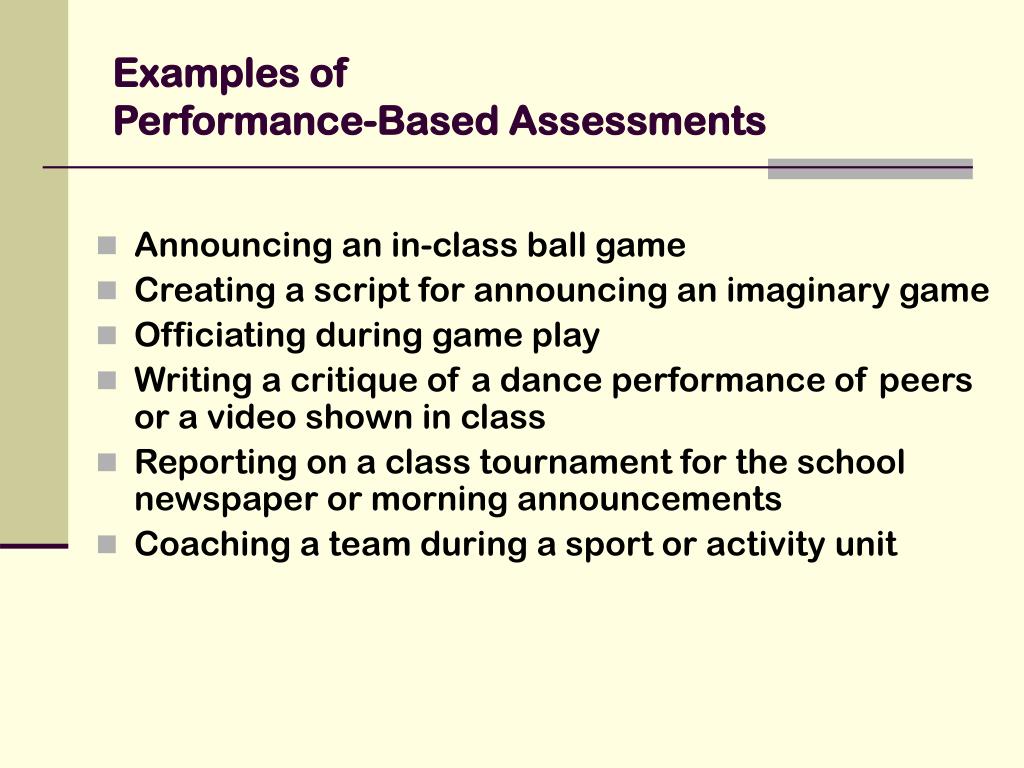
Performance-based assessments have gained significant popularity in alternative schooling and education systems. Unlike traditional tests that focus on memorization and regurgitation, performance-based assessments measure a student’s ability to apply knowledge and skills in real-world contexts. These assessments provide a more comprehensive evaluation of a student’s learning, as they require students to demonstrate their understanding through practical tasks or projects. Here are 15 reasons why performance-based assessments are valuable for both students and educators.
1. Real-world relevance: Performance-based assessments mirror real-life situations where knowledge is applied. This prepares students for success beyond the classroom by teaching them how to use what they have learned in practical scenarios.
2. Critical thinking development: Instead of just recalling information, performance-based assessments encourage students to think critically and problem-solve using their acquired knowledge. This fosters higher-order thinking skills that are essential for success in today’s complex world.
3. Individualized learning experiences: With performance-based assessments, educators can tailor tasks according to individual strengths, interests, and needs of each student. This approach promotes personalized learning experiences that engage students at their own level.
4. Collaboration opportunities: Many performance-based assessments involve group work or collaboration with peers, promoting teamwork and social skills development among students.
5. Authentic assessment: Unlike standardized tests that may not accurately reflect a student’s true abilities, performance-based assessments offer authentic measures of competency by evaluating actual performances or products created by the learners themselves.
6. Comprehensive feedback: Through detailed rubrics or checklists used in performance-based assessments, teachers can provide specific feedback on various aspects of a student’s work – from content accuracy to presentation style – allowing for targeted improvement and growth.
7. Multidisciplinary integration: Performance tasks often require the integration of multiple subjects or disciplines, enabling students to make connections between different areas of knowledge and develop interdisciplinary thinking skills.
8. Application-oriented evaluation: Performance-based assessments shift the focus from rote memorization towards the application of knowledge and skills. This evaluation method is more aligned with real-world expectations, where practical application is valued over mere recall.
9. Increased motivation: Performance-based assessments are often viewed as more engaging and meaningful by students compared to traditional tests. The hands-on nature of these tasks can motivate learners to invest more effort in their learning process.
10. Cultivation of creativity: Many performance-based assessments allow students to showcase their creativity through project-based assignments or presentations. This encourages them to think outside the box and explore innovative solutions to problems.
11. Lifelong learning skills: By emphasizing problem-solving, critical thinking, collaboration, and communication – essential skills for success in any field – performance-based assessments equip students with lifelong learning abilities that extend beyond academic achievements.
12. Assessment of multiple intelligences: Traditional tests tend to favor linguistic and logical-mathematical intelligences, while performance-based assessments accommodate various types of intelligence such as visual-spatial, bodily-kinesthetic, interpersonal, or intrapersonal intelligences.
13. Diverse assessment formats: Performance-based assessments encompass a wide range of formats like presentations, demonstrations, portfolios, exhibitions, simulations, debates, etc., allowing students with different strengths and preferences to demonstrate their understanding effectively.
14. Reducing test anxiety: Some students may experience high levels of stress during traditional exams due to time constraints or fear of failure. Performance-based assessments provide a less pressurized environment for demonstrating knowledge and skills at one’s own pace.
15. Long-term retention: Research suggests that when students learn through active engagement in performance tasks rather than passive studying for exams alone, they tend to retain information better over the long term.
In conclusion, performance-based assessments offer numerous benefits for both students and educators alike – from promoting real-world relevance and critical thinking development to fostering individualized learning experiences and cultivating lifelong learning skills across diverse intelligences. By incorporating these assessment methods into alternative schooling systems, educators can provide more holistic and meaningful evaluations of student learning.
 Alternative Amie
Leave a comment