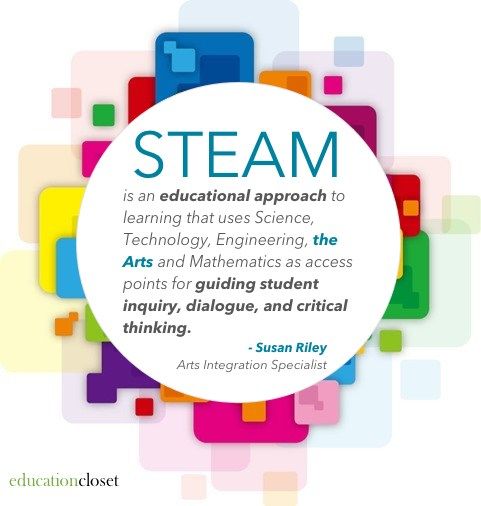
STEAM education, which incorporates science, technology, engineering, arts, and mathematics into a holistic learning experience, has gained significant traction in recent years. The approach aims to equip students with the skills needed for success in the 21st century workforce. However, alternative schooling settings have taken this educational philosophy a step further by exploring innovative ways to enhance student engagement and foster creativity.
One area of focus within alternative schools is providing STEAM education for students with disabilities. These programs aim to create an inclusive environment where all students can actively participate in hands-on projects and explore their interests. By adapting materials and employing assistive technologies, educators ensure that students with disabilities have equal access to STEM learning opportunities.
Another exciting development is incorporating art into traditional STEM curriculum. By infusing creativity into scientific concepts or engineering challenges, students are encouraged to think outside the box and develop unique solutions. This interdisciplinary approach not only fosters artistic expression but also enhances critical thinking and problem-solving skills.
Environmental sustainability is another key aspect of alternative school STEAM education. Students learn about renewable energy sources, waste management systems, and ecological conservation through engaging projects like designing sustainable buildings or creating composting programs on campus. These initiatives instill a sense of responsibility towards the planet while promoting scientific inquiry.
Early childhood development is also prioritized in alternative school STEAM programs. Through play-based activities that integrate science experiments or artistic exploration, young learners develop foundational knowledge and essential skills such as communication and collaboration.
Music and sound engineering are being integrated into STEM learning experiences as well. Students delve into topics like acoustics or digital music production while applying mathematical principles to understand frequencies or rhythms.
Robotics and coding are increasingly popular subjects in alternative schooling environments as they promote computational thinking skills alongside creative problem-solving abilities. Students gain hands-on experience building robots or developing software applications while acquiring valuable teamwork capabilities.
For at-risk youth who may face various challenges outside of academics, STEAM education offers a transformative opportunity. By engaging in hands-on projects and real-world problem-solving, these students build confidence, develop critical life skills, and discover their potential for success.
Virtual reality (VR) and augmented reality (AR) provide immersive experiences that enhance science education. Students can explore virtual simulations that bring abstract concepts to life or use AR applications to visualize complex scientific phenomena.
Homeschooling families also benefit from alternative school STEAM programs. Online platforms and resources allow parents to engage their children in interactive activities, experiments, or coding challenges tailored to the child’s unique learning style.
Exploring the intersection of mathematics and architecture is another aspect of alternative schooling STEAM education. By incorporating architectural principles into math lessons, students gain practical knowledge while nurturing creativity.
For non-English speaking students, alternative school STEAM programs offer language acquisition opportunities through hands-on projects that foster communication skills alongside scientific understanding.
Design thinking methodologies encourage students to approach problems creatively by focusing on empathy and collaboration. This framework helps them develop innovative solutions while enhancing critical thinking abilities.
Incorporating dance and movement into science lessons connects artistic expression with scientific concepts such as motion, force, or energy transfer. Through kinesthetic learning experiences, students deepen their understanding of physics while showcasing their creativity.
Gifted and talented students often thrive in alternative school STEAM settings where they can delve deeply into advanced topics or engage in independent research projects under the guidance of mentors or experts in various fields.
Engineering design challenges are central components of many alternative schooling programs. These open-ended projects enable students to apply engineering principles while developing problem-solving skills through real-world applications.
Storytelling is an effective tool for enhancing scientific understanding as it engages learners’ imaginations while conveying complex ideas in relatable narratives. By connecting facts with storytelling techniques, educators make STEM subjects more accessible for all learners.
Rural communities often face limited access to educational resources; however, alternative schools address this challenge by utilizing technology and online platforms to provide STEAM education opportunities to remote areas.
The relationship between technology and art is explored in alternative schools through projects that combine digital media, interactive installations, or multimedia presentations. This integration fosters creativity while showcasing the potential of technology as an artistic medium.
Nature-based learning is another approach employed by alternative school STEAM programs. By connecting students with the natural world, they develop a sense of stewardship for the environment while engaging in hands-on experiments or ecological research.
Hands-on experiments are a fundamental aspect of science classes in alternative schools. These experiential learning opportunities not only enhance student engagement but also foster a deeper understanding of scientific principles and methodologies.
For incarcerated youth, alternative school STEAM programs offer hope and rehabilitation through educational opportunities that focus on practical skills development and future employability. By combining academics with vocational training or entrepreneurship, these programs pave the way for successful reintegration into society.
Exploring the history of women in STEM fields is an integral part of many alternative school STEAM curricula. By highlighting female scientists’ achievements throughout history, educators aim to inspire young learners while promoting diversity and gender equality in STEM fields.
Entrepreneurship and innovation are emphasized in alternative schooling settings where students learn about business models, product development processes, or social entrepreneurship initiatives alongside traditional STEM subjects. This interdisciplinary approach equips students with entrepreneurial mindsets essential for success in today’s rapidly changing world.
Integrating social sciences with STEM subjects broadens students’ perspectives by emphasizing ethical considerations, cultural awareness, or societal impact when applying scientific knowledge to real-world issues.
Interdisciplinary projects play a crucial role in alternative school STEAM education as they encourage collaboration across different subject areas while providing holistic learning experiences that mirror real-world problem-solving scenarios.
Gamification techniques are utilized to enhance learning outcomes in science classes by incorporating game elements such as rewards systems or interactive challenges into lessons. These approaches increase student motivation and promote active engagement with scientific concepts.
In conclusion, alternative school STEAM education encompasses a broad range of innovative approaches that aim to create dynamic learning environments where students can thrive. By integrating art, technology, real-world applications, and inclusive practices, these programs foster creativity, critical thinking skills, and a passion for lifelong learning.
 Alternative Amie
Leave a comment