The Reggio Emilia approach to education is a philosophy that focuses on the holistic development of children, fostering creativity, curiosity, and critical thinking. One key aspect of this approach is the role of documentation in capturing and showcasing children’s learning experiences. Documentation serves as a powerful tool for teachers, parents, and students alike to reflect upon and celebrate their journey.
In Reggio Emilia-inspired schools, documentation takes many forms such as photographs, videos, written observations, artwork displays, and even digital portfolios. It allows educators to capture moments of discovery and growth in order to better understand each child’s unique learning style and interests. This process not only helps teachers plan future activities but also encourages collaboration among students as they share their ideas with others.
Another important element in the Reggio Emilia approach is incorporating nature and outdoor learning into the curriculum. The natural environment provides endless opportunities for exploration, imagination, and sensory experiences. Outdoor spaces are seen as extensions of the classroom where children can engage with nature firsthand through gardening projects or studying local flora and fauna. Being immersed in nature also supports physical development while encouraging a sense of wonder about the world around them.
Creativity and artistic expression play a significant role in Reggio Emilia classrooms. Art materials are readily available for children to express their thoughts, feelings, and ideas through various mediums such as painting, sculpting with clay or found objects like sticks or leaves. The emphasis on art allows children to develop their own voice while promoting problem-solving skills through open-ended activities.
Loose parts play is another concept commonly implemented in Reggio-inspired settings. Loose parts refer to open-ended materials that can be manipulated by children during playtime such as blocks, fabric scraps or shells. These materials encourage imaginative play while fostering cognitive development by allowing children to experiment with different combinations or create structures based on their own ideas.
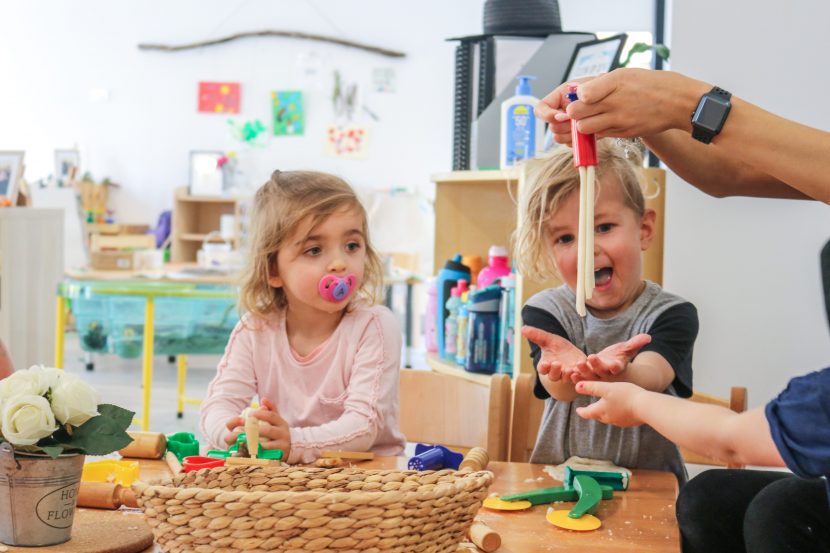
Sensory experiences are highly valued within the Reggio Emilia approach because they provide opportunities for children to engage with the world through their senses. Sensory activities like sand or water play, exploring different textures or smells, and experimenting with light and shadow help children develop their sensory perception while building connections between concepts.
The Reggio Emilia approach places a strong emphasis on social-emotional development. Teachers create a nurturing environment where children feel safe to express themselves and develop positive relationships with peers and adults. This is done through collaborative projects that encourage teamwork, empathy, and problem-solving skills.
Exploring the use of light and shadow is another unique aspect of Reggio Emilia-inspired environments. Light is seen as a powerful tool for learning, providing opportunities for investigation, discovery, and dramatic play. Educators intentionally design spaces where natural light can be manipulated using various materials such as translucent fabrics or mirrors.
Integrating technology into Reggio Emilia classrooms has both pros and cons. On one hand, technology can enhance learning experiences by providing access to information resources that may not be available otherwise. It also allows for global connections and collaborations among students from different parts of the world. However, there is a risk of over-reliance on technology which may detract from hands-on exploration and social interactions.
Supporting children with special needs in a Reggio Emilia context requires individualized attention while fostering an inclusive environment. The approach values every child’s abilities by adapting materials or activities to suit their specific needs while encouraging meaningful participation within the classroom community.
Parent involvement plays a crucial role in the success of a Reggio Emilia program. Parents are viewed as partners in education, actively involved in their child’s learning journey through regular communication with teachers, participating in school events or workshops, contributing ideas for projects or themes based on their own expertise or cultural backgrounds.
Addressing diversity and inclusivity within the Reggio Emilia philosophy is essential to creating an equitable learning environment where all children feel valued regardless of their background or abilities. The approach encourages educators to embrace and celebrate diversity, incorporating multicultural perspectives in the curriculum and creating an environment that respects and appreciates different cultures, languages, and experiences.
The role of the atelierista (art teacher) is significant in a Reggio Emilia school. The atelierista collaborates with classroom teachers to integrate art into all aspects of the curriculum. They provide expertise in various artistic techniques while guiding children’s exploration of materials, fostering their creativity and self-expression.
Promoting sustainability and environmental awareness is a core principle within the Reggio Emilia approach. Schools often incorporate eco-friendly practices like recycling programs or composting initiatives. Teachers also encourage children to explore topics related to sustainability through projects or discussions, raising their awareness about environmental issues from an early age.
Collaborative learning and group projects are highly valued in Reggio Emilia settings as they promote teamwork, communication skills, negotiation abilities, and shared decision-making. These projects are often based on children’s interests or questions which allow for meaningful engagement while developing critical thinking skills.
Different approaches to assessment exist within the context of Reggio Emilia education. Rather than relying solely on formal tests or grades, assessment focuses on ongoing observation of children’s progress through documentation. This allows teachers to tailor activities based on individual needs while providing parents with a comprehensive understanding of their child’s development.
The Hundred Languages concept is central to child development in a Reggio Emilia school. It recognizes that children have multiple ways of expressing themselves including through art, movement, music or storytelling. Educators encourage children to explore these languages as they learn because it sparks curiosity and enriches their educational experience.
Incorporating storytelling and narrative techniques into a Reggio-inspired curriculum enhances language development by encouraging oral language skills as well as literacy skills such as reading comprehension and writing abilities. Storytelling provides opportunities for creative expression while promoting imagination and empathy among students.
Conflict resolution is approached within a Reggio Emilia framework through open dialogue and problem-solving strategies. Teachers guide children in resolving conflicts by encouraging active listening, perspective-taking, and finding mutually agreeable solutions. This helps children develop essential social skills while fostering a peaceful and respectful learning community.
Project-based learning is a widely used approach in Reggio-inspired classrooms that allows for in-depth exploration of topics or themes. Projects are often based on children’s interests, questions or experiences, providing opportunities for research, collaboration, critical thinking, and creativity. While project-based learning offers numerous benefits such as student engagement and ownership of learning, it also poses challenges like time management and ensuring curriculum coverage.
Organizing space and materials is an important consideration in Reggio-inspired environments. Classrooms are designed to be flexible with easily accessible materials that promote exploration and independence. Spaces are arranged to encourage collaboration among students while allowing for individual work areas where children can focus on their own projects or investigations.
In conclusion, the Reggio Emilia approach encompasses various aspects including documentation, nature-based learning, artistic expression, loose parts play, sensory experiences,social-emotional development,parent involvement,diversity,inclusivity,the role of the atelierista,sustainability,collaborative learning approaches to assessment,Hundred Languages concept,narrative techniques for storytelling,resolving conflicts through dialogue,and project-based learning. These elements come together to create a unique educational experience that nurtures children’s curiosity,self-expression,and holistic development within a supportive community environment
 Alternative Amie
Leave a comment