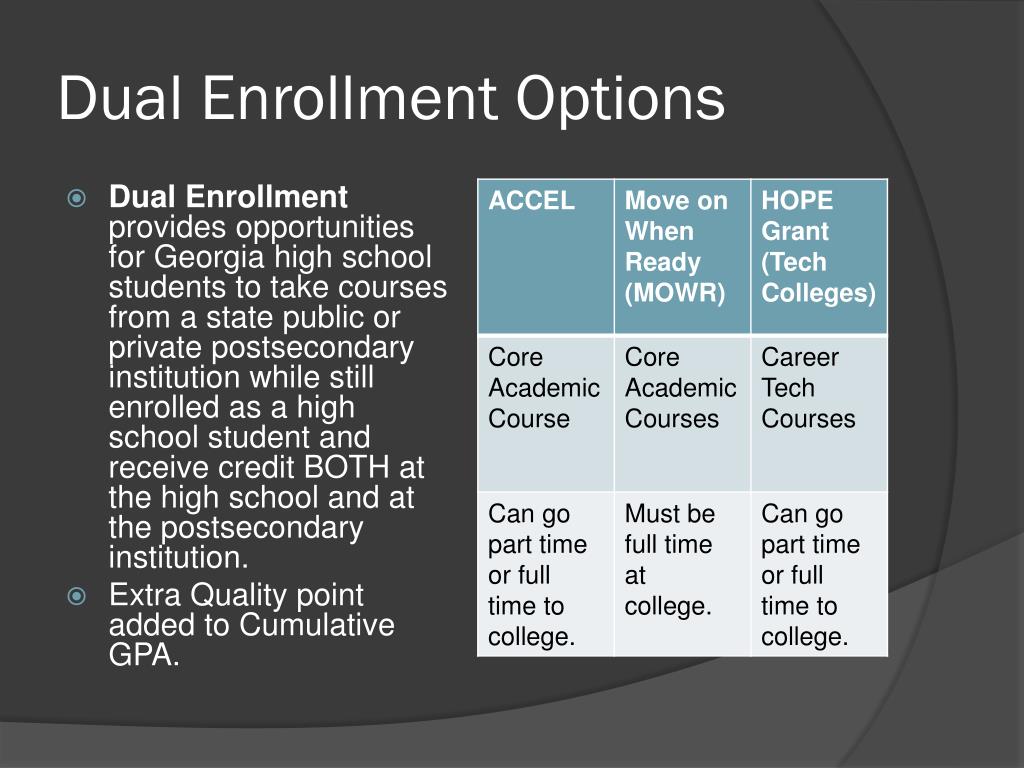
Dual enrollment programs offer high school students the opportunity to take college-level courses while still in high school. These programs are becoming increasingly popular, as they provide students with a head start on their college education and can be a cost-effective way to earn college credits. However, one of the biggest concerns for students participating in dual enrollment is whether or not these credits will transfer to their desired colleges or universities. In this article, we will explore the transferability of dual enrollment credits.
The transferability of dual enrollment credits largely depends on the policies of individual colleges and universities. While some institutions have specific guidelines for accepting these credits, others may evaluate them on a case-by-case basis. It is important for students to research and understand the policies of each institution they are considering attending.
One factor that affects the transferability of dual enrollment credits is accreditation. Dual enrollment courses offered by accredited colleges and universities are more likely to be accepted for credit than those offered by non-accredited institutions. Accreditation ensures that an institution meets certain academic standards, increasing the likelihood that its courses will be recognized by other educational institutions.
Additionally, it is crucial for students to consider how their intended major aligns with their dual enrollment coursework. Some majors have specific course requirements that may not be fulfilled through dual enrollment courses alone. For example, if a student plans to major in engineering but only took English and history classes during dual enrollment, it is unlikely that those credits will count toward their engineering degree.
Another factor influencing credit transferability is grade requirements. Some colleges may require students to earn a certain grade (such as a C or above) in order for the credit to transfer successfully. If a student does not meet this requirement in their dual enrollment course(s), they may need to retake equivalent courses at their chosen college or university.
It is also worth noting that some colleges have caps on how many credits can be transferred from dual enrollment programs. This means that even if a student successfully completes multiple dual enrollment courses, only a certain number of credits may count towards their degree. Understanding these credit transfer limits is essential when planning course schedules and selecting dual enrollment classes.
To increase the likelihood of credit transferability, students can take steps such as:
1. Researching potential colleges and universities: Students should review the transfer policies of their desired institutions to understand how they evaluate and accept dual enrollment credits.
2. Communicating with admissions counselors: Contacting admissions offices directly can provide students with specific information regarding credit transfers and any additional requirements.
3. Selecting accredited programs: Choosing dual enrollment programs offered by accredited colleges or universities can enhance the chances of credit acceptance.
4. Checking major-specific requirements: Students should ensure that their chosen dual enrollment courses align with the requirements of their intended major.
5. Maintaining good academic standing: Meeting grade requirements in dual enrollment courses is crucial for successful credit transfer.
In conclusion, while there are no guarantees when it comes to transferring dual enrollment credits, understanding individual college policies, choosing accredited programs, and fulfilling major-specific requirements will greatly improve a student’s chances of successful credit transfer. By taking proactive steps and being well-informed about each institution’s policies, students can make the most out of their participation in dual enrollment programs.
 Alternative Amie
Leave a comment