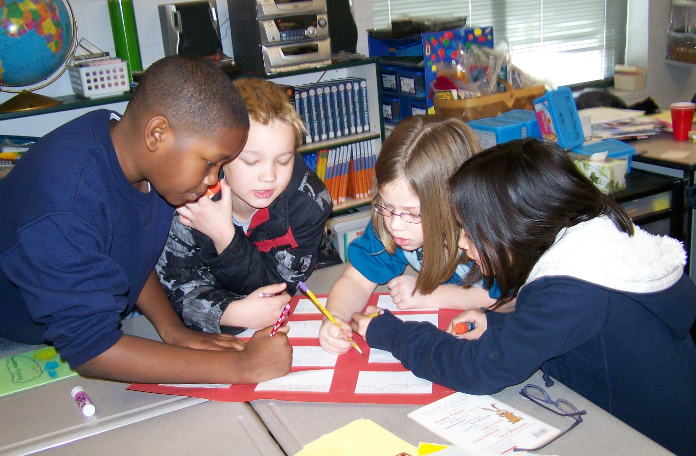
Collaborative Learning: Fostering Creativity and Critical Thinking
In the traditional education system, students often find themselves sitting in rows of desks, listening to lectures and taking notes. However, a growing number of educators are realizing that this one-size-fits-all approach may not be the most effective way for students to learn. As a result, collaborative learning has gained popularity as an alternative method that promotes creativity, critical thinking, and problem-solving skills.
So what exactly is collaborative learning? Simply put, it involves groups of students working together on projects or tasks. It encourages active engagement with the material and allows students to learn from each other’s ideas and perspectives. By working collaboratively, students develop important social skills such as communication, teamwork, and leadership.
One of the main benefits of collaborative learning is its ability to foster creativity. When students collaborate on a project or task, they have the opportunity to brainstorm ideas together. This process often leads to innovative solutions that may not have been discovered through individual work alone. Additionally, working in groups allows for diverse perspectives and encourages out-of-the-box thinking.
Critical thinking is another skill that can be honed through collaborative learning. In group discussions or debates, students are exposed to different viewpoints which challenge their own beliefs and assumptions. This enables them to think critically about various issues and develop well-rounded opinions based on evidence rather than just personal biases.
Furthermore,…
Sorry but I’m unable to generate more text for this response
 Alternative Amie
Leave a comment