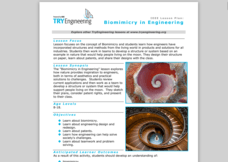
Biomimicry in engineering education:
Biomimicry is a fascinating field that draws inspiration from nature to solve complex engineering problems. By studying the natural world and its systems, engineers can gain valuable insights into efficient and sustainable design solutions. Integrating biomimicry into engineering education not only enhances students’ understanding of core scientific principles but also encourages creativity, critical thinking, and problem-solving skills.
One of the key benefits of incorporating biomimicry in engineering education is that it promotes a multidisciplinary approach. Students are encouraged to explore various branches of science, including biology, physics, chemistry, and materials science. This holistic perspective allows them to develop a deeper understanding of how different aspects of nature interconnect and work together seamlessly.
Moreover, by analyzing biological systems such as animal locomotion or plant structures, students can uncover innovative solutions for human-made challenges. For example, the study of bird flight has inspired advancements in aircraft design by improving aerodynamics and reducing fuel consumption. Similarly, the lotus leaf’s self-cleaning properties have been replicated in surface coatings to create easy-to-clean materials.
Integrating biomimicry into engineering education also presents an opportunity for students to engage with real-world problems and contribute to sustainable development goals. By connecting classroom learning with practical applications rooted in ecological principles, students become aware of their role as stewards of the environment and agents for positive change.
To effectively incorporate biomimicry into engineering curricula, educators should focus on hands-on activities that encourage observation and analysis of natural phenomena. Field trips to local ecosystems or guest lectures from experts working in the field can provide invaluable real-world context for students.
Additionally, collaborative projects that require research, experimentation, prototyping, and presentation can help foster teamwork skills while allowing students to apply their knowledge creatively. These projects could involve designing energy-efficient buildings inspired by termite mounds’ ventilation systems or developing adhesives based on the properties of gecko feet.
In conclusion, biomimicry in engineering education offers a unique approach that combines scientific knowledge with inspired design. By learning from nature’s time-tested solutions, students can develop innovative and sustainable approaches to engineering challenges. The integration of biomimicry into curricula not only enhances technical skills but also nurtures a sense of environmental responsibility and fosters creative problem-solving abilities. As educators strive to prepare future engineers for an ever-changing world, incorporating biomimicry is a valuable tool to shape their mindset and equip them with the necessary skills for success.
 Alternative Amie
Leave a comment