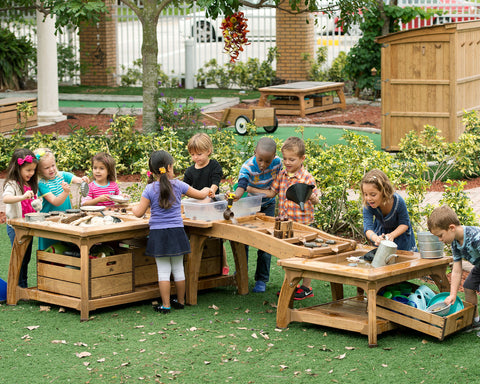
As alternative forms of education gain popularity, there is a growing interest in exploring different approaches to learning. Two areas that have garnered attention are multi-age classrooms and the use of outdoor spaces for experiential learning. In this post, we will delve into these topics and examine their benefits and challenges within alternative education settings.
Multi-age classrooms have long been a cornerstone of alternative schools. Unlike traditional classrooms where students are grouped solely based on their age, multi-age classrooms bring together students of different ages and grade levels. This approach promotes collaboration, peer mentoring, and personalized learning experiences.
One of the key benefits of multi-age classrooms is the opportunity for peer-to-peer learning. Younger students can learn from older ones who serve as role models and mentors. Older students, in turn, develop leadership skills by helping their younger peers understand concepts or complete tasks. This dynamic fosters a sense of community among students as they work together towards common goals.
Another advantage is that multi-age classrooms allow for individualized instruction tailored to each student’s needs. Teachers can differentiate their teaching strategies to accommodate various skill levels within one classroom setting. Students who grasp concepts quickly can be challenged with more advanced materials, while those who may need extra support receive targeted interventions without feeling singled out or stigmatized.
Furthermore, multi-age classrooms promote social-emotional growth by encouraging empathy and understanding among students. As they interact with peers from different age groups, children develop a deeper appreciation for diversity and learn how to navigate relationships with individuals who possess varying perspectives and abilities.
However, implementing multi-age classrooms also presents its fair share of challenges. One obstacle is ensuring appropriate academic progression across grade levels within the same space. Educators must carefully plan curriculum frameworks that encompass essential knowledge and skills for each grade level while allowing flexibility for individual differences among students.
Additionally, maintaining order and discipline can be more challenging in mixed-age settings compared to single-grade environments where rules may be more uniform across all students. Teachers must establish clear expectations and routines to create a structured learning environment that promotes respect, responsibility, and accountability.
Now, let’s shift our focus to the use of outdoor spaces for experiential learning in alternative education settings. Alternative schools often embrace the philosophy that real-world experiences enhance students’ understanding of academic concepts and foster holistic development.
Outdoor spaces provide opportunities for hands-on learning experiences that cannot be replicated within the confines of a traditional classroom. For instance, science lessons can come alive when students observe plants growing in a garden or conduct experiments in nature. History lessons can be enriched by visiting historical sites or reenacting events outdoors.
Experiential learning also encourages critical thinking skills as students are faced with authentic challenges and problem-solving situations. Outdoor environments offer unique scenarios where learners must adapt their knowledge to new contexts, fostering creativity and innovation.
Moreover, utilizing outdoor spaces allows for physical activity and movement during the school day, promoting overall health and well-being among students. Research has shown that spending time outdoors reduces stress levels, improves concentration, and boosts mood – all factors that positively impact academic performance.
Nevertheless, there are considerations when incorporating outdoor spaces into alternative education settings. Safety becomes paramount when venturing outside the controlled environment of a traditional classroom. Educators must assess potential risks associated with various activities and take appropriate precautions to ensure student safety at all times.
Furthermore, logistical challenges may arise when conducting lessons outdoors due to weather conditions or limited access to suitable outdoor areas. Alternative schools need proper planning and infrastructure support to maximize the benefits of using outdoor spaces effectively without disrupting regular instruction schedules.
In conclusion, multi-age classrooms promote collaborative learning environments where peer mentoring thrives alongside individualized instruction. The use of outdoor spaces for experiential learning enhances student engagement while providing real-world context for academic concepts. While both approaches bring significant advantages to alternative education settings, they also require careful planning and consideration of potential challenges along the way. By leveraging the benefits and addressing the challenges, alternative schools can create enriching learning experiences that foster holistic development and academic success for their students.
 Alternative Amie
Leave a comment