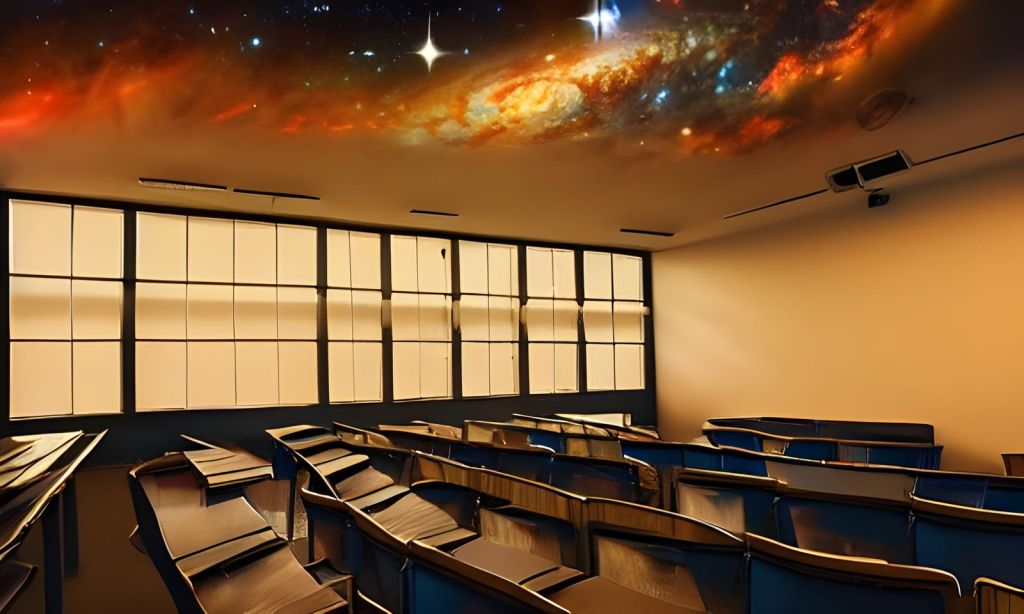
Astronomy: Exploring the Wonders of the Universe
Introduction:
Astronomy, often considered as the oldest of all natural sciences, has captivated human beings for centuries. From ancient civilizations observing the patterns of celestial bodies to modern-day space exploration missions, our fascination with astronomy has only grown stronger over time. With its ability to unveil mysteries about our universe and provide us with a greater understanding of our place within it, astronomy is an ideal subject to introduce students to alternative forms of education.
Why Teach Astronomy?
Teaching astronomy offers numerous benefits that go beyond simply acquiring scientific knowledge. It encourages critical thinking skills, fosters curiosity and wonder, promotes interdisciplinary learning, and inspires a sense of awe and humility in students. By exploring astronomical concepts and phenomena, students can develop a deeper appreciation for the world around them and gain valuable insights into various scientific disciplines.
Alternative Approaches to Teaching Astronomy:
Traditional classroom teaching methods often rely heavily on textbooks and lectures. However, alternative approaches can be employed to make astronomy more engaging and interactive for students.
1. Hands-on Experiments:
Encouraging students to actively participate in experiments helps them understand complex concepts more effectively. For instance, setting up models or simulations can demonstrate how gravity works or how different materials interact with light. These hands-on experiences allow students to connect theoretical knowledge with real-world applications.
2. Observational Astronomy:
Observing celestial objects directly through telescopes provides an opportunity for experiential learning while fostering a sense of wonder among students. Constructing simple telescopes or using smartphone apps enables even those without access to high-powered equipment to observe stars and planets from their own homes or schoolyards.
3. Citizen Science Projects:
Engaging students in citizen science projects allows them not only to contribute meaningfully but also exposes them to authentic research experiences alongside professional astronomers worldwide. Projects such as Planet Hunters TESS or Galaxy Zoo involve classifying newly discovered exoplanets or galaxies, respectively. By participating in these projects, students can actively contribute to scientific knowledge while learning about the vastness of our universe.
4. Virtual Reality (VR):
The use of virtual reality technology can provide an immersive experience that transports students to distant planets or allows them to witness astronomical events firsthand. VR simulations can aid in understanding complex concepts like stellar evolution, planetary formation, or galaxy collisions by visualizing abstract ideas and making them more accessible.
Key Concepts in Astronomy:
To promote a comprehensive understanding of astronomy, it is important to cover several key concepts within the subject area. Here are some fundamental topics that should be included in any alternative astronomy curriculum:
1. Celestial Mechanics:
Understanding celestial mechanics helps students comprehend the motions and interactions of celestial bodies such as stars, planets, moons, asteroids, and comets. Topics could include orbits and Kepler’s laws of planetary motion.
2. Stellar Evolution:
Exploring how stars form and evolve provides insights into their life cycles and eventual fates as white dwarfs, neutron stars, or black holes. Students should study topics like nuclear fusion processes within stars and the Hertzsprung-Russell diagram.
3. Planetary Science:
Investigating our neighboring planets’ characteristics allows students to compare Earth with other celestial bodies in our solar system. This topic covers aspects such as atmospheres, geological features, presence of water or ice on other worlds.
4. Galaxies and Cosmology:
Introducing galaxies and cosmology delves into the study of large-scale structures in the universe – from individual galaxies to galaxy clusters and superclusters – along with theories about its origin and expansion over time.
5. Exoplanets:
With advancements in technology enabling us to detect planets beyond our solar system more effectively than ever before, teaching about exoplanets has become increasingly important. Students can learn about different detection methods used by astronomers while exploring potential habitability conditions elsewhere in the universe.
Conclusion:
Astronomy offers a rich and diverse subject matter that can be effectively taught through alternative education methods. By incorporating hands-on experiments, observational activities, citizen science projects, and virtual reality simulations into the curriculum, students will be able to explore the wonders of the universe in a more engaging and interactive manner. Teaching astronomy not only provides scientific knowledge but also nurtures curiosity, critical thinking skills, and appreciation for our place within the cosmos. By embracing these alternative approaches to education, we can inspire a new generation of astronomers who will continue to unravel the mysteries of our vast universe.
 Alternative Amie
Leave a comment