Introduction
Welcome to today’s panel discussion on authentic assessment. In the context of alternative schooling and education, authentic assessment is an approach that focuses on evaluating students’ knowledge and skills by engaging them in real-world tasks and projects. This method moves away from traditional forms of testing, such as multiple-choice exams, towards more holistic and meaningful ways of measuring learning outcomes.
In this discussion, we have gathered a group of experts in the field who will provide insights into what authentic assessment entails, its benefits and challenges, and how it can be effectively implemented within alternative educational settings. Let us introduce our esteemed panelists:
1. Dr. Sarah Thompson – Professor of Education at XYZ University
2. Mr. John Parker – Principal at ABC Alternative School
3. Ms. Lisa Johnson – Parent advocate for alternative education
4. Ms. Emily Chen – Former student at an alternative school
Defining Authentic Assessment
To begin our conversation, let’s establish a shared understanding of what authentic assessment means in the context of education.
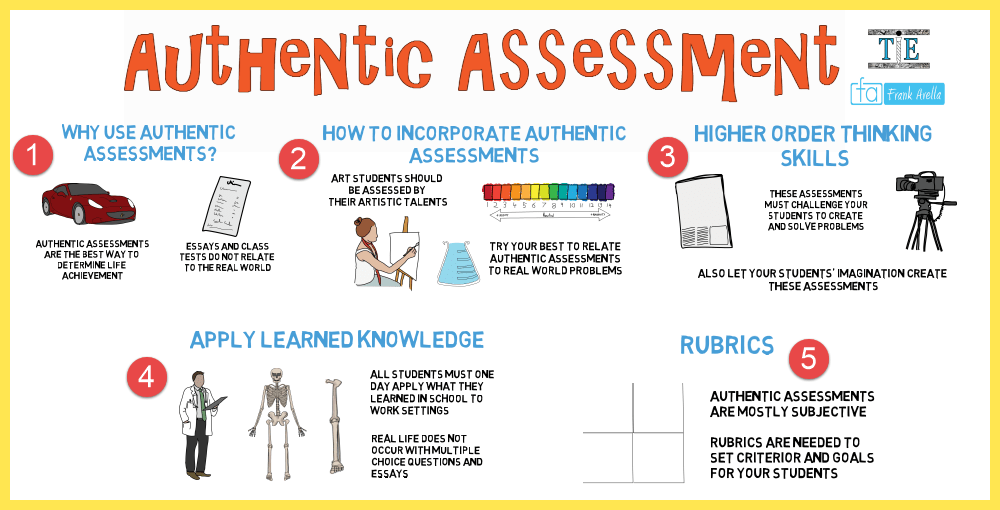
Dr. Thompson: “Authentic assessment refers to evaluating students based on their ability to apply knowledge and skills in real-world contexts that mirror tasks they may encounter beyond the classroom.”
Mr. Parker: “Exactly! It allows students to demonstrate their understanding through practical application rather than simply regurgitating information.”
Benefits of Authentic Assessment
Moving away from standardized tests towards authentic assessment offers several advantages for both educators and students.
Ms. Johnson: “One major benefit is that it promotes deeper learning since students are actively involved in constructing knowledge instead of memorizing facts.”
Ms. Chen: “I agree with Ms.Johnson; I felt more engaged during my time in an alternative school because I could see how my learning connected to real-life situations.”
Dr.Thompson: “Furthermore, it fosters critical thinking skills as students are challenged to analyze complex problems and develop innovative solutions.”
Challenges in Implementing Authentic Assessment
While authentic assessment has many merits, there are also challenges in implementing it effectively.
Mr. Parker: “One challenge is the time and effort required to design and evaluate these assessments. It demands a shift in teachers’ approach and may initially be more time-consuming than traditional methods.”
Ms. Chen: “Another challenge is ensuring fairness and consistency in grading since authentic assessments can be subjective. Clear rubrics and guidelines are crucial to overcome this hurdle.”
Dr.Thompson: “Additionally, standardized testing is deeply ingrained in our education system, so changing mindsets about assessment practices can be an uphill battle for educators and policymakers.”
Strategies for Effective Implementation
Now that we understand the benefits and challenges of authentic assessment let’s explore some strategies for its successful implementation.
Ms.Johnson: “Collaboration among educators is key; they can share ideas, develop common rubrics, and provide support to one another during the transition period.”
Dr.Thompson: “Teachers should also involve students in the process by setting clear expectations, providing examples of excellent work, and engaging them in self-assessment activities.”
Mr.Parker: “Integration of technology can streamline the process as well. Online platforms allow for easy submission of projects, peer feedback opportunities, and efficient tracking of student progress.”
Examples of Authentic Assessment Practices
To illustrate how authentic assessment works in practice within alternative educational settings, our panelists will share some examples.
Ms.Chen: “In my school, we had a project-based learning approach where we would research social issues such as homelessness or climate change. We would then present our findings through creative mediums like documentaries or community exhibitions”.
Mr.Parker: “At ABC Alternative School, we emphasize internships or apprenticeships where students gain practical experience related to their interests while being assessed on their ability to apply knowledge gained from coursework”.
Conclusion
Our panel discussion on authentic assessment has shed light on its definition, benefits, challenges involved with implementation within alternative educational settings, and strategies to overcome those challenges. Through authentic assessment, students are encouraged to connect their learning with real-world applications, leading to deeper understanding and the development of essential skills for success in life.
We hope this discussion has provided valuable insights into the power and potential of authentic assessment within alternative schooling and education. Let us continue exploring innovative approaches that foster meaningful learning experiences for all students.
 Alternative Amie
Leave a comment