Outdoor Education and Nature Exploration: Nurturing Curiosity in Reggio Emilia Schools
Education is not confined to the walls of a classroom. In fact, some of the best learning experiences happen when children are exposed to the wonders of nature. Reggio Emilia schools, renowned for their child-centered approach to education, understand this fundamental truth. They recognize that outdoor education and nature exploration play a crucial role in nurturing curiosity, fostering creativity, and developing a deep sense of connection with the natural world.
Reggio Emilia is a small city located in northern Italy. It is known for its innovative educational philosophy that places great emphasis on respect for children’s rights and interests. The Reggio Emilia approach believes that children are active constructors of knowledge who learn best through hands-on experiences.
One of the key principles underlying this approach is the belief in the importance of providing children with opportunities to explore and engage with their environment. Reggio Emilia schools take full advantage of their beautiful surroundings by incorporating outdoor education into their curriculum.
The benefits of outdoor education are manifold. Firstly, it provides an opportunity for children to develop a deep appreciation for nature’s beauty. Whether it be exploring a nearby forest or tending to a school garden, students are encouraged to observe closely, listen attentively, touch gently, and truly immerse themselves in the natural world around them.
This closeness fosters empathy towards all living beings and cultivates an understanding of ecological interdependence from an early age. Children learn about different species – plants, insects, birds – as they witness firsthand how each organism contributes to maintaining balance within ecosystems.
Furthermore, being outdoors stimulates all five senses simultaneously; sight becomes sharper as colors seem more vibrant under sunlight; sounds become distinct as birds chirp overhead; smells become richer as flowers release their fragrances; textures become tangible as leaves rustle beneath little feet; tastes become authentic as fresh fruits or vegetables from gardens are savored. These sensory experiences enhance cognitive development and contribute to the overall well-being of children.
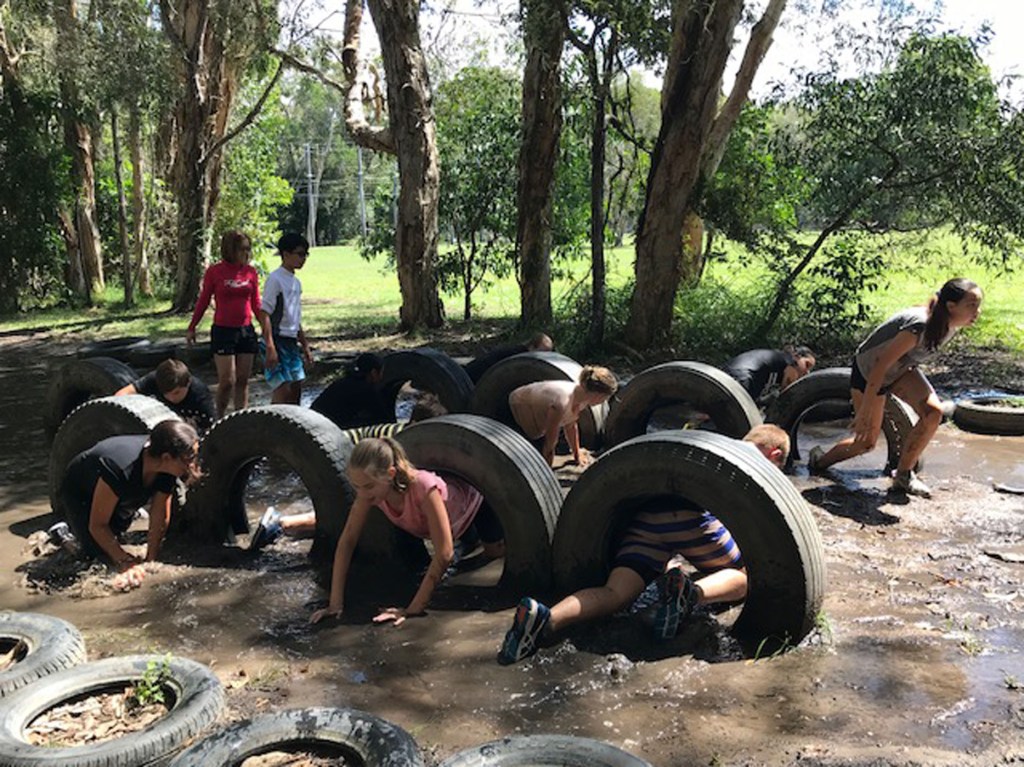
Outdoor education also encourages physical activity and enhances gross motor skills. Running, climbing, jumping, and balancing become natural extensions of learning as children engage in unstructured play outdoors. They develop coordination, strength, endurance, and spatial awareness while freely exploring their surroundings.
Moreover, outdoor education provides ample opportunities for social interaction and collaboration. In nature’s classroom, students learn to negotiate conflicts, share resources, communicate effectively with peers, and work together towards common goals. It is through these experiences that they develop important life skills such as cooperation, empathy, teamwork, leadership qualities – all essential for success in the future.
Reggio Emilia schools take a holistic approach to outdoor education by integrating it into various areas of the curriculum. For instance, mathematics lessons may involve counting seeds or measuring plant growth; science classes may include observing insect behavior or conducting experiments in a natural setting; language arts sessions may revolve around storytelling inspired by outdoor adventures; art projects might entail creating sculptures using found objects from nature.
Teachers act as facilitators in this process of exploration rather than mere instructors. They encourage children to ask questions about their observations and guide them towards finding answers through research or experimentation. This inquiry-based approach fosters critical thinking skills while nurturing a sense of wonder and curiosity within each child.
It is worth noting that Reggio Emilia schools also extend their commitment to outdoor education beyond the school premises by organizing field trips to nearby parks or forests regularly. These excursions offer students an opportunity to apply what they have learned within the context of a larger ecosystem while strengthening their connection with nature on a broader scale.
In conclusion, Reggio Emilia schools understand that true education goes beyond textbooks and classrooms walls – it encompasses everything around us including the natural world we are part of. By embracing outdoor education and nature exploration as integral components of their curriculum design – these schools foster curiosity, creativity, physical development, social skills, and a deep respect for the environment within each child. Through such experiences, Reggio Emilia schools are sowing the seeds of lifelong learners who will grow up to be stewards of our planet.
 Alternative Amie
Leave a comment