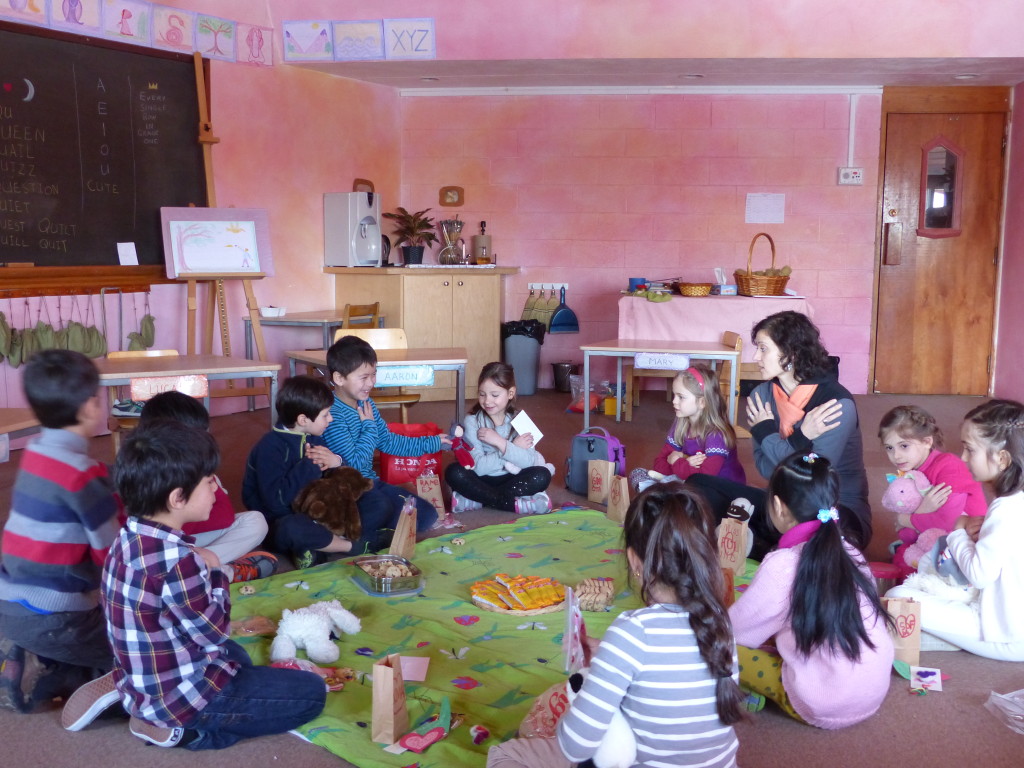
Waldorf Education: Nurturing the Whole Child
In a world where traditional educational systems often prioritize academic achievements above all else, Waldorf education offers an alternative approach that places equal emphasis on intellectual, artistic, and practical skills. Developed by Rudolf Steiner in the early 20th century, this holistic educational philosophy aims to nurture children’s physical, emotional, and spiritual development alongside their cognitive growth. Today, Waldorf schools can be found worldwide, offering a unique learning experience that fosters creativity, critical thinking, and a deep connection with nature.
At the heart of Waldorf education is an understanding of childhood as a distinct phase in human life that should be cherished and respected. It recognizes that children learn best through active engagement with their environment rather than passive absorption of information. As such, Waldorf classrooms are designed to provide a rich sensory experience where students can explore various subjects through hands-on activities.
One key element of Waldorf education is its focus on rhythm and routine. The daily schedule in a Waldorf school typically includes predictable blocks of time for different subjects such as mathematics, language arts, science, music or drama. This rhythmic structure helps create a sense of security for students while allowing them to fully immerse themselves in each subject without feeling rushed.
Another notable aspect of Waldorf education is its emphasis on arts integration across all disciplines. Drawing from diverse artistic mediums such as painting, sculpture, music and movement – students engage in creative expression throughout their academic journey. By integrating art into every aspect of learning – from illustrating stories to creating handmade textbooks – students develop not only their artistic abilities but also enhance their critical thinking skills and imaginative capacities.
The curriculum itself follows an age-appropriate progression that aligns with children’s developmental stages. During the early years (up until around age seven), there is an emphasis on free play and imitation which allows young learners to engage their senses fully while exploring the world around them. As children grow older, academic subjects are introduced gradually and in a way that helps them understand their practical application. For instance, mathematics might be taught through activities like cooking or woodworking where students apply mathematical concepts in real-life situations.
In Waldorf education, the role of the teacher is seen as that of a guide and mentor rather than an authority figure. Teachers work closely with students over several years, allowing them to develop deep relationships based on trust and respect. This allows teachers to fully understand each child’s unique strengths and challenges while providing individualized support tailored to their needs.
A notable feature of Waldorf education is its commitment to nature-based learning. Schools often have outdoor classrooms and gardens where students engage in hands-on experiences with plants, animals, and natural materials. This connection with nature not only fosters environmental awareness but also encourages a sense of wonder and reverence for the world around us.
Critics argue that Waldorf education places too much emphasis on imagination and artistic expression at the expense of academic rigor. However, proponents argue that this holistic approach enhances critical thinking skills by encouraging students’ curiosity about the world while fostering creativity and adaptability – essential qualities for success in today’s rapidly changing society.
It is important to note that while Steiner’s spiritual beliefs do influence some aspects of Waldorf education, schools strive to maintain religious neutrality and welcome families from diverse backgrounds. The aim is not to impose specific beliefs but rather provide an inclusive environment where children can explore different perspectives openly.
In conclusion, Waldorf education offers a powerful alternative model for schooling that nurtures children intellectually, artistically, emotionally, and spiritually. By integrating arts throughout the curriculum while honoring each child’s unique developmental journey – it cultivates well-rounded individuals who possess not only knowledge but also empathy, creativity, critical thinking skills needed for facing future challenges head-on.
 Alternative Amie
Leave a comment