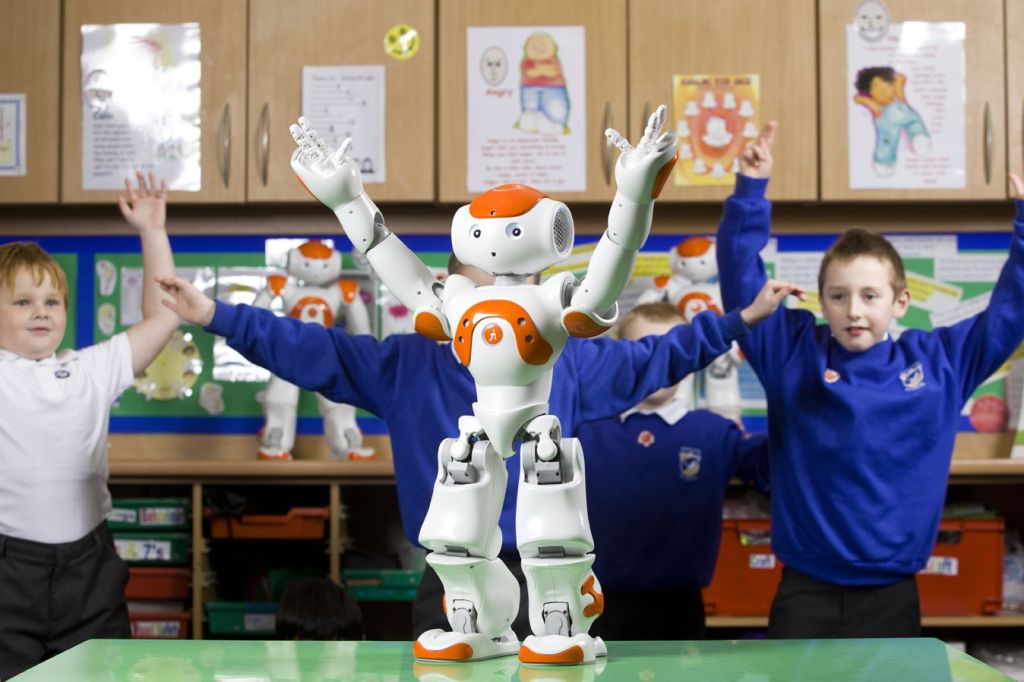
Robotics: A Future-Forward Education
In today’s rapidly advancing world, technology has become a ubiquitous part of our daily lives. As such, the education sector is leveraging this trend to enhance learning experiences for students. One such area of interest is robotics – an interdisciplinary field that combines mathematics, physics, engineering, and computer science.
Robotics presents an opportunity for students to learn about the practical applications of these subjects in a fun and engaging way. It also provides them with critical skills like problem-solving, creativity, and teamwork – all essential qualities for success in today’s world.
There are various types of robots used in education settings. These include programmable robots that can be coded using block-based or text-based languages; physical robots that can perform tasks through sensors and actuators; mobile robots that move around on wheels or legs; humanoid robots designed to look like humans but programmed to behave differently.
One advantage of using robotics in education is its ability to cater to diverse learning styles. Students who may struggle with traditional teaching methods may find it easier to engage with robotics since they offer a more hands-on approach. Additionally, as each student’s pace varies greatly from others’, robotics provide personalized instruction for individual needs.
Robotic competitions are becoming increasingly popular across schools worldwide as they help sharpen not only technical but also social skills such as communication and collaboration. The competitions range from building small-scale projects like line-following robots or robotic arms controlled by joysticks up until large-scale autonomous robot systems which compete on obstacle courses at regional levels.
The benefits of incorporating robotics into curricula extend beyond STEM subjects too. For instance, educators have found that language arts classes can use storytelling strategies involving robotic characters while history teachers could create simulations on life during ancient civilizations using similar techniques too!
As much as there are advantages associated with educational robotics programs there are also concerns around its impact on employment opportunities later down the line. While some worry about how automation will impact job prospects in the future, others see it as an opportunity to create new jobs that require different sets of skills.
Robotics is still a relatively new field, and thus there are few standards in place for teaching robotic education. However, certain organizations like Robotics Education & Competition Foundation (REC) and FIRST have created programs aimed at helping educators deliver high-quality robotics instruction.
Despite the challenges associated with incorporating robotics into curricula, many schools worldwide have already taken up this challenge. For instance, in Singapore, every primary school has a robotics program while Finland was recently ranked as one of Europe’s most advanced countries in terms of its use of educational technology.
In conclusion, robotics provides students with an exciting and practical way to learn about science, engineering, mathematics and programming while also developing vital social skills like teamwork and communication. With more schools embracing these innovative educational tools around the world – we can expect great things from our future leaders!
 Alternative Amie
Leave a comment