Rubrics for Assessment: A Comprehensive Guide
Assessment is a crucial component of education. It helps teachers evaluate students’ progress and plan the next steps in their learning journey. However, traditional methods of assessment, such as exams and quizzes, may not always provide an accurate representation of a student’s capabilities.
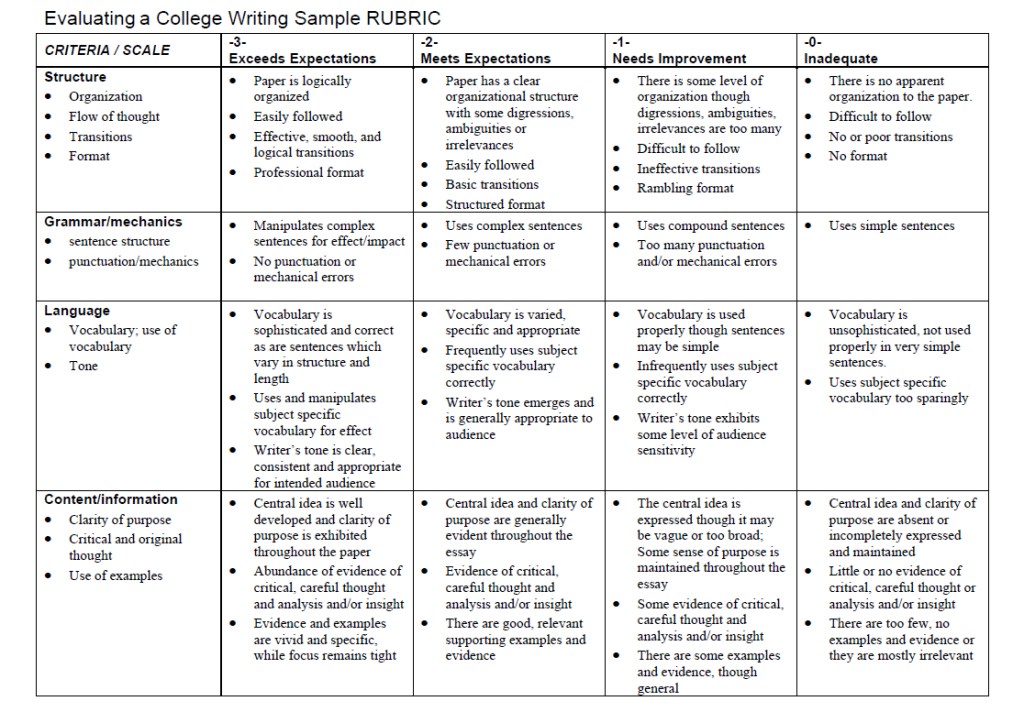
That’s where rubrics come in. Rubrics are scoring guides that can be used to assess various types of assignments, projects, or performances based on specific criteria. They offer a detailed evaluation that goes beyond just assigning a letter grade or percentage.
Here are some key elements to consider when creating rubrics for assessment:
1. Clear Learning Objectives: Before creating a rubric, it is essential to identify clear learning objectives and standards for the assignment or project being assessed. This will help ensure that the rubric aligns with the goals of the lesson and accurately evaluates student understanding.
2. Criteria: The criteria should reflect both qualitative and quantitative aspects of the assignment or project being evaluated. For instance, if assessing writing skills, criteria could include grammar usage (quantitative) as well as creativity (qualitative).
3. Levels of Performance: Rubrics typically include several levels of performance ranging from excellent to poor/unsatisfactory; each level should be clearly defined with descriptors outlining what each level looks like in terms of meeting expectations.
4. Feedback: Effective feedback provides actionable insights into areas where students excel and areas they need improvement upon; therefore it is important to make sure that your rubric allows space for comments on how students could improve their work next time around.
5. Transparency: Make sure your rubric is transparent so all students understand what they need to do to earn top marks – this includes sharing detailed descriptions about each criterion within your grading tool kit!
When using rubrics for assessment purposes it’s crucial that you communicate its purpose clearly with your students so they understand how they will be evaluated throughout their academic journey. Additionally, it is important to consider how the results of your rubric will be used; Will they be used for grading purposes or will they be shared with parents and administrators?
Ultimately, rubrics are a valuable tool that can help students understand what is expected of them while providing teachers with a more comprehensive evaluation of their student’s progress. By following these tips you’ll be well on your way to creating effective and meaningful assessments that benefit everyone involved in the learning process!
 Alternative Amie
Leave a comment