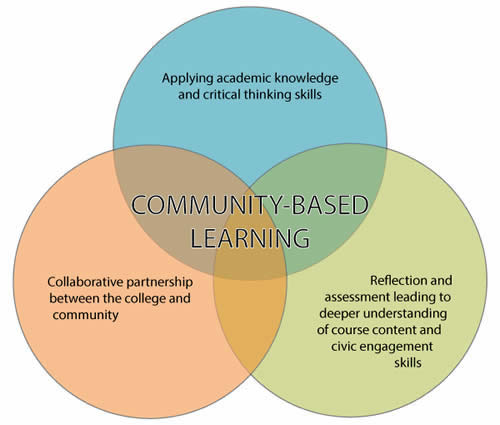
Community-based learning is a powerful tool for education that has been adopted by many alternative schools around the world. This type of learning involves engaging with and learning from community members, organizations, and businesses outside of traditional classroom settings. It emphasizes practical experience, hands-on learning, and real-world problem-solving in addition to theoretical knowledge.
To give you a better understanding of community-based learning, we have compiled some frequently asked questions about it:
Q: What is community-based learning?
A: Community-based learning refers to educational experiences that are anchored in communities outside the school environment. Students engage with people and institutions within their communities to learn new skills, gain knowledge on specific topics and explore potential career opportunities.
Q: How does community-based learning differ from traditional education?
A: Traditional education takes place mainly in classrooms where students learn theoretical concepts through lectures delivered by teachers. Community-based education focuses on hands-on activities which encourage learners to solve problems through collaboration while applying their knowledge in real-life situations.
Q: What are some examples of community-based learning activities?
A: There are several types of community-based activities such as internships, service-learning projects, apprenticeships or job shadowing programs. For instance, students can participate in gardening projects with local farmers to learn about sustainable agriculture practices or volunteer at non-profits organization that promotes social justice issues like homelessness or food insecurity.
Q: Who can benefit from community-based education?
A: Community based-education benefits everyone involved including students who get exposed to diverse perspectives other than those taught in textbooks; educators who interact directly with communities they serve; parents who see tangible results of their children’s hard work within their own neighborhoods; and lastly but not least business owners who get an opportunity to shape future workforce development according to industry standards.
Q: How does this approach help students become more engaged learners?
A: Community-Based Learning helps learners become more engaged because they’re working alongside others towards common goals rather than passively listening to lectures. By being immersed in the practical applications of what they’re learning, students can see how their education applies directly to real-world problems. They also get to apply what they learn in real-time and receive feedback from community members who are experts in their fields.
Q: What skills do students gain from community-based learning?
A: Students gain a variety of skills through this approach such as communication, critical thinking, problem-solving, leadership, empathy, adaptability among others. These soft and hard skills prepare them for future careers by exposing them to different types of work environments and enabling them to develop an understanding of various industries.
Q: Is community-based learning only for high school or college-aged learners?
A: Community-based education is not restricted to any age group; it can be applied at any level including preschools where children learn about nature by visiting nearby parks or senior citizens’ centers where retirees teach kids about history lessons.
Q: How does community-based education foster social justice?
A: Community-Based Learning provides opportunities for marginalized groups that have been historically underrepresented in traditional classroom settings. Through working with communities that face systemic oppression like poverty or racism, students learn about the realities of these issues while developing empathy towards people who experience them regularly.
Q: Why is community engagement important when it comes to alternative schooling and education?
A: Alternative schooling and education rely heavily on innovative approaches that prioritize individualized learning plans tailored according to each student’s needs. Therefore it becomes necessary for educators to engage with communities outside the classroom environment so that they can provide diverse perspectives on how best learners’ interests align with local industry standards.
Q: What challenges might educators face when implementing community-based programs?
A: Educators may encounter several barriers when implementing a successful program such as lack of funding or infrastructure support from schools district officials; limited availability of transportation options which limits mobility among those living in low-income areas; resistance from some parents or teachers who are not familiar with this approach; and lastly, difficulty in finding appropriate community partners.
Q: How can communities support community-based learning?
A: Communities can support community-based education by providing mentors for students, offering internships or job shadowing opportunities, providing space for educational activities or hosting events that promote local culture. By supporting these initiatives they help inspire learners to develop a sense of civic responsibility while fostering a lifelong love of learning.
Q: What is the future of community-based education?
A: The future of Community-Based Education looks bright as more educators realize its potential to revolutionize traditional classroom settings by incorporating hands-on experiences into their curriculum. It provides an opportunity for learners to explore different career paths while developing skills that enable them to succeed in today’s fast-paced world. As such, it will continue to grow and evolve as a meaningful tool for alternative schooling and education.
 Alternative Amie
Leave a comment