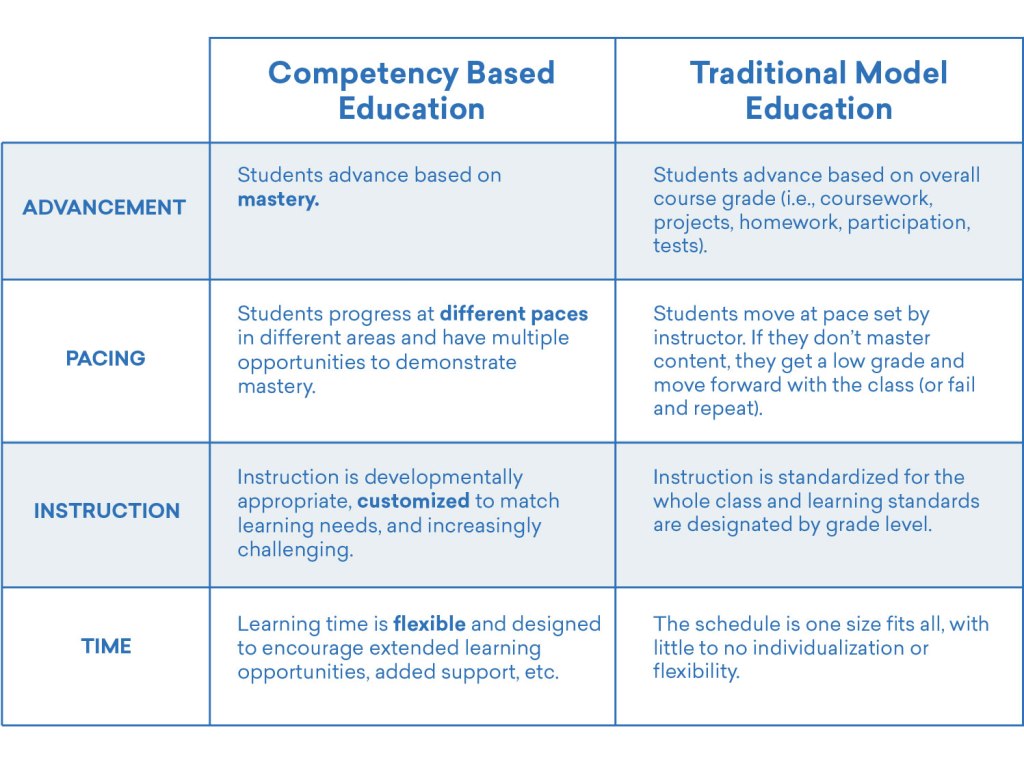
Competency-based education (CBE) is a student-centered approach to learning that focuses on the mastery of skills and knowledge rather than time spent in a classroom. It emphasizes students’ abilities to demonstrate their proficiency in specific areas, allowing them to move forward at their own pace. This approach provides more flexibility, efficiency, and personalization for learners who may have different backgrounds, experiences, and goals.
In CBE, students progress through a series of competencies or learning outcomes that are clearly defined and measurable. These competencies can be aligned with standards or industry needs and reflect the skills and knowledge required for success in a particular field or discipline. They are often broken down into smaller components or sub-competencies that can be assessed separately.
Assessment is an integral part of CBE as it helps determine what students know and can do at each stage of their learning journey. Teachers use various methods such as exams, projects, simulations, portfolios, observations, interviews, self-assessments to evaluate students’ performance against the set competencies. Feedback is provided regularly to help learners identify strengths and weaknesses so they can improve further.
One key advantage of CBE is its flexibility in terms of time and place. Students can learn anytime anywhere using different resources such as textbooks, videos, podcasts, online courses or mentors depending on their preferences and needs. They are not limited by traditional class schedules or locations but have greater control over their learning experience.
Another benefit is that CBE recognizes prior learning from previous coursework or work experience which means that students do not have to repeat what they already know but focus on areas where they need improvement. This saves time and money while increasing motivation as learners see tangible progress towards their goals.
CBE also encourages collaboration among learners who may work together on projects or share feedback on each other’s work through peer review processes. This fosters communication skills critical thinking creativity teamwork empathy which are essential for success beyond school.
However, CBE is not without challenges. One of the main concerns is ensuring that competencies are valid and reliable measures of learning outcomes. This requires careful design and alignment with standards or industry needs as well as clear criteria for assessment. Teachers need to be trained in CBE principles and practices so they can provide effective feedback to students.
Another issue is the potential for CBE to reinforce inequality by favoring certain types of learners or skills over others. For example, students from privileged backgrounds may have more access to resources or mentors while those from disadvantaged backgrounds may struggle with technology or language barriers. Therefore, it is important to ensure equity in terms of access support and opportunities for all learners regardless of their background.
Despite these challenges, CBE has gained momentum in recent years as an alternative approach to traditional education models that focus on seat time rather than mastery of skills and knowledge. It aligns well with the changing demands of the workforce which require individuals who can adapt quickly learn continuously collaborate effectively solve complex problems think critically communicate clearly and innovate creatively.
CBE also offers a pathway for lifelong learning where individuals can acquire new competencies throughout their careers rather than relying solely on formal degrees or certificates at specific points in time. This enables them to stay relevant flexible resilient and competitive in today’s rapidly evolving economy.
In conclusion, competency-based education (CBE) provides a student-centered approach that emphasizes mastery of skills and knowledge through clearly defined measurable competencies aligned with standards or industry needs. It offers flexibility efficiency personalization collaboration recognition of prior learning and lifelong learning opportunities but also faces challenges related to validity reliability equity teacher training curriculum design assessment methods etc. However, it represents a promising alternative model for education that prepares students for success beyond school by fostering critical thinking creativity communication empathy teamwork adaptability continuous learning innovation etc.
 Alternative Amie
Leave a comment