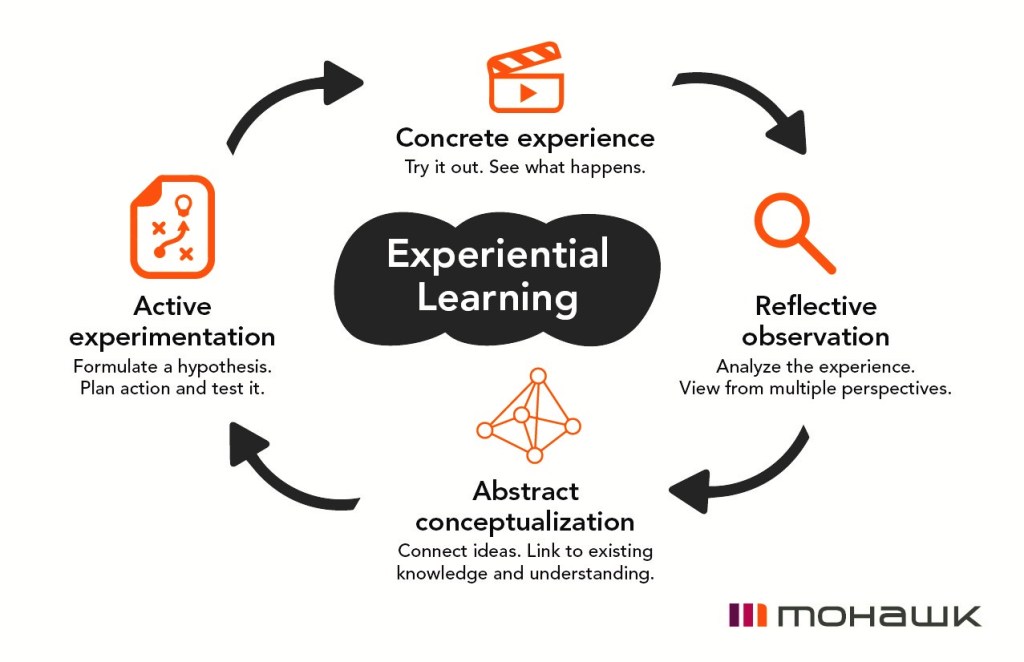
Experiential learning is a powerful tool for teaching and retaining knowledge. It’s a process that engages students in hands-on activities, allowing them to learn through experience. Unlike traditional classroom learning, experiential learning involves active participation and reflection on individual experiences.
There are several benefits to experiential learning. Firstly, it promotes critical thinking skills by encouraging students to reflect on their experiences and analyze the outcomes. This type of reflective practice helps learners develop problem-solving strategies that can be applied in real-life situations.
Secondly, experiential learning fosters creativity by providing opportunities for students to explore and experiment with different ideas and concepts. It allows them to think outside the box and come up with innovative solutions.
Thirdly, this style of learning encourages collaboration between students as they work together towards common goals. Students learn how to communicate effectively, listen actively, share responsibilities, and respect each other’s opinions.
Fourthly, experiential learning creates a sense of ownership over the educational process as it empowers learners to take charge of their own education. They become more engaged in the material they are studying because they have an active role in creating their own understanding of it.
There are many types of experiential learning activities that educators can use depending on the subject matter being taught or student needs. Field trips provide opportunities for hands-on exploration outside the classroom while service-learning projects allow students to apply classroom knowledge to solve real-world problems.
Simulations enable learners to experience complex scenarios without any risk involved while games make lessons more engaging and interactive while still promoting essential skills such as teamwork or strategy development.
Another type is project-based learning where students work collaboratively on extended projects that require them to research topics deeply before applying what they learned into concrete deliverables like presentations or products.
In conclusion, Experiential Learning provides an opportunity for educators who want their learners not only understand but also internalize what they teach them beyond just memorizing the material. It is a powerful way to engage and motivate learners, promote critical thinking and problem-solving skills, encourage creativity, foster collaboration, and create a sense of ownership over the educational process. Incorporating experiential learning activities into your lessons will not only make them more engaging but also improve the retention rate among students as they can apply what they learned in real-life situations.
 Alternative Amie
Leave a comment