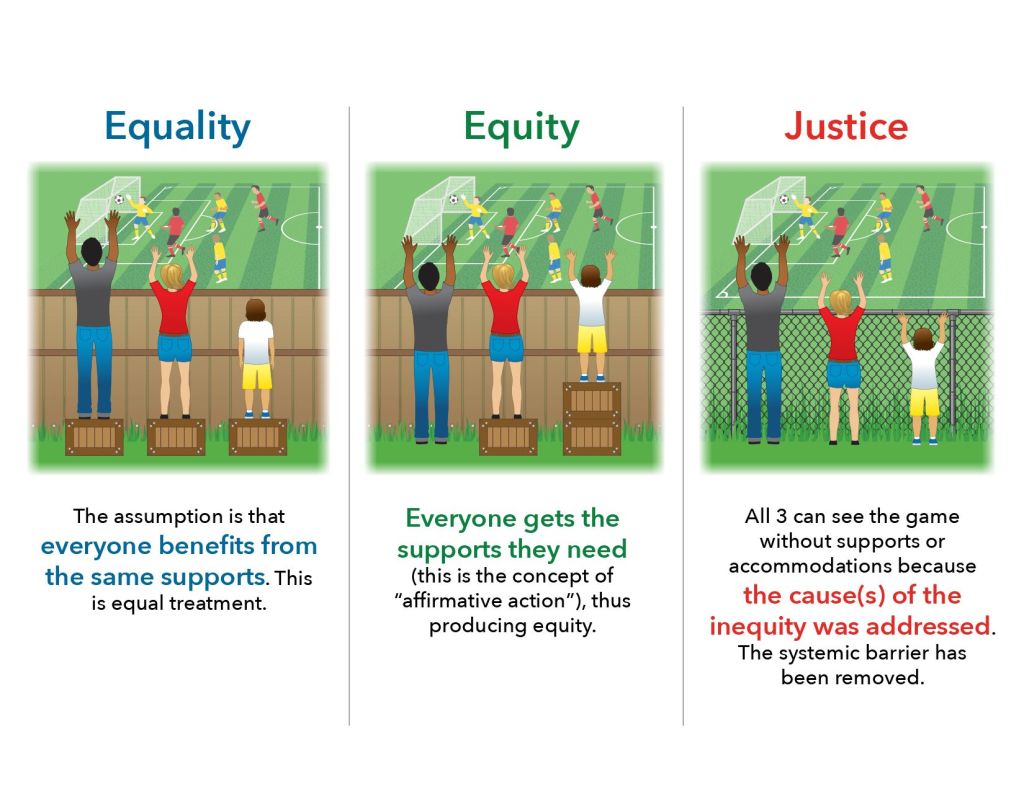
Equity, or the concept of fairness and impartiality, has been a buzzword in education for quite some time now. But what does it actually mean? And how do we achieve it?
Many schools have implemented equity initiatives to address disparities in opportunity and outcomes among students. These initiatives aim to provide all students with an equal chance to succeed regardless of their background, race, gender, or socioeconomic status.
However, achieving equity is easier said than done. There are many factors that contribute to educational inequality, including systemic racism and classism ingrained in our society. It requires more than just superficial changes such as diversifying the staff or implementing sensitivity training.
True equity requires a fundamental shift in our approach to education. We need to recognize that every student comes from a unique background with different needs and experiences. This means rethinking traditional models of teaching and learning that often prioritize conformity over individualization.
Alternative models of education have emerged as potential solutions to achieving equity in schooling. These models prioritize student-centered learning where students take ownership of their education by setting goals, pursuing interests, and working collaboratively with peers.
Montessori schools are one example of an alternative model that emphasizes self-directed learning and hands-on exploration instead of standardized testing and lectures. Another example is project-based learning where students work on projects that integrate multiple subjects while also addressing real-world problems.
While these approaches may not be feasible for all schools due to limited resources or infrastructure limitations, they offer valuable insights into what equitable education can look like when we prioritize student agency over compliance.
In conclusion, achieving true equity requires more than just lip service – it demands systemic change at every level of the educational system. Alternative models present viable solutions worth considering if we want all students to have access to quality education regardless of their background or circumstances.
 Alternative Amie
Leave a comment