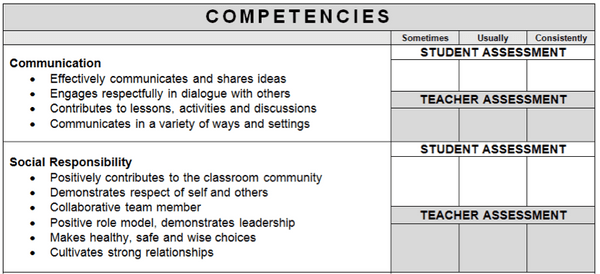
As our education system continues to evolve, new methods of teaching and assessing student performance are being explored. One such method is Competency-based grading (CBG), a system that focuses on students’ mastery of skills rather than their ability to memorize information.
The traditional grading system has long been criticized for its emphasis on test scores and grades. This approach often leads to students cramming for exams, memorizing information only to forget it once the test is over. Additionally, this method fails to account for the fact that students learn at different rates and in different ways.
In contrast, competency-based grading measures a student’s proficiency in specific skills or competencies rather than assigning them a letter grade based on their overall performance. It allows teachers to focus more on the learning process itself rather than just the end result.
One benefit of CBG is that it eliminates arbitrary deadlines and timetables as students can move at their own pace through each skill or competency set by teachers. Students with different levels of prior knowledge will be able to work together without feeling left behind when they work at their own rate instead of following an imposed timeline.
Another advantage is that CBG promotes self-awareness and encourages students to take ownership of their learning progress since they know not only what they need but also how much time it takes them personally compared with other classmates when honing particular competencies. This increased accountability can lead to greater engagement among learners who feel empowered by having more control over how they learn.
Furthermore, because competency-based grading assesses actual understanding and application rather than mere recall, assignments are no longer limited merely by rote memorization but reflect real-world scenarios where content must be applied creatively with critical thinking skills being required too. This results in more meaningful assessments which better prepare children for life outside school walls where practical application means everything!
Critics argue that this type of assessment may lack standardization across schools or districts depending upon which specific competencies are chosen as well as how they are measured. However, advocates counter that this can be addressed through clear communication and collaboration between teachers in different schools or locations.
Additionally, CBG is not intended to replace traditional grading systems altogether but rather be used alongside them. While letter grades may still be necessary for college applications or other specific contexts, CBG offers a more comprehensive assessment of a students’ performance and progress.
Ultimately, the goal of competency-based grading is to ensure that all students have equal opportunities to learn and grow at their own pace while also providing meaningful feedback on their progress. With its focus on mastery over memorization, it has the potential to revolutionize education by putting student growth and learning at the center of the educational experience.
In summary, competency-based grading offers several benefits over traditional grading methods by focusing on skills mastery rather than test scores. It promotes self-awareness among learners since they take ownership of their learning progress and encourages critical thinking skills development too with assignments being tailored towards real-world scenarios where content must be applied creatively with practical application meaning everything! Although there are challenges associated with implementing this type of assessment across all schools or districts consistently; clear communication channels need establishing so everyone knows what’s expected from them when assessing competencies within each curriculum area covered by teachers working together collaboratively better enabling success for every child involved in such an education system where no one gets left behind regardless of prior knowledge levels!
 Alternative Amie
Leave a comment