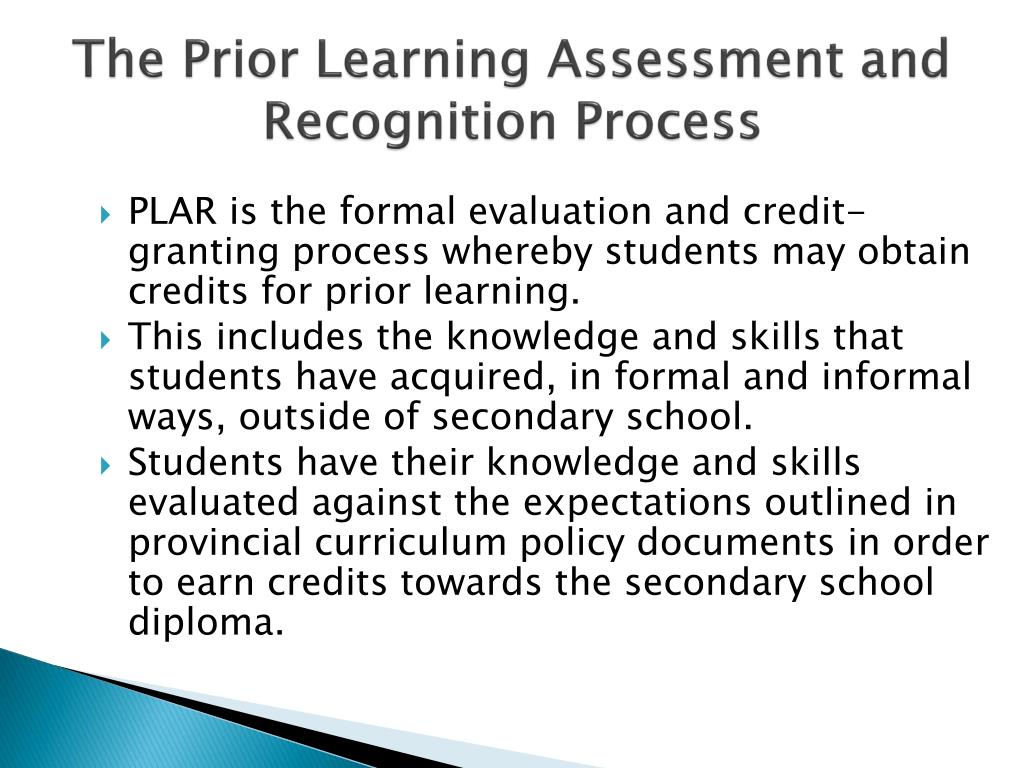
Prior Learning Assessment and Recognition (PLAR) is a process that recognizes learning acquired outside of formal education systems. It can include knowledge gained through work experience, self-directed study, volunteer work, or other relevant experiences. PLAR provides individuals with an opportunity to demonstrate their knowledge and skills and receive academic credit towards completed programs.
PLAR is becoming increasingly popular as people look for ways to fast-track their education or switch careers without having to start from scratch. For those who have already gained practical experience in a particular field, PLAR offers a pathway to formally recognize their expertise and allow them to advance in their career.
The PLAR process involves three main steps: identification of prior learning, assessment of prior learning, and evaluation of prior learning.
Identification involves identifying the relevant knowledge and skills that have been acquired through previous experiences. This could involve reviewing resumes or portfolios or conducting interviews with candidates to determine the extent of their knowledge.
Assessment involves determining whether the identified knowledge meets the requirements set by the program or institution offering recognition. The assessment process typically involves some form of testing or evaluation which may be done through written exams, oral presentations, simulations, or demonstrations.
Evaluation involves assigning credit hours based on the level of proficiency demonstrated during assessment. These credits are then applied towards specific courses within a program offered by an educational institution.
One key benefit of PLAR is that it allows individuals to save time and money on obtaining formal education credentials. By recognizing previously acquired knowledge and skills, individuals can skip introductory courses where they already possess adequate understanding while focusing on more advanced topics relevant to their area of interest.
Another advantage is that it helps bridge gaps between traditional academic programs and real-world expertise gained through life experiences such as entrepreneurship ventures or community involvement projects. By acknowledging these types of accomplishments beyond traditional metrics like grades test scores students receive greater validation for non-traditional methods used in developing competencies needed for success in today’s economy
However there are some challenges that can arise when implementing PLAR. One of the main challenges is ensuring the consistency and quality of assessments across multiple institutions. There needs to be a standard set for evaluating prior learning so that individuals are not unfairly judged based on subjective opinions or biases.
Another challenge is creating a system flexible enough to accommodate different types of learners with varying backgrounds and experiences. The process should be accessible to all individuals regardless of their socio-economic status, cultural background, or previous education experience.
Despite these challenges, PLAR offers an innovative approach to recognizing non-traditional forms of learning and expertise. It provides a valuable opportunity for individuals who have acquired knowledge outside traditional academic settings to demonstrate their skills and gain recognition towards formal certification.
To fully realize the potential benefits of PLAR, educational institutions need to develop more robust processes for identifying relevant skills and experiences while providing adequate support for candidates during assessment and evaluation stages. By doing this they can help enable people from diverse backgrounds achieve their goals while simultaneously providing employers with the skilled workforce they need in today’s fast-paced economy.
 Alternative Amie
Leave a comment