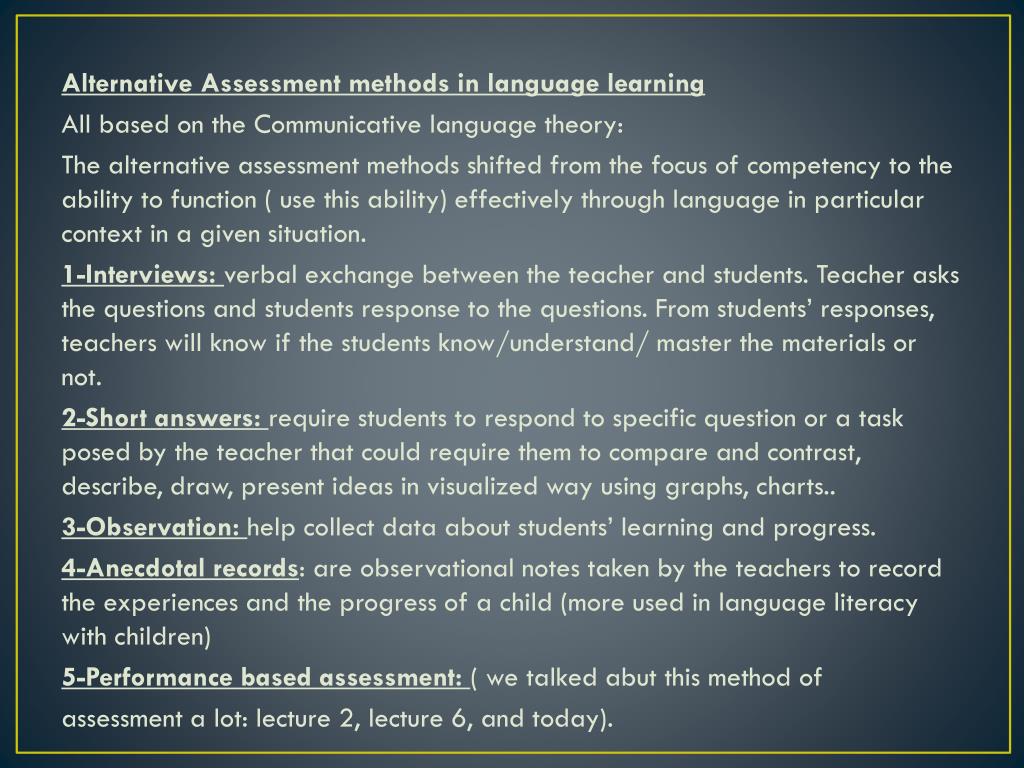
Alternative Assessment Methods: A Look at How They are Changing the Education Landscape
Assessment methods have always been an integral part of education. They help teachers and administrators to gauge students’ understanding, identify areas that need improvement and measure overall progress. Traditional assessment methods such as tests, quizzes and exams have long been used in schools across the world. However, over the years, alternative assessment methods have emerged which offer educators new ways to evaluate student learning.
In this article, we will be taking a closer look at some alternative assessment methods that are changing the education landscape.
1. Project-Based Learning (PBL)
Project-based learning is a teaching method where students work on projects for an extended period of time. PBL requires students to apply what they’ve learned in real-life situations while solving problems or creating something new. The focus is on critical thinking, collaboration and communication skills.
2. Portfolios
Portfolios are collections of work or artifacts that demonstrate a student’s progress over time in a specific subject area or skill set. Students can include written work, artwork, multimedia presentations or any other evidence of their learning process.
3. Self-Assessment
Self-assessment is when students take responsibility for evaluating their own learning progress based on criteria set by their teacher or themselves. It involves setting goals and reflecting on one’s strengths and weaknesses.
4. Peer Assessment
Peer assessment is when students evaluate each other’s work based on predetermined criteria set by the teacher or themselves. This not only helps them develop critical thinking skills but also encourages teamwork and communication among peers.
5. Performance Assessments
Performance assessments measure how well a student can perform certain tasks related to their subject matter instead of just memorizing information about it like traditional assessments do.
6. Authentic Assessments
Authentic assessments assess real-world applications of knowledge gained through coursework rather than just testing rote memorization skills from books alone.
7 . Multiple-Choice Questions
Multiple-choice questions are often used in traditional assessments. But, they can also be used as alternative assessment methods when designed to test critical thinking skills by requiring students to select the best answer out of several options.
8. Case Studies
Case studies involve looking at real-life scenarios and analyzing them from different perspectives. They allow students to apply what they have learned in a practical way.
9. Simulations
Simulations provide an environment where students can interact with realistic models of complex systems or processes that would otherwise be too expensive or dangerous for them to experience firsthand.
10. Game-Based Assessments
Game-based assessments use games as assessment tools rather than just recreational activities. These games simulate real-world situations, providing a fun and engaging way for students to learn while being assessed.
Why Use Alternative Assessment Methods?
Alternative assessment methods offer various benefits over traditional assessment methods:
1. Encourage Critical Thinking Skills Development
Alternative assessment methods require problem-solving and critical thinking skills development which is essential for success in life beyond school.
2. Promote Collaboration and Communication Skills
Most alternative assessments require teamwork, communication skills, and collaboration among peers which are important life skills.
3 . Measure Student Progress More Accurately
Alternative assessments measure student progress more accurately than traditional tests that only assess memorization ability since it measures application of knowledge gained through coursework rather than just rote memorization of information from books alone.
4 . Engage Students More Effectively
Many alternative assessment methods such as simulations, game-based assessments etc., engage students more effectively than traditional tests because they provide hands-on learning opportunities that promote active participation in learning rather than passively listening or reading about it.
Conclusion
In conclusion, alternative assessment methods offer educators new ways to evaluate student learning that are becoming increasingly popular across the education landscape today due to their numerous benefits over traditional testing approaches like multiple choice exams alone. With these innovative techniques becoming more widely accepted within educational communities worldwide – including everything from project-based learning and portfolios to self, peer, and performance assessments – it’s no wonder why teachers are now more than ever before embracing this evolution in assessment methods.
 Alternative Amie
Leave a comment