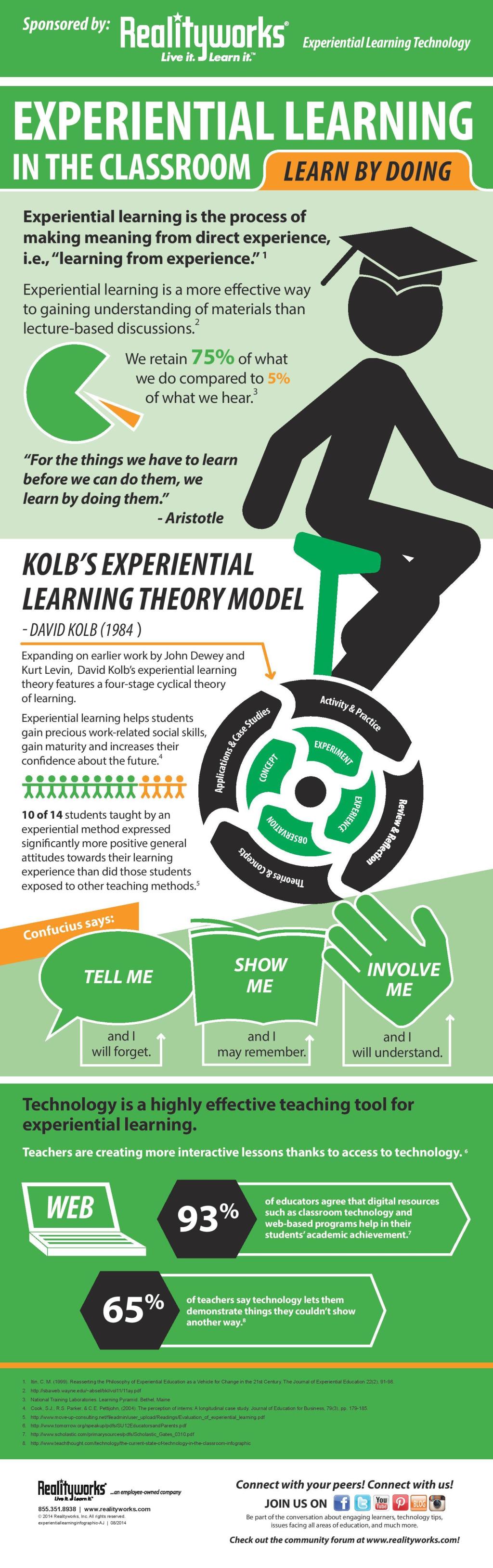
Experiential learning is a hands-on approach to education that emphasizes active participation and practical experience. Instead of just reading or listening about a subject, experiential learners engage with it directly, using their senses and intuition to explore and understand the world around them.
Research has shown that experiential learning can be highly effective in improving student performance and satisfaction. A study published in the Journal of Educational Psychology found that students who participated in experiential learning activities outperformed those who learned through traditional methods on measures of academic achievement, critical thinking, and problem-solving skills.
One reason for this success is that experiential learning allows students to apply what they have learned in real-world situations. By seeing firsthand how concepts work in practice, learners gain a deeper understanding of the material and are better able to remember it over time.
Experiential learning also fosters creativity by encouraging learners to think outside the box and come up with innovative solutions to problems. This approach encourages risk-taking and experimentation, which can lead to breakthroughs not possible through more passive forms of education.
Another benefit of experiential learning is its ability to build confidence and self-esteem. When students take an active role in their own education, they develop a sense of ownership over their own growth and progress. This feeling of mastery can translate into greater confidence both inside and outside the classroom.
Finally, experiential learning promotes collaboration by emphasizing teamwork, communication, and cooperation among learners. These skills are essential for success in today’s global economy where cross-cultural exchange is becoming increasingly common.
Overall, there are many reasons why educators should consider incorporating more experiential learning opportunities into their curricula. From improved academic performance to increased creativity and confidence-building benefits – these approaches have proven themselves as an effective way for students at all levels (from kindergarten through college) learn more deeply while having fun too!
 Alternative Amie
Leave a comment