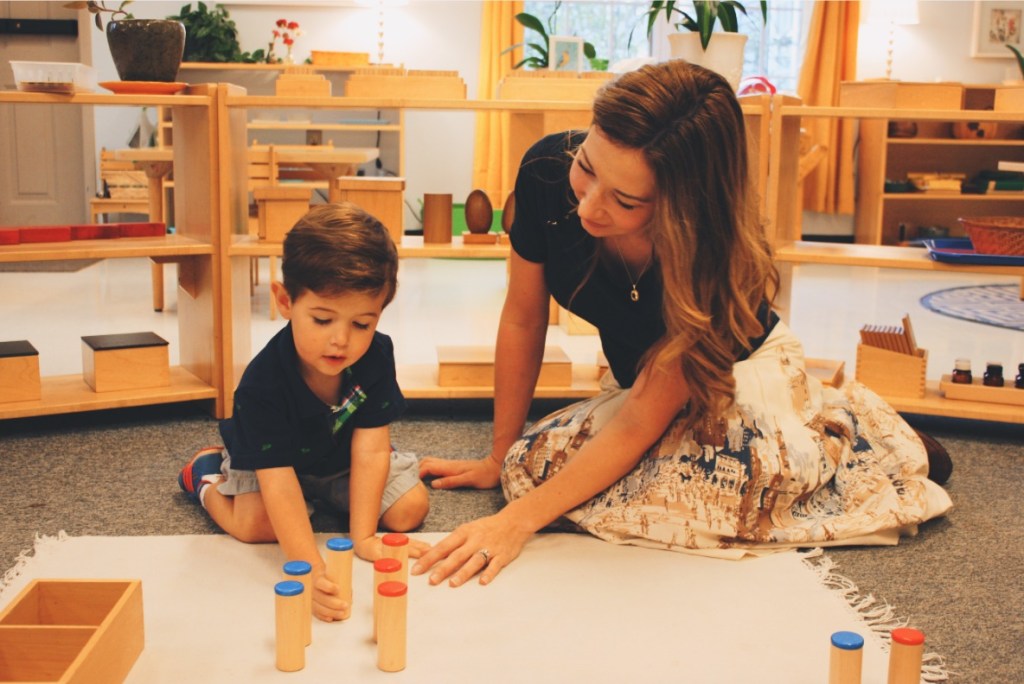
Montessori education is a unique approach to teaching that has been around for over 100 years. It was developed by Dr. Maria Montessori, an Italian physician and educator who believed that children learn best when they are allowed to explore and discover things on their own.
The Montessori method emphasizes self-directed learning and hands-on exploration. Children are encouraged to work at their own pace and follow their interests, rather than being forced to conform to a rigid curriculum or timeline.
One of the key principles of Montessori education is respect for the child as an individual. Teachers in Montessori classrooms view themselves as guides rather than authorities, helping children navigate their learning journey but ultimately allowing them to take charge of their own learning.
Another important aspect of the Montessori approach is the use of specially designed materials that allow children to learn through sensory experiences. For example, there may be sets of blocks in different sizes, colors, and shapes that children can manipulate and sort in order to develop spatial reasoning skills.
In a typical Montessori classroom, you might see children working independently or with small groups on various activities throughout the day. Some might be practicing handwriting using sandpaper letters, while others might be counting objects or reading books from a carefully curated selection.
But despite this emphasis on individual exploration and discovery, there is also a strong sense of community within Montessori schools. Children are encouraged to collaborate with one another and help each other out when needed. This can foster a sense of responsibility towards others as well as empathy – qualities that will serve them well later in life.
So what are some of the specific benefits of Montessori education? Here are just a few:
1) Improved cognitive development: Studies have shown that children who attend Montessori schools tend to perform better academically than those in traditional schools. They also tend to have higher levels of creativity and critical thinking skills.
2) Greater independence and self-reliance: Because Montessori students are encouraged to take charge of their own learning, they often develop a strong sense of self-confidence and autonomy. This can be especially beneficial for children who may struggle in more traditional classroom settings.
3) Enhanced social skills: The collaborative nature of Montessori classrooms helps children learn how to work effectively with others, communicate clearly, and resolve conflicts peacefully. These are all skills that will be valuable throughout their lives.
4) Respect for the environment: Many Montessori schools place a strong emphasis on environmental education, teaching children about sustainability and conservation from an early age. This can help instill a deep respect for the natural world as well as a sense of responsibility towards future generations.
Of course, like any educational approach, there are also some potential drawbacks or challenges associated with Montessori education. For example:
1) Limited access: Because Montessori schools tend to be private or charter institutions rather than public schools, they may not be accessible or affordable for all families.
2) Lack of standardization: Because there is no set curriculum or standardized testing in most Montessori schools, it can be difficult to compare student achievement across different institutions.
3) Potential for chaos: Without strict rules and regulations governing student behavior, some critics argue that Montessori classrooms could devolve into chaotic environments where discipline is lacking.
However, many parents and educators believe that the benefits of the Montessori approach far outweigh these potential downsides. And with an increasing number of alternative schooling options available today – including hybrid models that blend elements of both traditional and progressive approaches – it’s clear that there is no one-size-fits-all solution when it comes to education.
Ultimately, whether or not you choose to enroll your child in a Montessori school will depend on your individual values and priorities as well as your child’s unique needs. But regardless of what path you choose, it’s clear that the Montessori approach has a lot to offer in terms of fostering creativity, critical thinking, and self-directed learning – skills that will serve students well throughout their lives.
 Alternative Amie
Leave a comment