Summative Assessment in Alternative Schools and Education
Alternative schooling and education have been gaining popularity over the years as a way to provide a more personalized learning experience for students. In these settings, summative assessment plays an important role in evaluating student progress and achievement. Summative assessments are typically given at the end of a unit or semester and are used to measure overall knowledge and skills gained during that time period. This post will delve into what summative assessment is, how it differs from formative assessment, its benefits, types of summative assessment, and challenges faced by educators.
What is Summative Assessment?
Summative assessments are formal evaluations that measure the knowledge and skills acquired by students over a given time frame. These tests are usually graded using predetermined criteria to evaluate whether or not students have achieved mastery of the subject matter. The results help identify areas where additional instruction may be required to improve student outcomes.
How does it differ from Formative Assessment?
While summative assessments measure overall knowledge at the end of a unit or term, formative assessments track progress throughout the course of study. Teachers use this type of evaluation to monitor student growth in real-time and adjust their teaching methodologies accordingly. It also provides opportunities for feedback along with suggestions on how to improve performance before final exams arrive.
Benefits of Summative Assessments
Summative assessments offer several advantages when implemented correctly:
1. Encourages Student Accountability: Because these evaluations occur after extensive study periods, they require significant effort on behalf of students who must demonstrate mastery across all covered topics.
2. Provides Feedback for Instructional Improvement: By analyzing test results teachers can determine which topics need further refinement allowing them to tailor their lesson plans better.
3. Offers Objective Evaluation: When grading criteria are well-defined prior testing objectivity increases which helps teachers assess every student equally based on merit rather than favoritism bias.
4. Helps Identify Learning Gaps: Summative assessments can help identify students who may need additional support or interventions.
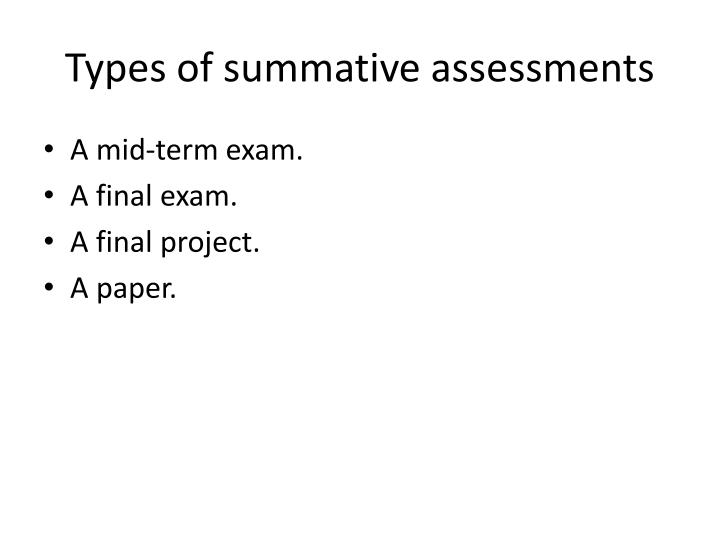
Types of Summative Assessments
Summative assessments come in various forms, including:
1. Standardized Tests: These are exams that are administered nationally using a uniform curriculum and grading system.
2. Performance Evaluations: Students demonstrate their skills through projects, presentations, or performances aligned with curricular standards.
3. Essay Examinations: Students provide written responses to prompts focusing on specific topics related to the course material learned throughout the term.
4. Portfolios: Compilation of student work over an extended period showcasing growth and proficiency across various subjects.
Challenges Faced by Educators
Despite its benefits, summative evaluation presents some challenges for educators such as:
1. Time Constraints: Preparing and administering these evaluations requires significant time allocation which may not be feasible during busy teaching schedules.
2. Limited Scope: Because summative evaluations only test students at the end of a unit/semester they don’t capture all aspects of learning like formative assessments do throughout the entire period.
3. Unforeseen Variables: Unexpected events outside of classroom control can disrupt student performance during testing periods skewing results in unpredictable ways.
4. Pressure to Perform Well : There is often immense pressure on students to perform well on these high-stakes tests leading them to experience anxiety and stress that affects their overall performance negatively.
Conclusion
As alternative education continues to grow in popularity so does reliance on summative assessment as an effective tool for evaluating student progress effectively while identifying areas requiring further attention from educators. By understanding how it works, its benefits alongside limitations faced by instructors administrators alike we can continue developing better methods for measuring academic success among our learners accurately while providing opportunities for improvement along the way!
 Alternative Amie
Leave a comment