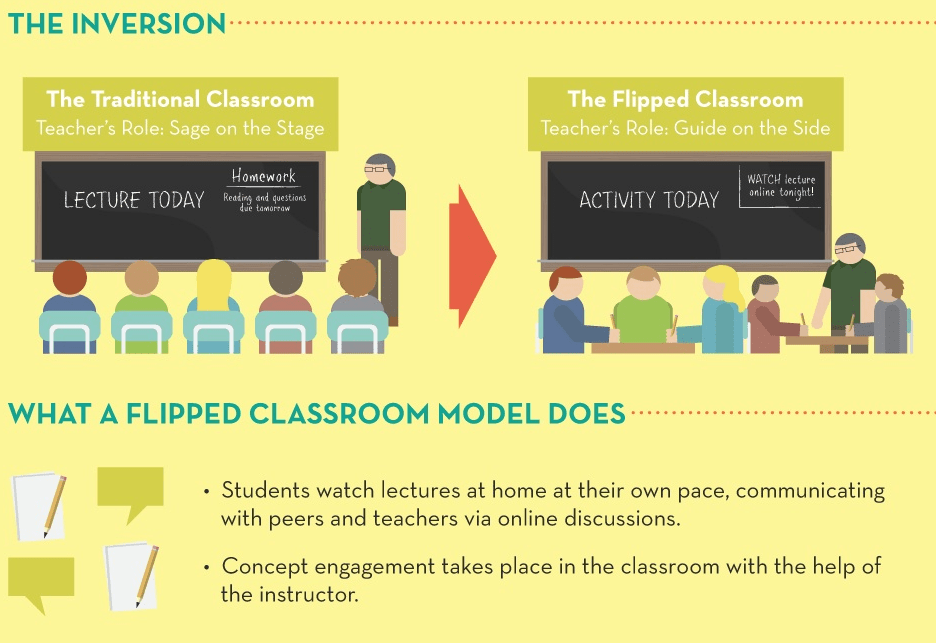
The traditional classroom model has always been a one-size-fits-all approach to education, with the teacher as the primary source of information and the students as passive recipients. However, this approach has its limitations in meeting every student’s individual needs and learning styles. Flipped Classroom is an innovative teaching method that reverses the roles of students and teachers by making them active contributors in their own educational journey.
What is a Flipped Classroom? This term refers to a pedagogical model where students learn new concepts outside the classroom through pre-recorded videos, podcasts, or other digital materials. They then come to class ready to apply their knowledge through collaborative activities, discussions, and projects facilitated by their teacher. In essence, this methodology flips the traditional learning process on its head.
One significant advantage of flipped classrooms is that it allows for more personalized instruction tailored to each student’s pace and interests. By giving students access to digital resources at home or anywhere they have internet access, educators can free up valuable classroom time for interactive sessions that challenge learners’ critical thinking skills while providing real-time feedback.
Another benefit of flipped classrooms is that they promote active engagement among students who might otherwise tune out during lectures or just go through the motions without really absorbing what’s being taught. Because they must watch videos or listen to audio recordings before attending class, learners are more likely to arrive with questions and be eager to participate actively in group work.
Flipped Learning also encourages peer-to-peer interaction as well as collaboration between teachers and students. It provides opportunities for learners from different backgrounds with various skill sets to engage in teamwork while tackling complex problems together under their instructor’s guidance.
Moreover, research shows that flipping classrooms can lead to improved academic performance among students compared with those taught using conventional methods. A study conducted by Stacey Roshan found out that her Precalculus Honors class scores increased by 20 percent when she began flipping her lessons.
Critics argue that flipped classrooms require a significant investment in technology and software, which may not be feasible for all schools. However, many free and affordable resources are available online, such as Khan Academy, TED-Ed, and YouTube tutorials.
In conclusion, Flipped Classroom can revolutionize the way students learn by providing greater flexibility and personalization while promoting active engagement between learners and teachers. This methodology allows instructors to focus more on collaborative activities that foster critical thinking skills while catering to individual needs. Although it requires some effort upfront to set up digital resources for students’ use outside of class time, the benefits are well worth it in terms of increased student achievement and overall satisfaction with their educational experience.
 Alternative Amie
Leave a comment