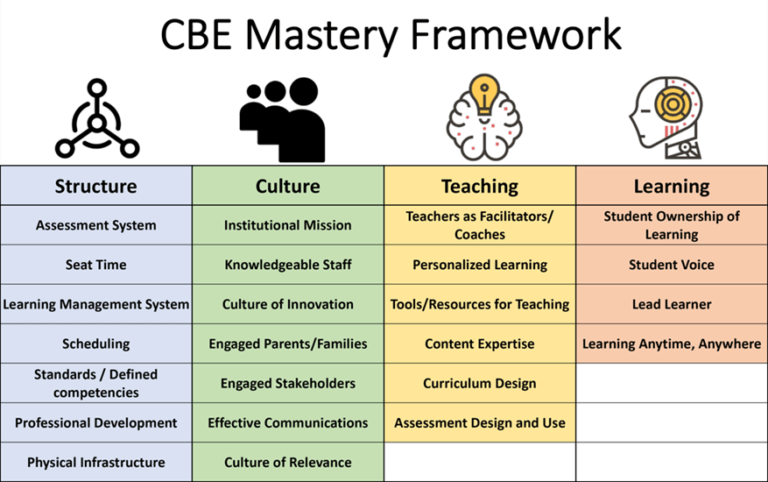
Competency-based education (CBE) is a learning approach that focuses on mastering specific skills and knowledge instead of completing a set amount of coursework or time spent in class. The concept of CBE has been around for decades, but it has recently gained popularity as an alternative to traditional educational models.
At its core, CBE is designed to help students develop the skills and knowledge they need to succeed in their chosen field. This means that learning outcomes are defined upfront, and students are given the tools they need to achieve those outcomes. In other words, CBE places more emphasis on what students know than how long they’ve spent studying.
One of the main advantages of CBE is that it allows students to progress at their own pace. Instead of being stuck in a classroom for hours every day, they can work through material at their own speed, taking as much or as little time as necessary to fully grasp each concept. This makes it possible for learners who struggle with certain subjects or who learn best through hands-on experience to excel in ways that may not have been possible under other educational models.
Another benefit of competency-based education is that it provides a clear path forward for learners who want to pursue advanced degrees or certifications. Since learning outcomes are clearly defined upfront, students can see exactly what they need to do in order to progress from one level of education to another. This helps them stay motivated and focused on achieving their goals.
One potential downside of CBE is that it can be challenging for educators and administrators who are used to more traditional teaching methods. Teachers must be able to create effective assessments that accurately measure student mastery over specific competencies while also providing ongoing feedback and support throughout the learning process.
Additionally, some critics argue that relying too heavily on specific competencies could lead educators away from teaching broader concepts such as critical thinking and creativity which might not fit into narrow categories like “competencies.”
Despite these challenges though many institutions are adopting CBE in various forms and shapes. Some schools have gone entirely competency-based, while others have added online resources to supplement traditional classroom learning.
One of the most important things to keep in mind when considering CBE is that it is not a one-size-fits-all solution. Different students will learn best under different circumstances, so it’s important to choose an educational model that is tailored to individual needs.
Overall, competency-based education has many potential benefits for learners who want a more flexible and focused approach to their studies. Whether you’re looking to pursue advanced degrees or simply want to gain new skills and knowledge on your own time, CBE could be the right choice for you.
 Alternative Amie
Leave a comment