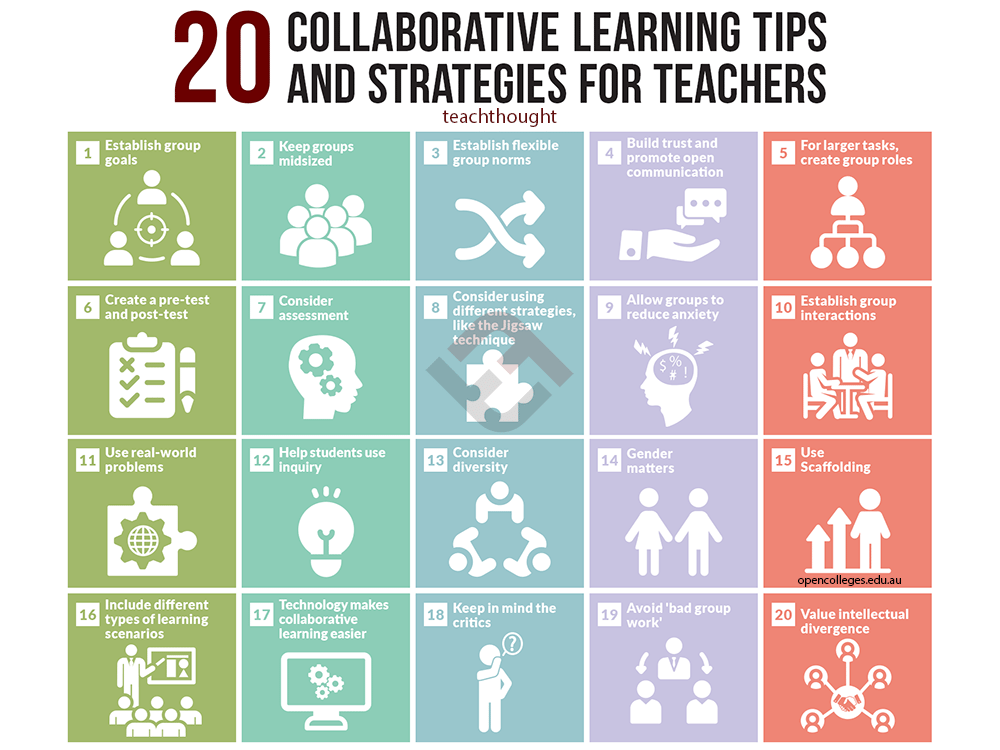
Collaborative learning has been gaining popularity in recent years as educators recognize the value of having students work together to achieve shared goals. This approach can be applied to a wide range of subjects and settings, from physical education classes to specialized STEM courses.
One popular method is peer tutoring, which involves pairing students with different levels of knowledge and experience so that they can learn from one another. Another technique is group investigation, where students work together to research a topic or issue before presenting their findings to the class.
The jigsaw method takes this concept even further by breaking up a larger project into smaller pieces that each student must complete before sharing their results with others. This encourages collaboration while also providing individual accountability for each student’s performance.
Think-pair-share is another useful strategy that allows students to discuss ideas with a partner before sharing them with the rest of the class. Student-led discussions take this concept even further by allowing learners to take ownership of their own learning experiences and lead conversations themselves.
Collaborative writing is an effective technique for developing writing skills while also encouraging teamwork and cooperation. Cooperative problem solving provides similar benefits in math and science classes, helping students develop critical thinking skills while working together on complex problems.
Role-playing and simulations are engaging ways for learners to explore historical events or fictional scenarios while collaborating with their peers. Cross-age mentoring connects younger and older students in mentor-mentee relationships that benefit both parties involved.
Cooperative learning can also be applied online through virtual environments like Google Classroom or other collaborative platforms. Team building activities help build strong bonds between classmates while collaborative art projects encourage creativity within groups.
Group projects with community partners provide opportunities for service learning while classroom jobs give students responsibilities within the classroom setting itself. Cooperative learning techniques can even be applied in physical education classes through team sports or other activities that require teamwork.
In STEM subjects, cooperative learning encourages experimentation, inquiry-based learning, and scientific exploration among small groups of peers. Debate teams and literature circles provide opportunities for students to engage in argumentation, critical thinking, and reading comprehension skills.
Peer editing and revising groups help students develop writing skills while also learning from one another. Class-wide service projects encourage civic engagement among students while collaborative research projects foster inquiry-based learning.
Games and puzzles can be used as tools for cooperative learning, encouraging teamwork while also developing problem-solving skills. Interactive whiteboard activities provide engaging visual aids for group work while brainstorming sessions and mind mapping exercises encourage creative thinking.
Group presentations with peer feedback allow learners to practice public speaking while receiving constructive criticism from their peers. Classroom management techniques can also be enhanced through the use of cooperative learning strategies, promoting a positive classroom environment where all students feel valued and respected.
Overall, there are many benefits to using cooperative learning in a variety of educational settings. From improving academic performance to fostering social-emotional development, this approach has proven successful in helping students achieve success both academically and personally.
 Alternative Amie
Leave a comment