Equity in Education: An Overview
Education is the foundation of a prosperous society. It plays an essential role in shaping individuals’ lives, providing them with knowledge and skills to cope with life’s challenges. However, not all students have access to quality education, leading to inequalities that require immediate attention. Equity in education aims at ensuring every student has equal opportunities for success regardless of their background or circumstances.
What is Equity?
Equity refers to fairness and justice in society where everyone has access to the same opportunities, resources, and privileges. It ensures that individuals are treated equally based on their needs rather than providing them with identical support. In education equity means removing barriers that prevent some students from accessing quality education.
Equality vs. Equity
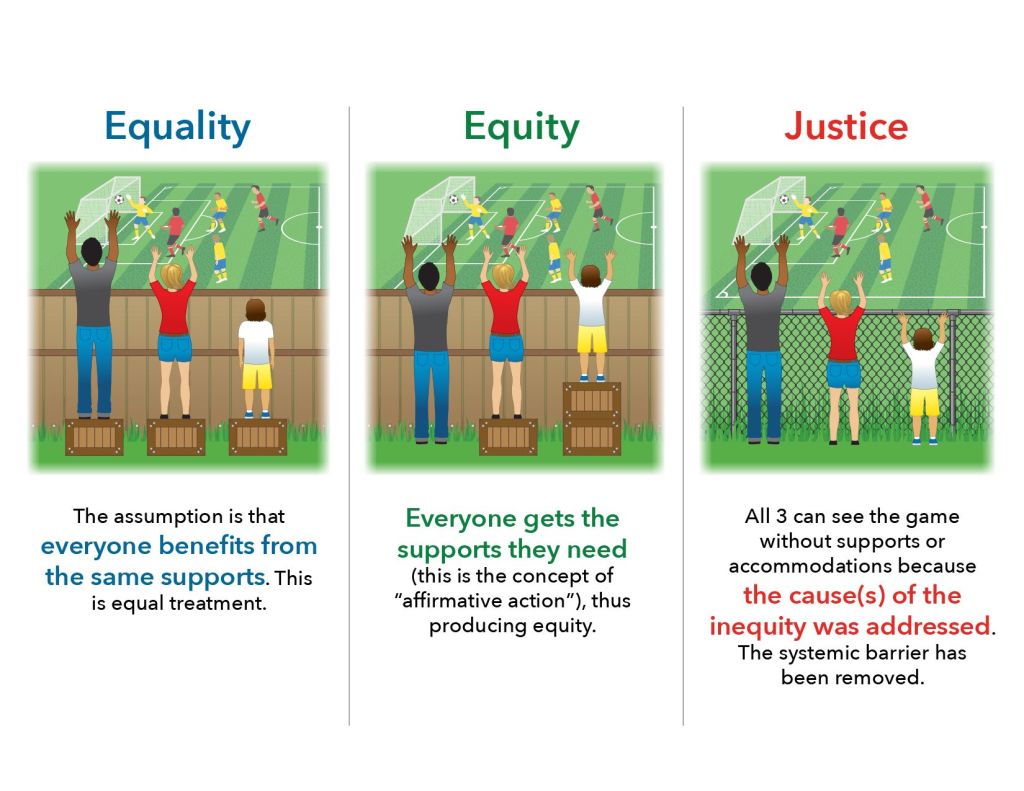
Although equality and equity are related concepts, they differ significantly in how they address disparities among different groups of people. Equality focuses on treating everyone equally irrespective of their differences while equity seeks to level up opportunities for those who have been historically disadvantaged.
For example, imagine two students trying to watch a baseball game over a fence; one is tall enough to see over it while the other is not tall enough. Giving both students boxes would be an equal solution; however, only one would benefit from it as the other could still not see over the fence due to his/her height difference. Providing more boxes for the shorter student equates an equitable solution since it addresses his/her unique need.
Why Do We Need Equity in Education?
Inequities exist within educational systems across various dimensions such as race/ethnicity, gender identity/expression, socioeconomic status (SES), language proficiency/disability status which can affect academic achievement outcomes.
The following statistics demonstrate why we need equity-based approaches:
– According to National Center for Educational Statistics (NCES), Black students graduated high school at a rate of 76% compared with 89% white counterparts.
– Students living below poverty line score lower on standardized tests than those above.
– English language learners (ELLs) are more likely to drop out of school than native speakers.
These statistics show that despite significant progress in education, some students face systemic and persistent barriers to academic achievement. Equity-based approaches aim at eliminating these disparities by providing targeted support for students who need it most, promoting equal opportunities for all.
How Can We Promote Equity in Education?
There is no one-size-fits-all approach to promote equity in education since every student has unique needs and challenges. However, here are some strategies that can help:
1. Culturally responsive teaching
Culturally responsive teaching involves integrating the cultural backgrounds of diverse students into classroom instruction. It acknowledges the importance of culture and recognizes its impact on learning outcomes, making learning relevant and engaging for all students.
2. High-quality early childhood education
Early childhood education provides children with a solid foundation for future academic success. Research shows that investing in high-quality early childhood education reduces achievement gaps among low-income and minority students.
3. Adequate funding
Schools serving low-income areas often have limited resources needed to provide quality educational opportunities compared to their wealthier counterparts. Adequate funding can bridge this gap by providing necessary resources such as textbooks, technology equipment, extracurricular activities among others.
4. Teacher diversity
Having a diverse teacher workforce is essential in addressing educational disparities as it promotes inclusivity and understanding of different cultures and experiences.
5. Multilingualism
Multilingual programs can improve ELL’s academic performance by enabling them to learn subjects effectively while retaining their primary languages.
Benefits of Equity-Based Approaches
Equity-based approaches benefit both individual learners and society as a whole:
1) Improved Academic Outcomes
When schools adopt equity-based approaches, they close the achievement gap between disadvantaged groups leading to improved academic outcomes across all demographics.
2) Increased Social Mobility
Students from low-income families who receive quality education have higher chances of social mobility, breaking the cycle of poverty.
3) Reduced Unemployment
Equity-based strategies promote equal access to quality education, leading to a better-prepared workforce that is more competitive in today’s job market.
4) Fosters Inclusive Society
Equity promotes inclusivity and diversity within society. Through equitable educational systems, individuals learn about different cultures and ideas, promoting tolerance and respect for others’ differences.
Conclusion
In conclusion, equity-based approaches play an essential role in promoting fairness and justice within our education system. Promoting equity means removing systemic barriers that prevent some students from achieving their full potential. By adopting inclusive policies such as culturally responsive teaching methods, adequate funding for schools serving low-income areas among others we can create a fairer society with equal opportunities for all.
 Alternative Amie
Leave a comment