Culturally Responsive Teaching: Creating Inclusive Learning Environments
In recent years, there has been increased attention on the need for culturally responsive teaching in our schools. With an increasingly diverse student population, it’s important to recognize that students come from a variety of cultural backgrounds and bring with them unique experiences and perspectives. Culturally responsive teaching is a pedagogy that recognizes these differences and seeks to create inclusive learning environments where all students can thrive.
What is Culturally Responsive Teaching?
Culturally responsive teaching (CRT) goes beyond simply acknowledging diversity in the classroom. It involves understanding and valuing the cultural backgrounds of each student and using this knowledge to inform instructional strategies.
At its core, CRT is about creating a classroom culture where every student feels valued, respected, and included. This means recognizing that different cultures have different ways of learning, communicating, and expressing themselves. CRT acknowledges these differences while also providing opportunities for students to learn from one another.
Why Is Culturally Responsive Teaching Important?
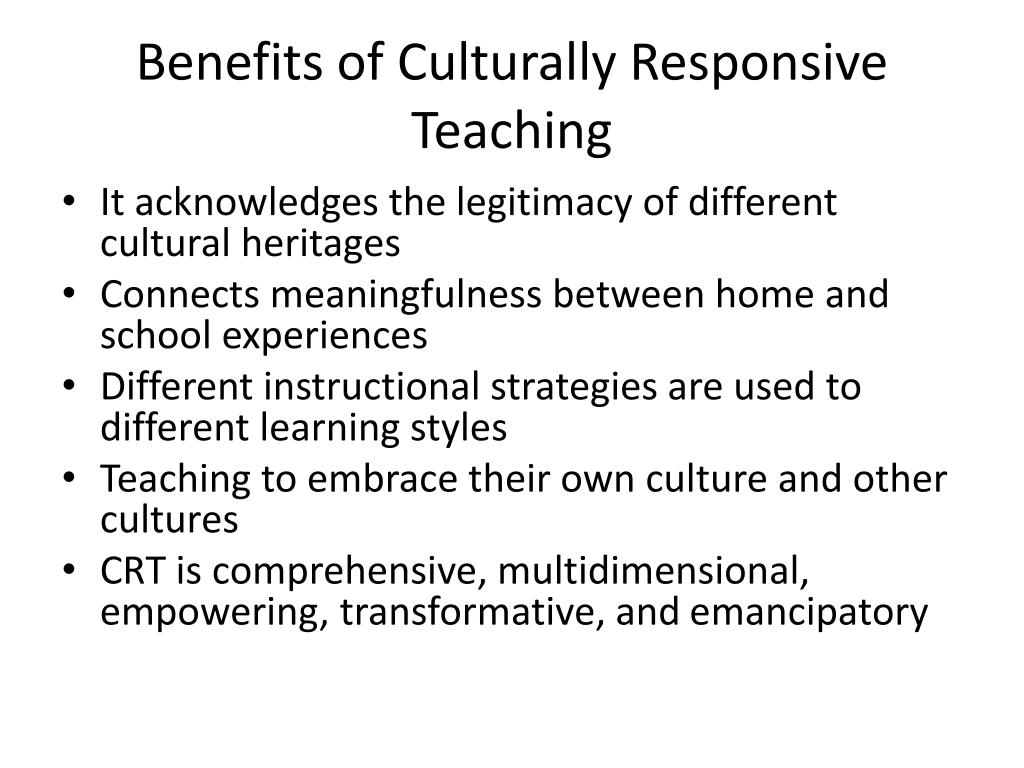
The benefits of culturally responsive teaching are numerous. First and foremost, it helps create a positive school climate where all students feel safe and supported. When students feel like they belong in their classrooms, they are more likely to engage in learning activities and take academic risks.
Secondly, CRT promotes academic achievement by taking into account the diverse needs of each learner. By incorporating various cultural perspectives into instruction, teachers can cater to different learning styles while also promoting critical thinking skills.
Finally, CRT prepares students for success outside of the classroom by helping them develop empathy towards others who may be different from themselves. In today’s globalized world, cultural competence is becoming an increasingly valuable skill as workplaces become more diverse.
How Can Teachers Implement Culturally Responsive Teaching Practices?
There are several strategies teachers can use to implement culturally responsive teaching practices in their classrooms:
1. Get To Know Your Students
One of the most important steps you can take towards creating a culturally responsive classroom is to get to know your students. Take the time to learn about their cultural backgrounds, interests, and experiences. This will help you understand how they learn best and what motivates them.
2. Incorporate Student-Centered Learning
Student-centered learning is an approach that places the student at the center of the learning process. This involves providing opportunities for students to take ownership of their own learning by choosing topics that interest them or working on projects that reflect their cultural background.
3. Use Culturally Relevant Materials
Incorporating culturally relevant materials into instruction can help students see themselves reflected in what they are learning. This could include books, videos, music, or art from different cultures.
4. Promote Collaboration and Discussion
Collaboration and discussion are essential components of culturally responsive teaching because they provide opportunities for students to share their perspectives with one another. By encouraging collaboration and discussion, teachers can create a classroom culture where all voices are heard and valued.
5. Recognize Stereotypes And Bias
It’s important for teachers to recognize stereotypes and bias in instructional materials as well as in their own thinking. By being aware of these issues, teachers can work towards creating more inclusive classrooms where all students feel respected.
6. Provide Positive Feedback And Encouragement
Providing positive feedback and encouragement is key to promoting academic achievement among all learners – including those from diverse backgrounds who may have faced challenges due to systemic barriers or discrimination.
Conclusion:
Culturally responsive teaching is an important pedagogy that recognizes diversity in our schools while also promoting academic achievement and preparing our students for success outside of the classroom.
By implementing practices such as getting to know your students, incorporating culturally relevant materials into instruction, promoting collaboration and discussion among peers , recognizing stereotypes & bias etc., we can create inclusive learning environments where every student feels valued & supported.
As educators it’s up-to us to ensure this happens so that every child feels seen, heard & understood.
 Alternative Amie
Leave a comment