Economic Policy and Government Regulation of Markets
The economy is a complex system that is influenced by many factors. Governments around the world have different approaches to regulating markets, but they all share the same goal: to promote economic growth while minimizing negative externalities. In this post, we will explore economic policy and government regulation of markets.
What is Economic Policy?
Economic policy refers to measures taken by governments to influence the economy’s performance. The main goals of economic policy are:
1. Promote Economic Growth – Governments aim to encourage businesses’ growth, create employment opportunities and increase people’s purchasing power through increasing their income.
2. Stabilize Prices – Governments aim for low inflation rates so that consumers can afford goods at affordable prices without experiencing rising costs.
3. Ensure Stable Exchange Rates – By stabilizing exchange rates, governments can facilitate international trade and investment while avoiding sudden fluctuations in currency values.
4. Encourage Innovation – To remain competitive on a global scale, countries must develop innovative technologies and products that will create new jobs and industries in the future.
There are two primary types of economic policies; monetary policy (managed by central banks) and fiscal policy (managed by governments).
Monetary Policy
Central banks use monetary policies as tools for managing an economy through influencing money supply as well as interest rates levels in a country’s banking system.
1. Money Supply Management- Central banks control money supply through setting targets for how much currency should be circulating within an economy at any given time.
2. Interest Rate Management- Central banks also set interest rate levels that govern borrowing costs from commercial lenders which affect how much capital flows into or out of financial institutions within a country.
Fiscal Policy
Governments use fiscal policies when implementing changes such as tax reform or increased public spending aimed towards stimulating job creation opportunities or providing services like education or healthcare provision among others.
1.Taxation- Governments can choose to raise or lower taxes to influence consumer spending patterns or encourage investment in certain sectors of the economy.
2. Government Spending – This includes investments in infrastructure, healthcare, education, and other social services that are aimed at stimulating economic growth.
What is Market Regulation?
Market regulation refers to the rules set by governments for businesses operating within their borders. The goal of market regulation is to promote competition while protecting consumers from harmful business practices. Regulations can be placed on products, industries, and even individual companies.
The main goals of market regulations are:
1. Protect Consumers – To ensure goods and services provided by companies meet safety standards protecting consumers from harm
2. Promote Competition – Regulating monopolies creates a competitive environment which encourages innovation and helps keep prices affordable for consumers.
3. Ensure Fair Play- Governments aim towards ensuring that no one company has an unfair advantage over others through activities such as insider trading or price-fixing.
Types of Market Regulations
There are many different types of market regulations that governments use to protect citizens; some examples include;
1) Product Standards: These regulate how products must be made so that they meet certain quality requirements set out by law (e.g., food safety regulations).
2) Industry Standards: These regulate how companies operate within an industry so that they don’t do anything illegal or unethical (e.g., environmental laws).
3) Consumer Protection Laws: These provide protection for consumers against fraud and false advertising by requiring companies’ honest representation about their products and services offered.
4) Anti-trust Laws: Antitrust laws prohibit monopolistic behavior in the marketplace (such as mergers between two large competing firms)
5) Labor Laws: Set standards for working conditions such as minimum wage rates designed at promoting workers’ welfare.
Why Does Government Regulate Markets?
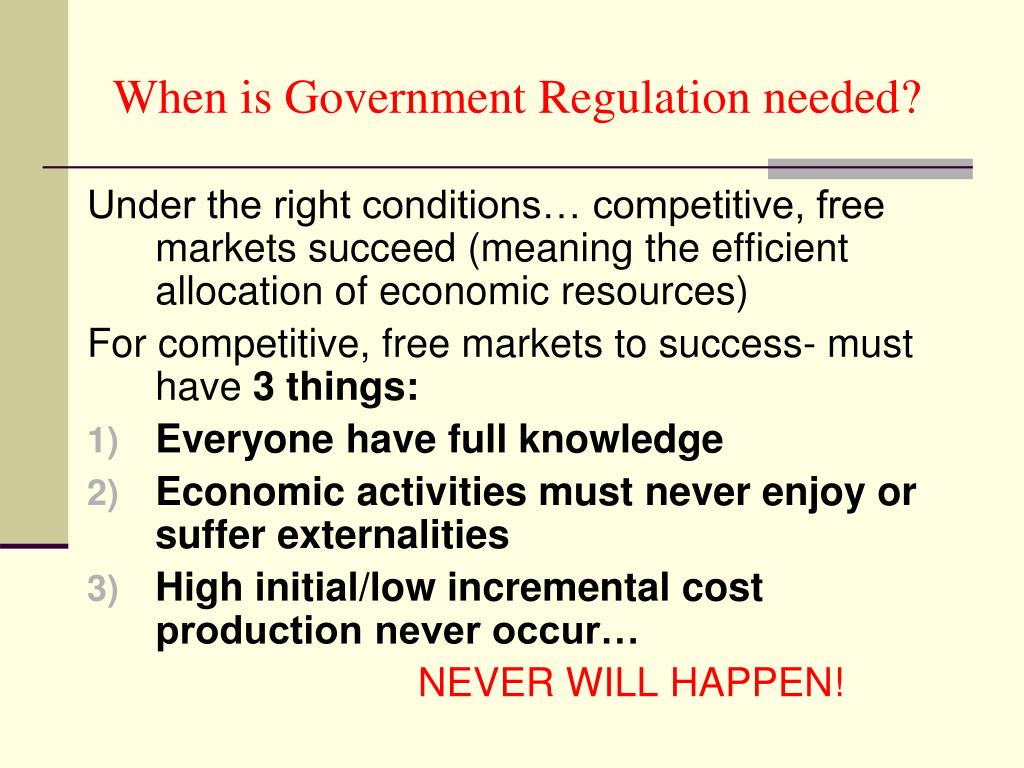
Governments regulate markets because unregulated markets tend towards failure due to asymmetry in information available between buyers & sellers, monopolies and externalities that have negative effects on society.
1) Asymmetry in Information Available Between Buyers & Sellers: Buyers may not be aware of product quality or safety standards. This can lead to consumers purchasing products that are potentially harmful.
2) Monopolies: Without competition, businesses can become monopolistic, which leads to higher prices and lower-quality goods and services.
3) Negative Externalities – Economic activities by companies sometimes cause harm to the environment or society at large; Governments regulate these activities for protection purposes (e.g., pollution control laws).
4) Promoting Fairness – Government regulations promote fairness within the marketplace, ensuring that all businesses operate under similar conditions while protecting consumers from fraudsters preying on them with false advertising claims.
Conclusion
Economic policy and government regulation of markets play a critical role in maintaining stability within an economy. The goal is to promote economic growth while minimizing negative externalities. Governments use various tools such as monetary policies and fiscal policies when implementing changes aimed towards stimulating job creation opportunities or providing essential public services like education or healthcare provision among others. Market regulations protect citizens from unscrupulous business practices by setting rules governing how companies can operate within their borders, leading to a level playing field where all parties benefit equally without fear of exploitation.
 Alternative Amie
Leave a comment