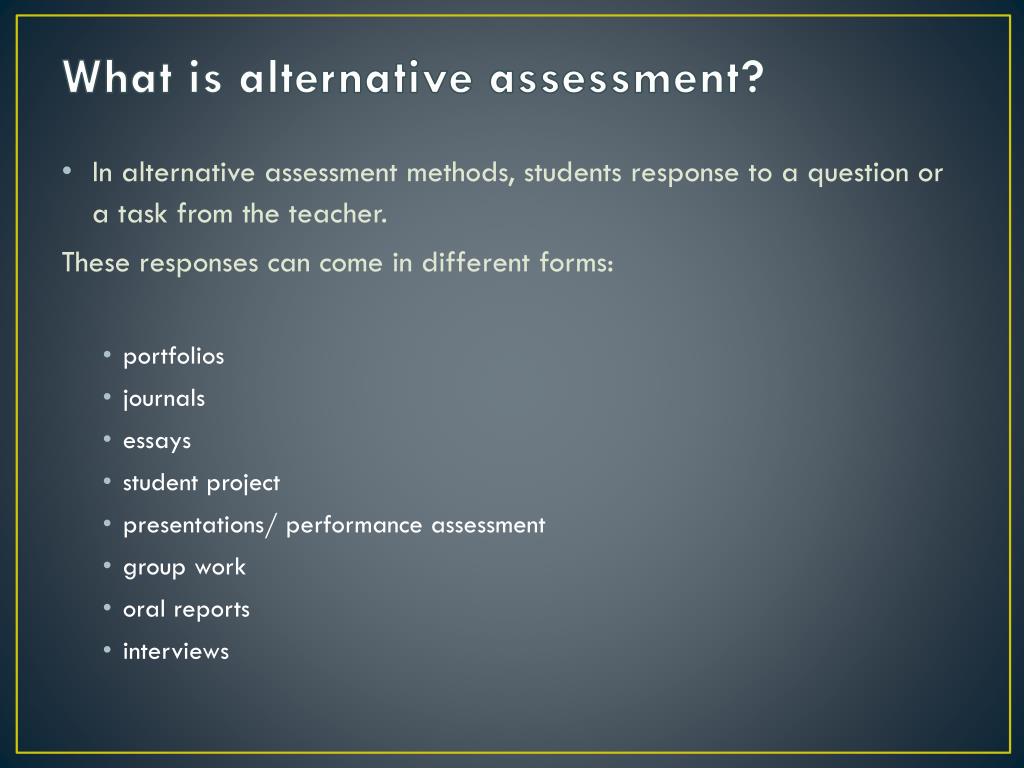
Standardized Testing Alternatives: A Deep Dive into Innovative Assessments
Standardized testing has been a staple of the American education system for decades. However, as educators and parents alike have become more critical of the impact of these tests on students’ learning, there has been a growing movement towards alternative forms of assessment.
The drawbacks of standardized testing are well-documented. These tests place an enormous amount of pressure on students and teachers to perform well, often at the expense of creativity and critical thinking skills. Moreover, they fail to capture important aspects of student achievement that cannot be measured through multiple-choice questions alone.
Fortunately, there is no shortage of innovative assessments being developed by educators and researchers around the world. In this article, we will explore some promising alternatives to traditional standardized tests that offer a more holistic approach to measuring student learning.
1. Authentic Assessments
Authentic assessments are designed to evaluate real-world skills rather than just rote memorization or test-taking strategies. These assessments can take many forms, from project-based assignments to portfolios that showcase students’ work over time.
One example is performance tasks – complex projects or activities that require students to apply what they have learned in real-life situations. For instance, instead of taking a traditional written exam on history facts, students might create a documentary film about a particular historical event or analyze primary sources related to it.
Another form is multimedia presentations where students create videos showcasing their understanding in creative ways using things like music composition software (like Garageband), video editing software (such as iMovie), or animation creation tools (like PowToon).
By designing assignments that reflect real-world contexts and challenges rather than abstract concepts found in textbooks only gives learners greater motivation and develops their critical thinking skills while providing evidence about their abilities beyond mere recall ability.
2. Rubrics
Rubrics are another tool used by teachers and administrators looking for an alternative way of evaluating student progress without relying solely on standardized tests. Rubrics are a form of scoring criteria that outline what is expected of students in terms of their knowledge and skills, as well as how they will be assessed.
Rubrics provide clear expectations for students and help them understand what they need to do in order to succeed. They also allow teachers to provide feedback on specific areas where individual learners need improvement, making it easier for both students and educators alike when looking at the progress made over time.
3. Personalized Learning Plans
Personalized learning plans are another alternative assessment tool that can help educators tailor instruction to meet each student’s unique needs while tracking their progress over time. These plans typically focus on setting goals, identifying strengths and weaknesses, and creating a roadmap for achieving academic success.
By providing customized learning experiences that cater to each student’s interests or passions through personalized curriculum designs with additional resources such as podcasts or videos recommended by an AI-powered system based on learner performance data allows better opportunities for learners’ growth than standardized testing alone.
4. Performance-Based Assessments
Performance-based assessments are becoming increasingly popular among educators who believe that traditional tests fail to capture the full range of skills needed in today’s fast-paced world. These assessments require students to demonstrate mastery by performing tasks rather than simply answering multiple-choice questions.
Examples include simulations where pupils take part in activities like running a business from scratch or designing new products using 3D printing technology; case studies requiring critical thinking about complex issues such as climate change impact assessment projects; debates where two opposing sides argue about relevant topics related to science or social sciences – all aimed at reflecting real-world scenarios outside the classroom environment.
5. Peer Assessment
Peer assessment is gaining popularity among educators as a way of encouraging collaborative learning while giving students more responsibility for their own education outcomes beyond just memorizing facts then regurgitating them during exams. In this form of evaluation, peers score each other’s work according to defined criteria while providing constructive feedback meant to improve the quality of future work.
Peer assessments provide an opportunity for learners to develop self-reflection skills, collaboration and communication abilities, all while addressing any biases or assumptions that may affect their evaluations about other students’ understanding of a particular subject matter.
Conclusion
In conclusion, standardized testing has long been the cornerstone of American education. However, it is clear that these tests have significant drawbacks and limitations that make them less than ideal as the sole method for evaluating student learning.
Fortunately, there are many alternative approaches available today – from authentic assessments to personalized learning plans – that offer a more holistic view of each learner’s progress over time. By embracing these innovative assessment methods, we can help our students develop critical thinking skills while ensuring they receive a well-rounded education aligned with their individual needs.
 Alternative Amie
Leave a comment