International Baccalaureate (IB) Program: A Comprehensive Guide
The International Baccalaureate (IB) Program is a rigorous, internationally recognized educational program that offers students the opportunity to develop the knowledge, skills, and attitudes necessary to succeed in an increasingly globalized world. It is designed for students aged 16-19 years old and is offered in more than 150 countries around the world.
The IB program has been gaining popularity over the years due to its unique approach to education. Unlike traditional educational programs that focus primarily on academic achievement, the IB program emphasizes holistic learning and development. It encourages students to think critically, communicate effectively, and become active global citizens who are committed to making a positive difference in their communities.
In this comprehensive guide, we will explore everything you need to know about the International Baccalaureate (IB) Program – from its history and philosophy to its curriculum and assessment methods. We will also discuss some of the benefits of studying under this renowned international program.
History of International Baccalaureate (IB)
The International Baccalaureate organization was founded in Geneva, Switzerland in 1968 by educators who were seeking a new approach to education that would prepare students for life beyond academia. The original aim was to create an international diploma which would allow students from different countries with differing curricula systems access into universities worldwide.
Since then it has grown tremendously over time with additional programmes being added such as Primary Years Programme(PYP), Middle Years Programme(MYP), Diploma Programme(DP), Career-related programme(CP).
Philosophy of International Baccalaureate (IB)
At the core of the IB philosophy lies challenging yet achievable goals towards developing critical thinking individuals who are driven by curiosity and passion whilst embracing tolerance through intercultural understanding within a supportive community environment.
The main objective is not only academic excellence but developing well-rounded individuals capable of taking up leadership roles in the future.
Curriculum of International Baccalaureate (IB)
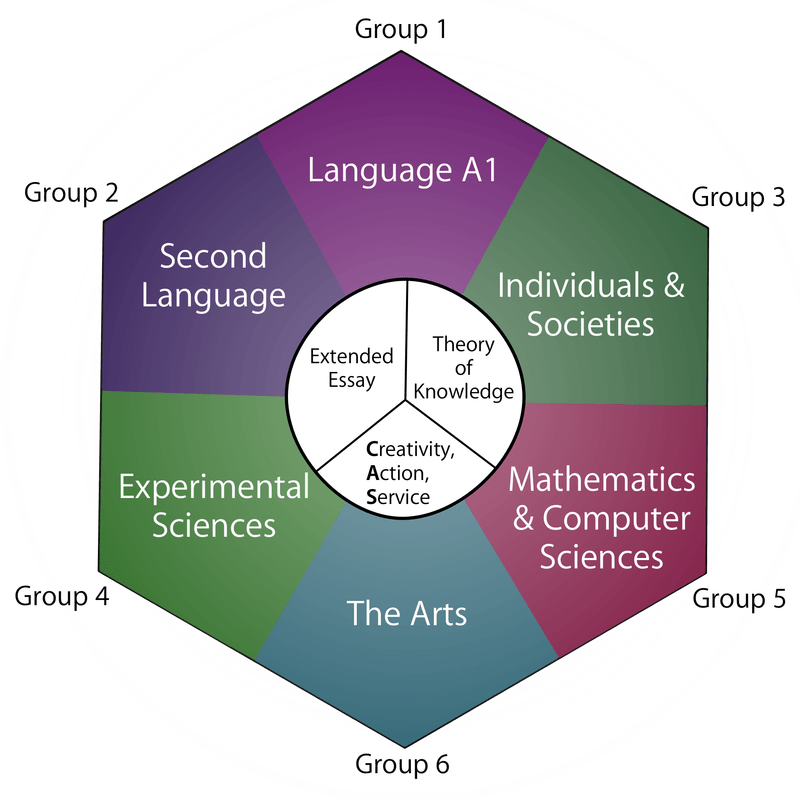
The IB curriculum comprises six subject groups that students are required to study, including language and literature, language acquisition, individuals and societies, sciences, mathematics and the arts.
In addition to the core subjects mentioned above, students must also complete a course on theory of knowledge (TOK), participate in creativity activity service (CAS) which is an extracurricular program aimed at developing their interpersonal skills through community service.
Assessment of International Baccalaureate (IB)
The IB program employs a rigorous assessment system that measures student performance across various domains such as exams, essays and projects. The grading system uses a 1-7 scale with seven being the highest grade.
One unique feature of the programme is external moderation where examiners from different parts of the world mark scripts to ensure consistency across all examination centres worldwide.
Benefits of Studying Under International Baccalaureate (IB)
There are several benefits associated with studying under this renowned international program:
1. Global Recognition: The IB diploma is recognized by top universities around the world thus providing opportunities for students who wish to continue their education overseas.
2. Holistic Learning: Unlike traditional educational programs that focus primarily on academic achievement; IB provides holistic learning experiences that emphasizes critical thinking skills alongside personal development.
3. Interdisciplinary Approach: By taking courses from across multiple disciplines such as Arts & Humanities or Mathematics & Sciences , students will be better equipped with transferable skills they can apply in real-life situations.
4. Enhanced Social Skills : Through CAS extra-curricular activities students develop social responsibility values through community involvement whilst improving communication skills
5. Personalised Learning: Students have greater autonomy over their learning experience enabling them to tailor it according to interests & strengths thus promoting confidence
Conclusion
International baccalaureate(IB) programme remains one of the most comprehensive educational programmes available today designed for students who are looking for a challenging, internationally recognized educational experience.
The programme provides numerous benefits such as a global recognition of the diploma, holistic learning experiences via interdisciplinary approach & personal development through CAS. It is important to note that the programme requires a high level of dedication and commitment from students in order to achieve success.
 Alternative Amie
Leave a comment