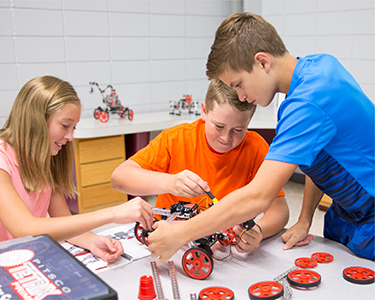
Project-based learning in STEM
Project-based learning (PBL) is a teaching approach that emphasizes students working on long-term projects that require critical thinking, collaboration, and problem-solving skills. PBL has become increasingly popular in science, technology, engineering, and mathematics (STEM) education because it provides an opportunity for students to engage with the material in a more meaningful way.
In PBL classrooms, students work on projects that are relevant to their lives and interests. For example, a group of high school students might design and build a solar-powered car or develop an app that helps people track their carbon footprint. By working on these types of projects over an extended period of time, students have the opportunity to apply what they are learning in real-world situations.
One benefit of PBL is that it allows for interdisciplinary approaches to STEM education. Projects can incorporate elements from multiple subjects such as math, science, art, and social studies. This type of integration helps to break down subject-area silos and allows for a more comprehensive understanding of complex issues.
Another benefit of PBL is that it encourages creativity and innovation. Students are given the freedom to explore different ideas and solutions without fear of failure or judgement. Through trial-and-error processes inherent in project-based learning activities like building circuits or designing prototypes using 3D printers or laser cutters; learners learn how persistence pays off even when things don’t go according to plan.
However, implementing PBL requires careful planning by educators since there could be various challenges involved like assessment strategies or classroom management issues especially when groups get too big; so teachers must consider carefully how best they can support learners throughout each stage while also monitoring progress towards expected outcomes.
Overall though there’s no doubt about its potential impact upon student engagement levels which leads directly into greater motivation towards pursuing career options within fields related specifically those aforementioned areas such as computer science programming coding robotics engineering physics biology chemistry etcetera where hands-on experimentation creativity and working in teams are highly valued skills.
 Alternative Amie
Leave a comment